



| Dispatch | |||
|---|---|---|---|
| Release Date | Gameplay & Story | Pre-Order & DLC | Review |
Dispatch Review Overview
What is Dispatch?
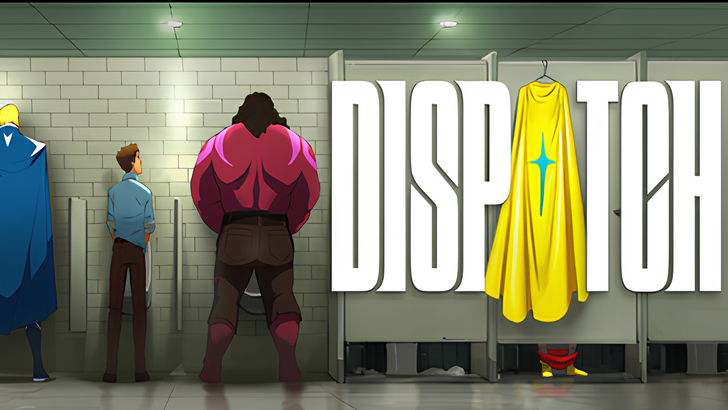
Dispatch is an interactive narrative adventure game where you follow the life of a former hero now turned dispatcher. Developed and published by the same minds that created The Wolf Among Us and Tales from the Borderlands, Dispatch will follow a similar gameplay style where you will be making several choices that will affect the outcome of the story, and have these decisions and outcomes carry over to the next episode.
The game will feature a star-studded cast of actors and actresses from various entertainment sections, namely: Aaron Paul, Laura Baily, Erin Yvette, Matthew Mercer, MoistCr1TiKaL, Jacksepticeye, and more.
Dispatch features:
⚫︎ Choice-Based Narrative Adventure
⚫︎ Dispatcher Management Gameplay
⚫︎ Episodic Release Structure
⚫︎ All-Star Voice Cast
⚫︎ Mini-Games and QTEs
⚫︎ TV Show-esque Production Values
For more gameplay details, read everything we know about Dispatch's gameplay and story.
| Digital Storefronts | |||||||
|---|---|---|---|---|---|---|---|
 Steam Steam |
 PlayStation PlayStation |
||||||
| $29.99 | |||||||
Dispatch Pros & Cons
| Pros | Cons |
|---|---|
 Strong Writing Overall Feels Like Watching an Animated TV Show Excellent Voice Acting Strong Writing Overall Feels Like Watching an Animated TV Show Excellent Voice Acting |
The Illusion of Choice Rears Its Ugly Head Once Again Episodes are Paced Unevenly |
Dispatch Story - 8/10
Dispatch takes a superhero premise that could’ve easily felt uninspired and turns it into something grounded and human. Every scene feels curated, every line of dialogue serves a purpose, and the way the characters bounce off each other (sometimes with heart, sometimes with pure sarcasm) is just chef’s kiss. However, it doesn't entirely escape the familiar pitfalls of classic Telltale games, particularly the illusion of choice and uneven pacing across its eight episodes. Even so, Dispatch proved utterly compelling week after week, and I’ve got little doubt that it remains one of the best-written episodic stories video games have seen in years.
Dispatch Gameplay - 8/10
Each new episode of Dispatch makes the player feel more involved in the experience. The dispatch system continues to be both a fun gameplay mechanic and a clever storytelling device that ties neatly into the game’s themes, even if the segments themselves are quite simple. My only wish is for a dedicated, story-free dispatch mode to keep players engaged after they complete all eight episodes.
Dispatch Visuals - 10/10
Dispatch looks like a high-budget animated TV show you’d actually tune in for, the kind that makes you forget it’s a game until you’re choosing your next line of dialogue. The action sequences move with a cinematic rhythm, and transitions between scenes, especially during branching choices, are so smooth they practically feel pre-rendered. Its cel-shaded art style gives it a comic-book look, which is very thematically accurate.
Dispatch Audio - 10/10
The audio work in Dispatch significantly elevates the story. Every line, whether delivering dry humor or subdued vulnerability, is imbued with intent by the voice actors, and the star-studded cast sounds genuinely tuned into their characters. It's a thoughtful touch that the developers also included a dedicated Streamer Mode, which lets streamers tinker with settings like bleeping out curses or turning off licensed soundtracks.
Dispatch Value for Money - 9/10
$30 gives you the base game, which includes all eight episodes. This feels like a fair deal that doesn’t stretch your wallet too thin. Each episode may only run about an hour, but the quality of the writing, performances, and story make that time feel well spent. There’s little replay value outside of trying out different choices. This is, after all, in the same vein as old Telltale titles, so it’s best to keep expectations tempered in this regard.
Dispatch Overall Score - 90/100
Dispatch is finally over, and I’m honestly sad to see it go. After three weeks, starting from October 22, and eight episodes, it’s apparent that this is a narrative adventure that understands well what makes the format work. The character writing stays sharp, the humor still lands when it needs to, and the emotional beats have only gotten stronger as the story moves forward. The pacing can be uneven here and there, and player choices don’t always change how the overall story plays out, but Dispatch easily stands as one of the better examples of why this kind of interactive storytelling deserves another shot.
Dispatch Review: Absolute Cinema!
A Hero's Work is Never Done
Back in the early 2010s, episodic narrative games were everywhere. You couldn’t go a few months without hearing about a new series from Telltale Games, the studio that made the format what it was. Titles like The Walking Dead became cultural moments, fueled in part by a zombie craze that seemed to infect every corner of pop culture. Usually, players waited months between episodes, talking about their choices, debating what might happen next, treating each release like the return of a favorite show. But the years that followed weren’t kind to that release model. As time went on, binge culture took over through Netflix and similar platforms. People wanted everything right away. DontNod’s Life is Strange, for instance, were monthly releases. Recent games in the series, however, opted to drop all episodes at once.
Dispatch, however, was cut from the same cloth as previous Telltale titles.
Three weeks. Eight episodes, released week after week, each pair closing on a note that kept people talking until the next ones dropped. In those three weeks, communities came together to talk. Fans made theories, posted breakdowns, even held polls for what decisions people made or plan on making. Each weekly release became an event in itself. Wednesday felt like something worth looking forward to. It brought back that same energy from when episodic games were at their peak, a sense of shared experience that made the waiting part of the fun.
As of November 12, 2025, all eight episodes are out. Looking back, the way Dispatch handled its release was proof that this kind of storytelling in video game form has value. AdHoc Studio has proven that the episodic format isn't dead after all; it's merely waiting for the right team to pick up the phone.
The Desk Job of a Fallen Hero
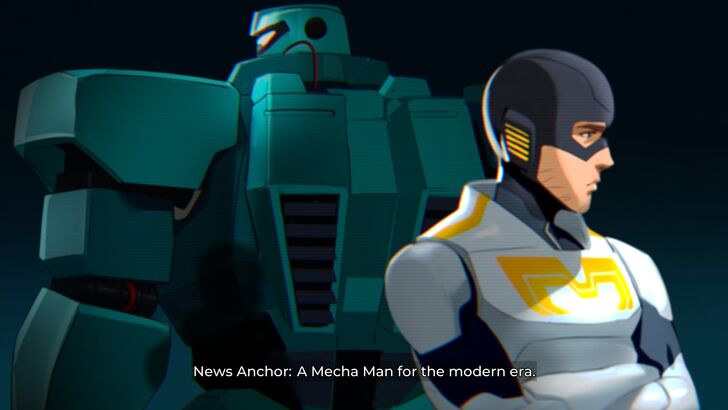
With the superhero genre having permeated pretty much every facet of modern pop culture, it’s no surprise that the world of Dispatch feels both familiar and refreshingly playful. Much like Invincible, The Boys, and—fine, I’ll say it—My Hero Academia, we’re in a reality where powered beings, magical creatures, and everyday people share the same streets. In present-day Los Angeles, you assume the role of Robert Robertson III (a.k.a. Mecha Man), who, despite the grandiose alias attached to a silly name, is really just a regular guy in a large mechanical suit, carrying the weight of his family’s heroic legacy. This all comes crashing down, though, in a moment of vengeance when Robert tries to pursue a villain, only to be ambushed, caught off guard, and left with a destroyed mech and a bruised ego. The suit becomes inoperable, and our would-be hero is forced into putting down the superhero mantle indefinitely.
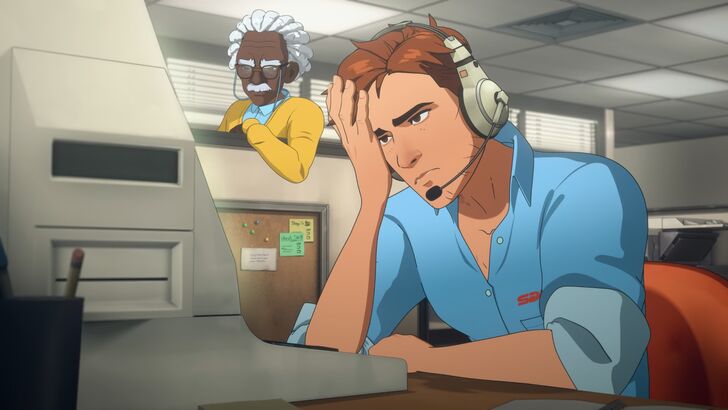
But where one chapter ends, another begins. Even in a world of capes, organizations exist to funnel the heroic impulses of the superpowered into something still helpful. Here, the Superhero Dispatch Network (SDN) steps in. Their job is to answer distress calls, big and small, and send heroes out to do good, or whatever passes for good. Robert ends up here, behind the desk, picking up distress calls and dispatching his own team of super-powered misfits to handle situations across the city.
Naturally, as with all human stories (or superhero ones masquerading as human stories), complications abound. I won’t dive into major spoilers here, but let’s just say the narrative threads weave in interesting directions.
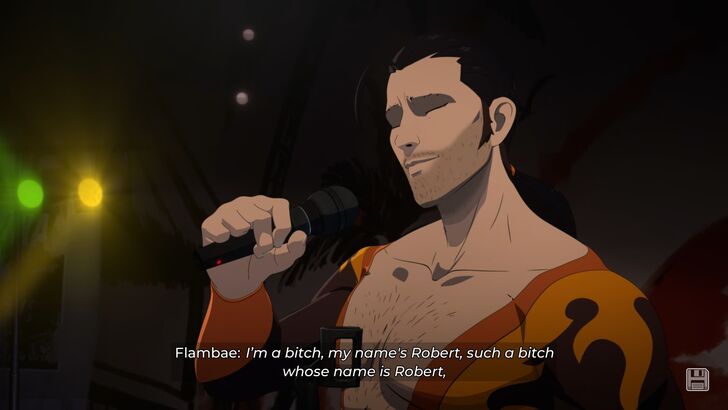
The writing itself leans into the absurd and the everyday at once. Dialogue is sometimes crude and often really, really funny. For viewers accustomed to the pervasive cynicism of shows like Invincible and The Boys, which this show’s humor and language certainly echo, it might initially feel familiar. However, it sheds the depressive undertones of the former and the edginess of the latter to offer instead an earnest superhero story with genuine inspirational moments, often fueled by Robert’s superpower of giving pep talks.
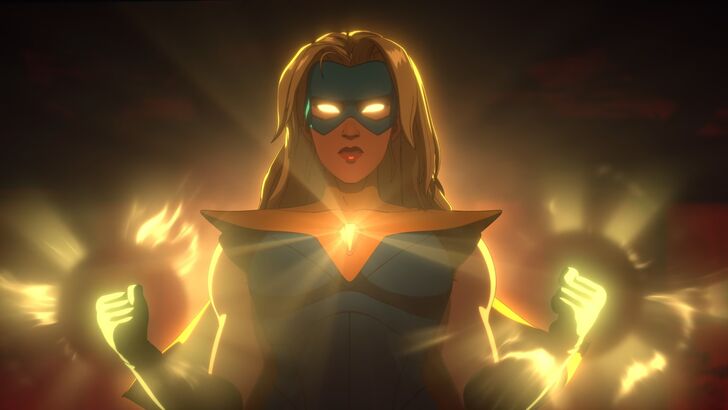
It helps that the voice cast is top-tier. Aaron Paul of Breaking Bad-fame lends his voice to Robert Robertson; Academy Award nominee Jeffrey Wright plays the GOAT Chase; voice actress and Telltale alumnus Erin Yvette steps in as Blonde Blazer. It’s amazing what exceptional voice work could do. These voices help elevate what could have otherwise been just another superhero narrative into something with actual texture and humanity.
Pristine superhero tropes have been a mainstay in much of superhero media, popularized perhaps most widely by Marvel Studios. Now, however, many popular works—Dispatch among them—have diverted from this model. This change is partly a response to a desire for something more grounded after a long period of exposure to the classic trope. The resulting modern trope features characters who, despite wielding god-like powers, are still rooted in human vulnerability, a dynamic often associated with mythical figures, such as the Greek gods.
“X Will Remember That”
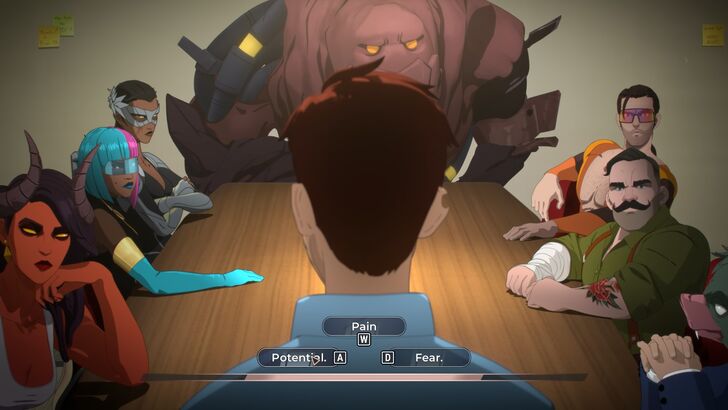
The burden of this vulnerability is placed directly on the player by making their choices "feel" consequential (more on why "feel" is in quotes later).
The game incorporates the "X will remember that" of Telltale Games in its dialogue sequences, which signals that it’s very much playing in the episodic-narrative structure of old. We, as Robert, choose our responses to guide how conversations unfold.
These choices don’t just change what people say, but also how they act toward you, especially during dispatches. Even the smallest lines you choose in earlier episodes echo in later scenes, and this shapes how relationships develop and how much support Robert gets from his team. It’s nice to see tension build naturally instead of being boxed into a "good" or "bad" path. I like that Dispatch doesn’t treat choices as binary or moral dilemmas but more as reflections of how we think Robert would act as we roleplay as him.
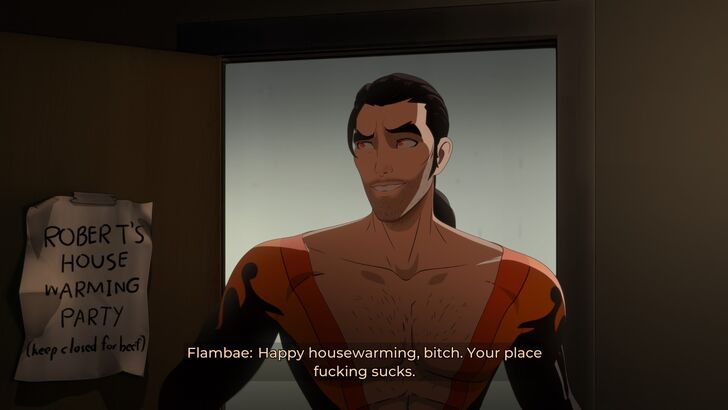
After playing through all eight episodes of Dispatch, it’s clear that while the game gives you a lot of decisions to make, most of them only go so far. Your choices shape dialogue and short-term interactions, and they can make certain scenes play out a little differently, but they don’t push the overall story in new directions until the very end. Even when I went through the game twice, making wildly different decisions, both runs ended up at roughly the same conclusion. Some story beats changed depending on earlier choices, but the destination stayed the same.
That’s not necessarily a bad thing, though. It’s part of what comes with this type of game. The illusion of choice has always been part of the DNA of Telltale-style narrative adventures. These games invite you to take the wheel, but only let you drive along carefully guided lines. You make choices that seem massive, but behind the scenes, everything is still built to funnel toward a set number of outcomes.
I don’t think that’s a flaw as much as it’s a reality of storytelling in this genre. Recording and animating every possible branching path is an enormous task, after all.
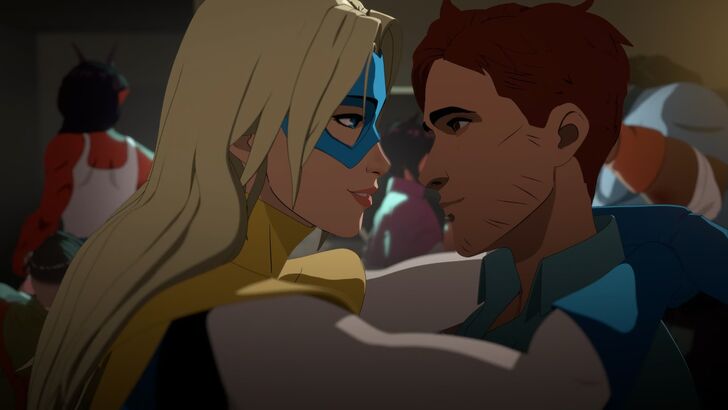
However, there was a part of me that was hoping Dispatch might be the one to break the mold. AdHoc Studio is made up of former Telltale developers, people who know this format better than anyone. Across all eight episodes, the decisions you make definitely influence your relationships with other characters, especially Robert’s connections with the rest of the team. You can feel the tension rise or ease depending on what you say or do.
But when it comes to the overall narrative, it becomes obvious that the real impact of your choices is being saved for something later. It’s easy to see how many of these choices might carry more weight in the oft-talked about second season, but for now, they mostly serve to color the journey rather than change its destination.
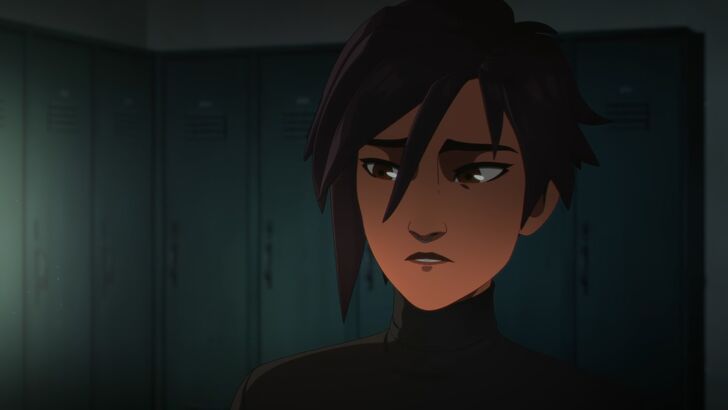
And maybe that’s why some parts of Dispatch’s story feel a little predictable. The writing is solid, yes, but you can often see where the story is headed long before it gets there. The twists don’t "twist" with the same surprise as they seem intended to. I still found myself reacting out loud when major events happened, don’t get me wrong, but more out of hype than shock.
Because of this, a few moments that are emotional ended up feeling a bit forced, or like the characters make choices simply because the story needed them to. The game, as a result, feels like it's playing safe when it could have gone further.
Even so, I stayed invested all the way through. The cast is lovable, even with all their flaws, and I very much cared about what would happen to them. By the time the final episode rolled around, I was fully locked in, leaning forward, mouse tight in my hands, desperate not to mess up a single quick-time event (QTE). I won’t spoil what happens there, but it’s one of those moments where everything you’ve done so far is on the line. No matter my choices, I just wanted to see it through, to make sure Robert and his team made it out okay.
Pacing is Uneven
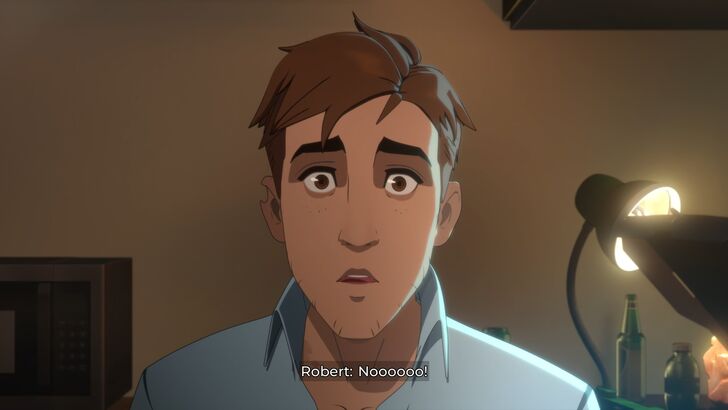
Pacing, too, is one of the game’s problems. When Episodes 3 and 4 came out, I started to worry that the story might be losing focus. Not much seemed to move forward with the bigger mystery surrounding Shroud or even Robert’s personal motivations. The early episodes built up an interesting premise, but those middle chapters felt like they were just stalling. At the time, I couldn’t tell if the game was holding its cards too close to its chest or if it was simply padding out its runtime. Thankfully, by the time the credits rolled on Episode 8, everything came together. Storylines involving Shroud, Z-Team, Invisigal, and Robert all found their place, and the way they tied together in the end worked better than I expected. However, the road to get there felt uneven.
The showstopping moments in Episodes 7 and 8 are easily the best in the entire series. They’re intense, emotional, and make the whole experience worth it. But because of how strong those final episodes are, it highlights how slow and meandering the earlier ones can feel. The buildup is long, and although I can appreciate a good slow burn, I felt like the distribution of plot points could have been more even. Some of these that take several hours to set up are resolved almost immediately, leaving certain story beats rushed just when they start getting interesting.
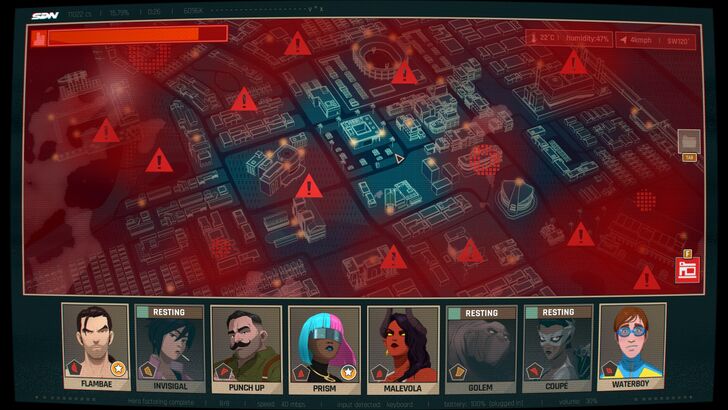
Part of this comes from how the game splits its focus between its story and its dispatch segments. Each episode features several of these missions, where you take calls, manage situations, and direct your team through different scenarios. They’re enjoyable, with great banter that shows off the team’s personality. But they also take up a large chunk of each episode’s runtime, and that sometimes works against the pacing. It’s not that they don’t belong here—this is a video game still, so they absolutely do—but some episodes spend so long on the dispatch calls that by the time the main story picks up again, the tension has dissipated.
I just wish the balance leaned a little more toward the character and story moments. The gameplay works, but it sometimes takes up half if not more of the 1-hour runtime that could’ve been used to develop the cast more outside of their work environment. There are characters who clearly have more going on beneath the surface, but we only ever get glimpses of that between missions. With how personal the story tries to be, especially in its earlier episodes, those missing moments are more noticeable.
It's a fantastic story, honestly, and I thoroughly enjoyed it. However, I can't help but feel a few extra episodes or a longer runtime would have benefitted the pacing and prevented certain plot points from feeling unduly hastened. Perhaps the strongest criticism is that the writing is so good that I simply wish there was more of it.
Dispatching and Hacking are Simple but Clever
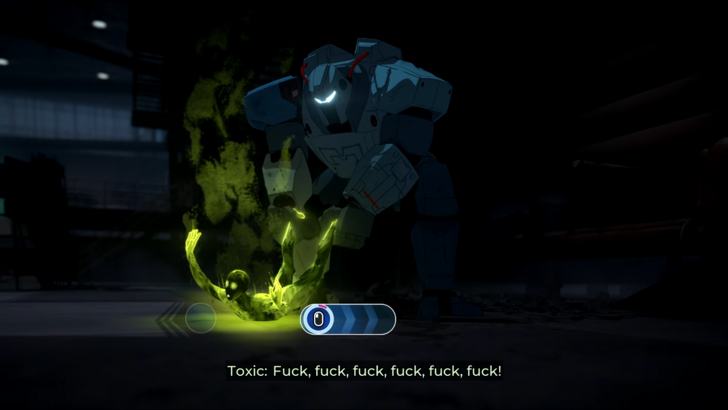
However, of course, this isn’t a TV show, even if it borrows the rhythm of one. Dispatch is, still, a video game. And yet, for all my comparisons to Telltale’s repertoire, it actually trims away some of the interactive elements. Gone are the exploration segments where you’d wander around poking at cluttered desks or initiating small talk just to coax out another line of dialogue.
What remains, however, are the classic narrative prompts and QTEs. The latter often plays out during fights, where the game asks you to hit a button or drag your mouse in the right direction at the right moment. It’s going to be familiar to anyone who’s played a Telltale game before. The immediacy of it mirrors how Robert Robertson moves around fight scenes, snapping to decisions under pressure, with only a second or two to think.
Where Dispatch really pivots from straight narrative-adventure toward something a bit more mechanical is in its namesake: dispatching. As Robert, who has taken a desk job in the SDN, your main job becomes picking which hero to send where. You’ll see distress calls pop up, and you’re in charge of matching the right hero (or heroes) with the right job. However, each hero has stats, quirks, and synergies you first have to take into account before sending them out. As these heroes succeed in missions, they level up, earn points you distribute to improve their stats, maybe even unlock abilities.
You’re at the mercy of RNG here. Unless the people you dispatch perfectly meet the job requirements, there's always a risk of failure. That failure might just result in an injury (which decreases their stats for the rest of the shift) or, worse, them being downed and unavailable for the whole shift. Conversely, even if your character only hits 20% of the requirements, they have a chance to succeed.
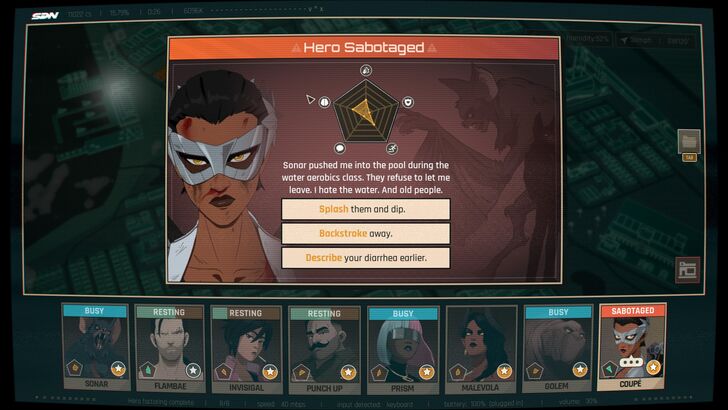
I adore how the gameplay works in service of the story. For example, without saying too much, a plot point in episode 3 leads to some internal tension within the Z-Team, and that carries over to dispatch calls. Certain heroes might insist on working alone or sabotage another during a mission, and sometimes that even leads to failures if you’re unlucky.
It’s a clever way of showing instead of telling. It also makes you adapt as a player, since you can’t always do more of the same thing every time. You’re left, then, to make the best of what you have, even if that means risking a few failed dispatches along the way. Experiencing these the first time, blind, really sells the idea that these characters have agency of their own, and you’re just doing your best to keep the whole operation running.
These don't happen for all plot beats, however. For instance, it’s weird why Flambae would work with, say, Waterboy, when just hours earlier the two had a big fight. It's not enough to break immersion, but it does make some of the character dynamics feel inconsistent from scene to gameplay.
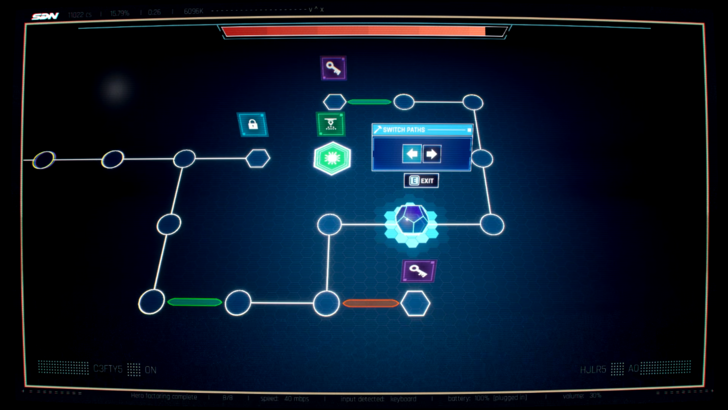
Robert isn't limited to pushing buttons and giving orders. He participates through a hacking minigame that starts simply but quickly becomes tense once time limits and other gimmicks come into play. To assist your team mid-mission, you guide an object through nodes, inputting arrow keys to unlock and travel to other nodes. It’s not the deepest system in the world, but it gets tense fast, especially when you’re racing against the timer to keep your heroes safe. It adds just enough pressure to make you feel involved in the action rather than just watching events unfold from behind a desk.
An Endless Mode Could be Nice to Pass the Time
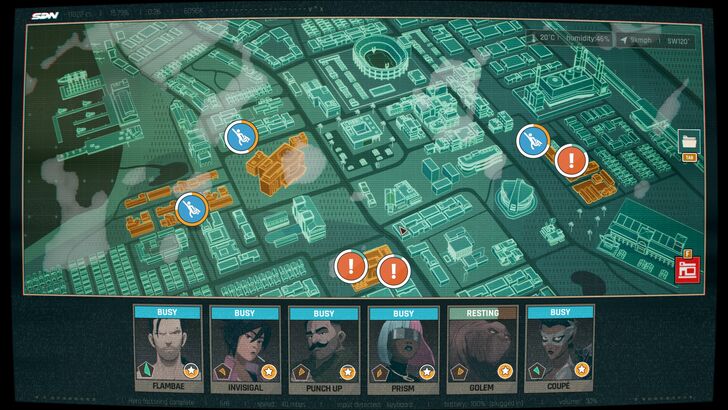
It’s a bit of a shame, though, that the gameplay elements that tie directly into the story only appear in certain episodes. The moments where the mechanics reflect what’s happening narratively feel so natural and smartly woven that I wish there were more of them. There’s so much potential in how Dispatch uses its mechanics during key story moments. Some of the later episodes, without giving too much away, introduce variations in the gameplay that perfectly reflect what the characters are going through. Small touches can add so much texture to the experience, after all.
What I, and apparently a lot of players, want to see in Dispatch is a separate mode that is dedicated purely on the dispatch gameplay. Something that lets players jump in and just focus on managing the Z-Team without the confines of the main story. It doesn’t need to be a full roguelike or anything complex, but an endless or replayable mode would fit naturally here. Imagine replaying missions with shifting objectives or having character relationships carry over and affect how each dispatch plays out. It would give players a reason to return after finishing the story and make better use of the systems that already work so well.
Is Dispatch Worth It?
Yes, I’m Already (Im)Patiently Waiting for Season 2!

Dispatch is one hell of a game that kept me hooked for three weeks straight. The story is gripping from the start, and the dialogue and character writing are sharp enough that they keep you wanting to see what happens next. I went in completely blind, knowing almost nothing beyond the basic premise, and by the end, I found myself deep in fan communities, reading theories, and watching reaction videos to scenes that genuinely left me with my mouth open.
All eight episodes are available for $30, which I’d say is a fair deal. Each episode runs about an hour, and although that might seem modest at first, the quality of the writing, the performances, and the way the story keeps you engaged make it feel worth every minute. Since all episodes are out as of November 12, you can binge them at your own pace without waiting for weekly releases. You can even replay certain scenes and try different choices or see how small changes in dialogue affect interactions, though it doesn’t drastically alter the story.
I do, however, wish there was more to do outside of replaying episodes. The dispatch missions themselves are fun, and they offer some gameplay variety, but once you’ve completed the story, there isn’t much to keep you coming back unless AdHoc Studio adds a separate mode for playing those missions endlessly. Something like that would give the game extra life and make revisiting it feel fresh.
So… Season 2, where?
| Digital Storefronts | |||||||
|---|---|---|---|---|---|---|---|
| Steam |
PlayStation |
||||||
| $29.99 | |||||||
Dispatch FAQ
Who is the Voice Cast of Dispatch?
Dispatch features a star-studded cast of traditional actors and well-known creators. Leading the cast is Aaron Paul as the protagonist Robert Robertson (Mecha Man), alongside veteran actors Jeffrey Wright and Laura Bailey. Other notable cast members include Matthew Mercer, Travis Willingham, Erin Yvette, Alanah Pearce, Seán McLoughlin (Jacksepticeye), and Charlie White (Cr1TiKaL).
How Long are Dispatch’s Episodes?
Dispatch’s episodes are about an hour each.
Game8 Reviews
Dispatch Similar Games

Dispatch Product Information
|
|
| Title | DISPATCH |
|---|---|
| Release Date | October 22, 2025 |
| Developer | AdHoc Studio |
| Publisher | AdHoc Studio |
| Supported Platforms | PC (via Steam) PlayStation 5 |
| Genre | genres here |
| Number of Players | Adventure, Simulation |
| ESRB Rating | ESRB M 17+ |
| Official Website | Dispatch Website |





i romanced blonde blazer because mommy