



| VARLET | |||
|---|---|---|---|
| Release Date | Gameplay & Story | Pre-Order & DLC | Review |
VARLET is a turn-based RPG where you support the student body by eliminating monsters that threaten to control them with their desires. Read our review to see what it did well, what it didn't do well, and if it's worth buying.
VARLET Review Overview
What is VARLET?
VARLET is a school-life RPG released on August 28, 2025 for PC, PlayStation 5, and Nintendo Switch. Developed by FuRyu Corporation and AQURIA Co., Ltd., the game centers on a new transfer student at Kousei Academy who discovers that an urban legend about "Glitches" (otherworldly monsters) is real.
Players must join the Student Support Services (SSS) to fight these creatures and save the academy. The game features a "Timeline Command system" for battles and explores themes of self-discovery.
VARLET features:
⚫︎ The Triad system influences your stats based on your personality
⚫︎ Resetable skill trees
⚫︎ An affinity system between characters
⚫︎ Multiple playable characters
⚫︎ Environmental puzzles
⚫︎ A timeline system for turn-based combat
For more gameplay details, read everything we know about VARLET's gameplay and story.
| Digital Storefronts | |||||||
|---|---|---|---|---|---|---|---|
 Steam Steam |
 Epic Epic |
 PlayStation PlayStation |
 Switch Switch |
||||
| Price: | $59.99 | ||||||
VARLET Pros & Cons

| Pros | Cons |
|---|---|
 Combat Has a Decent Difficulty Curve Your Decisions Have Weight Excellent Music Combat Has a Decent Difficulty Curve Your Decisions Have Weight Excellent Music |
Story Pacing? More Like Story Racing Gameplay Quickly Becomes Repetitive It’s Way Too Expensive |
VARLET Overall Score - 66/100
VARLET is, as much as I wanted to like it, a disappointing addition to FURYU’s already mixed lineup. Its story and steep asking price in particular drag down what could have otherwise been a fairly decent game hard. In many ways, it feels like most of the budget went straight into production values because the game both looks and sounds impressive, though with caveats on the visual side that also hold it back somewhat.
VARLET Story - 5/10
There are so many problems with VARLET’s story that I honestly struggle to see it as anything more than something you’d stumble upon on a free-to-read webnovel site. Its issues range from extremely rough pacing to a disjointed and often illogical sequence of events, all tied together by characters who are far too conveniently open-minded just to keep the plot moving… and that’s not even half of its problems. Fortunately, though, if you’re into quick and digestible storytelling, this actually scratches that itch somewhat.
VARLET Gameplay - 7/10
The game can be roughly divided into two parts: an objective-driven exploration segment where you roam the school grounds completing tasks for your student organization, and a turn-based combat system accessed through dungeons built for adventure-style gameplay. While the concept shows promise, each side carries its own flaws, and together they culminate in a gameplay loop that wears out its welcome far too quickly.
VARLET Visuals - 8/10
While the game certainly deserves praise for its high-quality character artwork, gorgeous animations, and the sheer spectacle of its many cutscenes, its visual appeal is consistently dragged down by several minor issues. The UI, for instance, somehow looks both cluttered and bland despite being filled with imagery, coming across as poorly designed rather than stylish. Outside of cutscenes, the characters suffer from floaty movements and limited hand and body gestures. Meanwhile, their combat forms look oddly washed-out, lacking the vibrancy and impact that a more striking, colorful lineup could have brought to life against the vivid, high-contrast backdrops of its stages.
VARLET Audio - 9/10
As one would expect from a well-funded JRPG, VARLET delivers a stellar audio experience, with its strong voice acting, evocative music, and impactful sound effects. It could have been perfect, really, if not for the lack of practical design considerations. Then, there’s also the issue of repetition of certain sound effects—especially those tied to frequently spammed actions—quickly becoming grating, undermining the otherwise impressive presentation.
VARLET Value for Money - 4/10
For what it offers, faults and all, you’d probably expect this game to sit somewhere in the $30 to $40 range, right? Wrong. Instead, it comes with a whopping $60 price tag, the same as a budget AAA release or an enhanced version of a high-profile JRPG. To make matters worse, it isn’t nearly as long, nor is it anywhere near as content-dense, as either of those. Honestly, the only redeeming part about all of this is that the game does have some replay value, and the gameplay is actually rather good.
VARLET Review: Discount Persona at a Premium
FURYU Corporation is a company I’ve always associated more with anime figures than video games, largely because I’ve bought several of their products before (their Hatsune Miku figs are fantastic). That said, I do know they dabble in games as well, and a couple of years ago, they even published one of the better action RPGs I’ve played in recent memory: Crymachina.
So what happened with VARLET, and why is it in the state it’s in now? Is it because, unlike Crymachina, FURYU had a direct hand in creating it this time?
As much as I dislike making comparisons, it’s impossible not to with VARLET because of just how blatantly it wears its Persona inspirations on its sleeve. For context, its story revolves around Desires overwhelming people once they’ve built up enough malice toward others. These Desires manifest Glitches, parallel dimensions shaped by the person’s personality and, well, their desires.
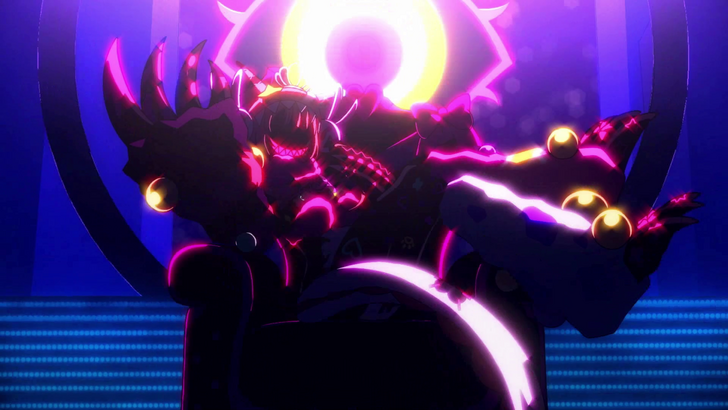
Sound familiar? That’s because it is. It’s Persona 5 all over again. The Glitch owners? Beat them and they’ll have a change of heart—no treasure stealing required this time. The day-based progression system? Also here. Sure, there are small differences, like Glitch owners being able to enter their own worlds, but by and large, it’s basically the same loop.
That’s where the similarities stop, though, because VARLET does bring some unique mechanics to the table. For starters, while it also uses a turn-based combat system, the experience is far more tactical than Persona’s combo-heavy battles. Instead of chasing elemental weaknesses, you’re expected to counter enemy actions directly, predicting and punishing their moves. On top of that, builds are more customizable thanks to skill trees, though this comes at the cost of the protagonist being far less flexible.
The real question, however, isn’t about similarities or differences—it’s about execution. And that’s where things get tricky.
The Combat is Pretty Good
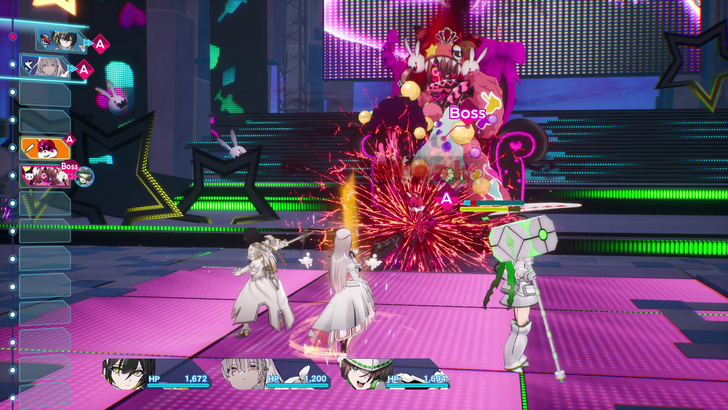
VARLET uses a turn-based combat system to let you kick monster behinds like it’s just another Tuesday. But it’s not the standard "my turn, your turn" routine where both sides politely trade blows. Instead, every action plays out along a timeline, with both characters and enemies acting in relation to one another.
If you’ve played Honkai: Star Rail, you’ll find it familiar—though VARLET twists the formula. Here, moves don’t have a recovery delay; instead, they need to charge up before going off, making each move’s delay, or "step," a key factor in how quickly actions are readied. Essentially, you’re planning your characters’ turns well in advance, watching them play out down the line.
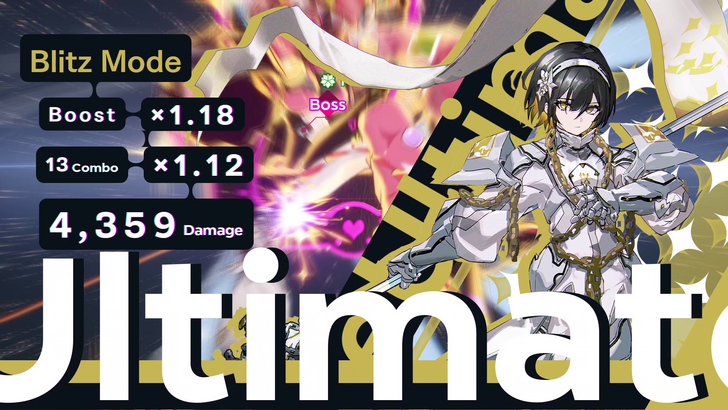
This approach adds a surprising amount of tactical flexibility, not just for you, but also for the game design. Certain abilities, for example, are built to disrupt or counter others, such as Charge Break moves being able to cancel skills mid-charge, while Stun Bind attacks can trigger Blitz Mode, which is essentially just a window where you can combo them freely, when used on a previously stunned target.
As you can imagine, once you get into the later levels where enemies start dishing out chunkier damage, VARLET really forces you to think about your actions if you want to conserve resources. You can’t just spam your strongest moves whenever they’re available either—those tend to come with hefty delays that leave you wide open to enemy retaliation. The system naturally pushes you toward more defensive or tactical maneuvers, rewarding foresight over reckless aggression.
Adding to this, the decision to cap your team size at three characters is actually a smart one. Roles are pretty strict, so party-building quickly becomes a balancing act. Take Noa Hatsuse, for example: her entire kit revolves around tanking and stunning, while her offensive tools demand awkward requirements like stacking taunts on enemies. Even so, she’s practically indispensable for tougher fights thanks to her absurd bulk and ability to soak up punishment for the team.
So what about healing? That’s someone else’s job, which means your final slot becomes the real wildcard. Do you slot in a damage dealer? A debuffer? Someone who brings more utility? Or maybe you don’t want to use a tank in the first place? There’s never really one clear answer—and that’s exactly what makes a good game design.
Your Life Decisions Have Weight
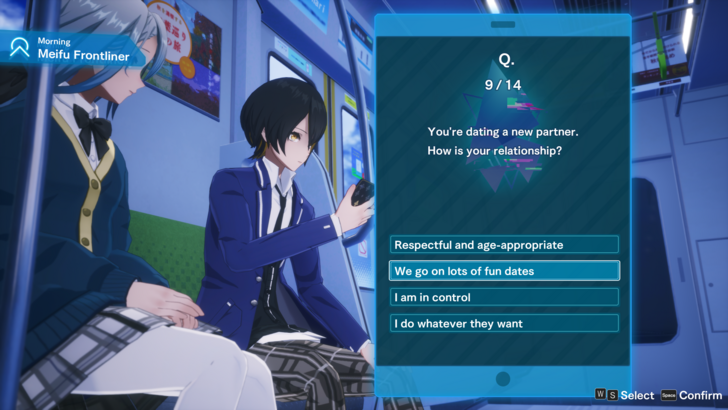
One of VARLET’s more unique mechanics is the Triad system. In short, it evaluates your character based on life decisions and adjusts your combat performance according to your dominant traits, while also unlocking extra dialogue options for unique interactions.
Most of this is shaped by a survey you take between chapters, but plenty of in-game events can nudge your personality mid-arc as well. For example, let’s say you stumble upon someone’s diary while combing the school grounds for lost items. Do you hand it straight to the lost and found, or sneak a peek inside? The former might boost your Morality score, granting your party reduced damage in battle.
And as for what happens if you do take a look inside? No clue. I’m not enough of a degenerate to find out, after all. Now, excuse me while I check my Azur Lane dailies…
Story Barely Walks Before Running
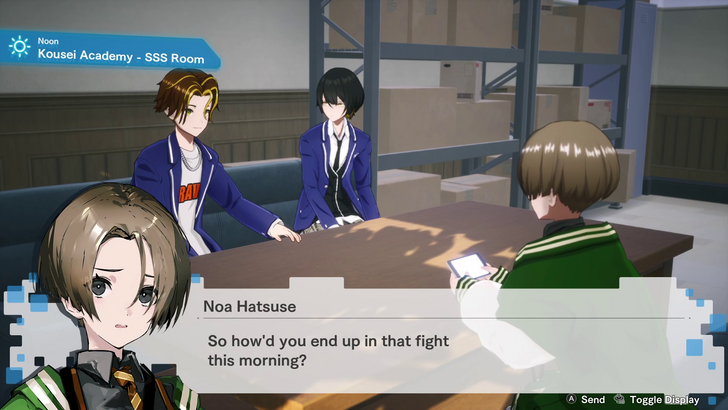
That said, while VARLET has a solid grasp of how to make dialogue choices feel urgent, it utterly fails to back that up with a cohesive story. Honestly, even setting aside the elephant in the room (yes, the price), the narrative is easily the game’s weakest aspect—and it’s so messy I barely know where to begin.
As I mentioned earlier, VARLET’s story draws very striking parallels to Persona 5. The problem is that where Persona 5 carefully builds to its protagonist awakening his power—through several tense scenes of resisting exposure to the first antagonist’s Palace—VARLET’s hero unlocks his ability out of nowhere, with no buildup and in a completely counterintuitive setting.
That is, this same protagonist is an amnesiac, which the game barely communicates before that pivotal scene, by the way. So how exactly does someone with no memories suddenly muster the revolutionary willpower needed to awaken his power on the spot? No idea. The game doesn’t even bother foreshadowing that he had those powers before losing his memory (again, something it also fails to properly establish). Yet somehow, that’s what it goes with.
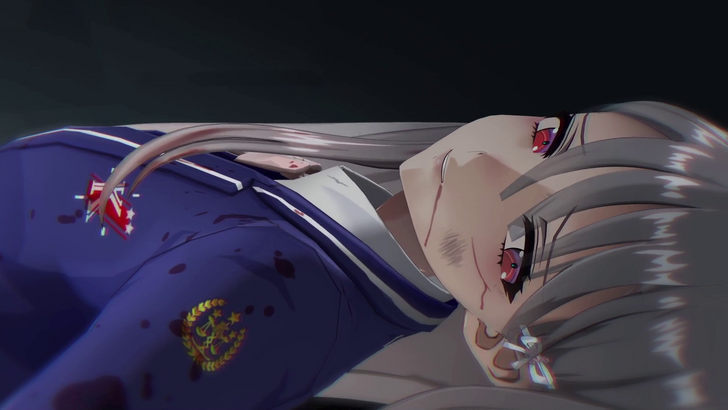
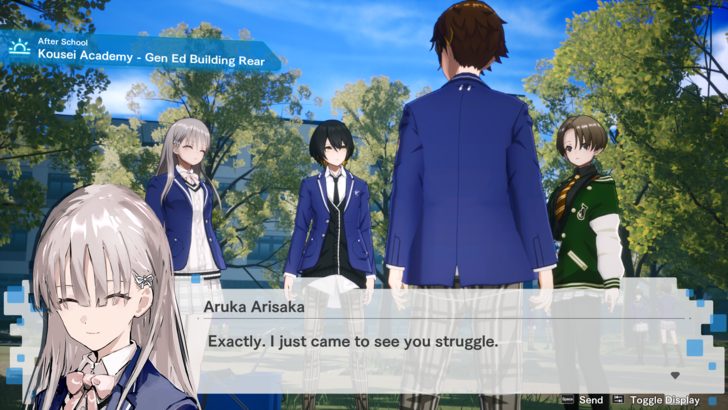
This habit of pulling random developments out of a hat that doesn’t even exist is one of VARLET’s most consistent narrative pain points. For example, suddenly being told you’ve known Aruka, one of the main characters, from childhood? Yup, that’s a blatantly shoehorned detail just to patch over a prior cutscene. Or how about Noa and Sota never really questioning the science or logic behind the existence of Glitches (alternate worlds) hard enough, despite being proven that it exists? "It’s magic, don’t think about it"?
And the worst part is, these aren’t rare slip-ups. They pop up so frequently in every arc that it becomes impossible to take the story seriously after finishing even a single one. Sure, a few of these issues eventually get addressed, but never in a timely fashion. The result is an experience that comes off as incredulous at best, and outright stupid at worst.
Gameplay Could Use Some Polish
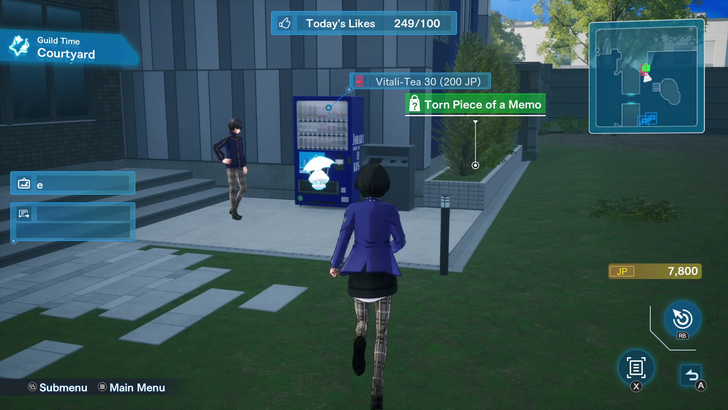
Thankfully, VARLET’s gameplay isn’t nearly as bad as its story. In fact, it’s actually quite good, though it suffers from a handful of annoyances that, while minor on their own, pile up enough to be hard to ignore.
For starters, combat options aren’t organized well. Skills and basic actions like Attack or Defend are all lumped into a single list, forcing you to scroll more than you should. Combat animations also drag at normal speed—thankfully the game defaults to 2x, but I strongly recommend cranking it up to 3x. The afternoon exploration segments could also use more variety, since running lost-and-found errands, swatting stray monsters, putting up posters, and eavesdropping on gossip gets repetitive by the fourth in-game day.
Other smaller problems crop up too: sluggish menus, the lack of a Sprint button, overly tanky but otherwise unchallenging enemies, limited map variety, and money that rarely matters. Still, while these nitpicks stack up, they don’t derail the whole experience. At its core, VARLET’s gameplay remains engaging enough to hold your attention for at least several hours…
Is VARLET Worth It?
Not at that price.
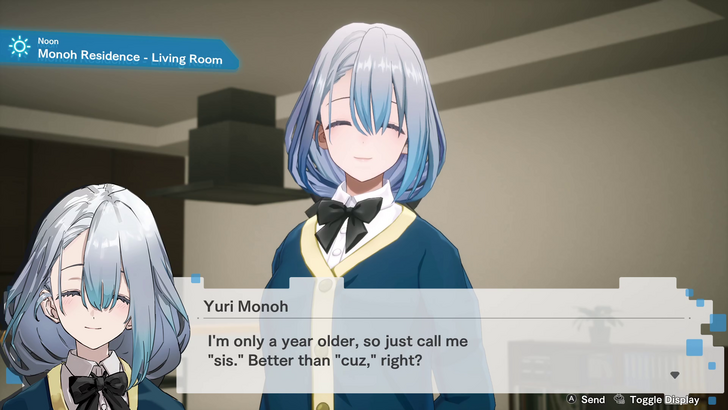
Honestly, if VARLET was priced 20 to 30 dollars lower, I’d have no problem recommending it to anyone looking for a decent Persona-like JRPG every now and then. But at its current jaw-dropping price, I can’t justify giving it a pass. Between the weak story, lack of varied content, and its many other issues, the value just isn’t there, and several hours of enjoyment really is all you’ll get for such a premium price tag.
Skip this one—or wait for a heavy discount.
| Digital Storefronts | |||||||
|---|---|---|---|---|---|---|---|
| Steam |
Epic |
PlayStation |
Switch |
||||
| Price: | $59.99 | ||||||
Game8 Reviews

You may also like...

VARLET Product Information
 |
|
| Title | VARLET |
|---|---|
| Release Date | August 27, 2025 |
| Developer | FURYU Corporation |
| Publisher | FURYU Corporation |
| Supported Platforms | PC, PS5, Nintendo Switch |
| Genre | Action, RPG |
| Number of Players | 1 |
| ESRB Rating | T |
| Official Website | VARLET Website |