


Tomb Raider Definitive Edition Review Overview
What is Tomb Raider Definitive Edition?
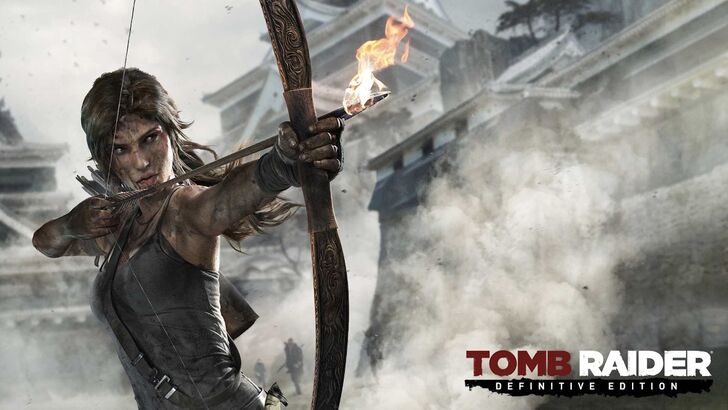
Tomb Raider: Definitive Edition (TR13) is an enhanced version of the original 2013 release. The franchise was rebooted for yet another trilogy, dubbed the Survivor Trilogy, to showcase Lara Croft in a completely new action-adventure journey. The game is set on the fictional island of Yamatai, where the location of the mythical Sun Queen Himiko is said to be found.
After getting shipwrecked due to the unprecedented strength of the storms, you play as the young and ambitious archaeologist, Lara Croft, who discovers that the myth of Himiko’s power of weather control is all too real. Experience Lara’s harsh and unforgiving journey as she attempts to both unravel the history of the lost kingdom and escape from the island.
Tomb Raider Definitive Edition features:
⚫︎ The Iconic Lara Croft
⚫︎ Enhanced Version of the Reboot
⚫︎ Third-Person Action Shooter
⚫︎ Tons of Collectibles
⚫︎ Improved Performance and Resolution
⚫︎ Switch 2 Exclusive Controls
⚫︎ Additional Content
| Digital Storefronts | ||||
|---|---|---|---|---|
 Steam Steam |
 Playstation Playstation |
 Xbox Xbox |
 Switch Switch |
 Switch 2 Switch 2 |
| $19.99 | ||||
Tomb Raider Definitive Edition Pros & Cons

| Pros | Cons |
|---|---|
 Stable 60 FPS Perfect For Handheld Better Resolution Stable 60 FPS Perfect For Handheld Better Resolution |
Impractical Additional Controls Only Upgraded Switch Port Screen Shake is Still An Issue |
Tomb Raider Definitive Edition Story - 9/10
Certain plot points are questionable and fairly linear, but the overall story is great due to its simplicity and grounded nature. It’s arguably the strongest story out of the Survivor Trilogy, and it’s evident with the cast, pacing, and atmosphere. To top it off, Lara Croft’s evolution into a bona fide, yet human, heroine is wonderfully portrayed through all of the trials, violence, and near-death scenarios she had to endure.
Tomb Raider Definitive Edition Gameplay - 7/10
As a third-person action adventure shooter, the reboot doesn’t veer off the rails or try to reinvent the wheel, and it still plays great to this day. It followed the standard formula to the letter, and one could argue that the weakest point of its gameplay is its similarity to its contemporaries. However, it lacked more puzzle-solving segments, where it could’ve showcased the franchise’s identity of having a good balance of action and thought-provoking problems. The Switch 2 port’s additional controls are widely unnecessary, and it would probably be better if they were not included in the first place.
Tomb Raider Definitive Edition Visuals - 7/10
In terms of visuals, it appears noticeably dated and worse than other versions of the port, specifically its lighting and other textures. The Switch 2 supports a higher resolution and has a stable frame rate of 60 frames per second, but the port fails to use the upgraded hardware to its full potential. It’s not bad at all, but it definitely could’ve been better if the port had independent specifications.
Tomb Raider Definitive Edition Audio - 7/10
As for the audio design, it’s pretty good and doesn’t have any noteworthy issues. Everything from the sound effects to the voice acting is great enough that there’s not much to critique.
Tomb Raider Definitive Edition Value for Money - 8/10
Priced at $19.99, the game is an absolute steal for what you’re paying for. Not only is it a great action-adventure experience, but it also offers approximately 12 to 25 hours of content, depending on the level of completion. The issue with its value mainly stems from Aspyr’s decision to play it safe, since it doesn’t take full advantage of the Switch 2’s stronger performance, and it doesn’t offer a Switch-to-Switch 2 upgrade.
Tomb Raider Definitive Edition Overall - 76/100
Tomb Raider (2013) is a great example of how to rebrand a character as iconic as Lara Croft. The darker and grittier tone of the narrative, along with the pivot to standard third-person shooter gameplay, made it a memorable game even among the multitude of similar games at the time. As a Switch 2 port, however, it’s a missed opportunity since it leaves more to be desired, particularly in how it doesn’t utilize the console’s full power.
Tomb Raider Definitive Edition Review: Could've Been Perfect
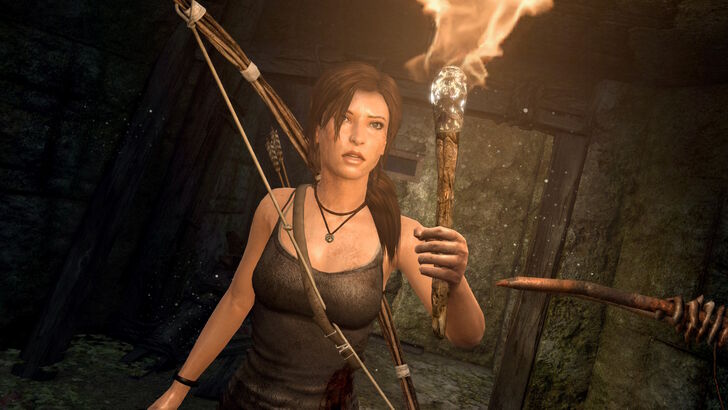
About a decade ago, the third-person shooter gameplay was the meta. Games like Mass Effect, Red Dead Redemption, and Uncharted are a few examples of games that made a mark on the industry and dictated what was popular at the time. It’s not as if it were the only genre that was thriving, but it was a particularly notable era of a certain genre.
One prominent franchise that was missing in action was Tomb Raider, especially given its popularity; it seemed wrong that the Tomb Raider franchise wasn’t the one leading the charge on the action-adventure renaissance. In 2013, however, Crystal Dynamics finally decided that it was the perfect time to reintroduce Lara Croft to the world and reveal her in a different light. Again.
Many, including myself, were surprised by their decision to reboot the series again back then, but looking back, the series seriously needed to reinvent itself. While the Legend continuity was a more narrative and edgier take on the heroine, it didn’t take off as well as they had hoped. So, like many popular franchises before them, Crystal Dynamics wanted to start anew.
Similar to the surprising announcement of the reboot, Aspyr decided to surprise everyone once again with a shadow drop of the Nintendo Switch and Nintendo Switch 2 ports of the game’s enhanced version. To many of us, including myself, this is one of the best early Christmas gifts one could get, especially since you can finally play the game on a handheld device.
But even with Aspyr’s reputation for making good ports, is it actually worth your time? As a self-proclaimed connoisseur of action-adventure games and having played the reboot multiple times, I intend to find out.
The Sun Queen’s Storm
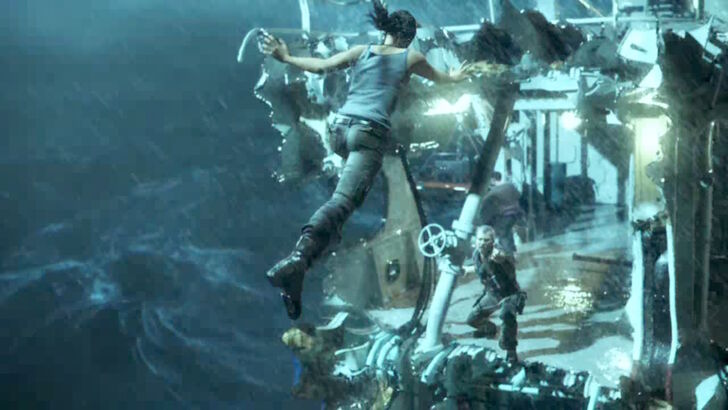
Set on the fictional island of Yamatai, located in the Dragon’s Triangle, you play as a budding archaeologist, Lara Croft, as she, along with her crew, takes an expedition to find the mythical kingdom of the Sun Queen Himiko. It takes a turn for the worse as the storms surrounding the island end up splitting their ship in half and leaving them stranded on the island.
Lara quickly finds out that the locals are not only fanatics of the mythical being, but they’re also hostile. Armed only with her wit and instincts, she must find a way to escape the island with her crew while discovering the myth behind the lost kingdom and the island that keeps them there in the first place.
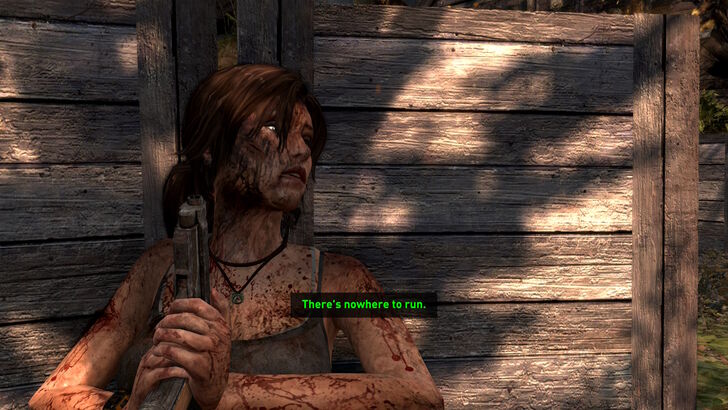
The narrative is a fairly straightforward story with the focus mainly on Lara, her fellow expeditioners, the fanatic locals, and the mythical kingdom. Aside from a few supernatural elements, the game is surprisingly quite grounded, especially considering that the previous games delved too far into the realm of fantasy.
However, what really sets the game apart is its fantastic pacing. While TR13 has a reputation for being "too much action," I would argue that it had a great balance of action, emotional, and intense moments. Hell, I would even go so far as to say that the amount of action segments was needed to showcase the sharp contrast between the violent Solarii Brotherhood and Lara’s young naivety.
Speaking of the Solarii, they’re kind of a pretty basic villainous group. It also doesn’t help that the other notable members of the group, aside from Father Mathias, who’s the main antagonist, are quite forgettable. Comprised of scavengers who found themselves trapped on Yamatai due to the surrounding storms, it’s a group of survivors that has learned to adapt and utilize everything they find.
In a way, their methods of survival constantly trigger Lara’s fight-or-flight instincts, which lead to her slowly becoming a hardened survivor.
The Woman Behind the Icon
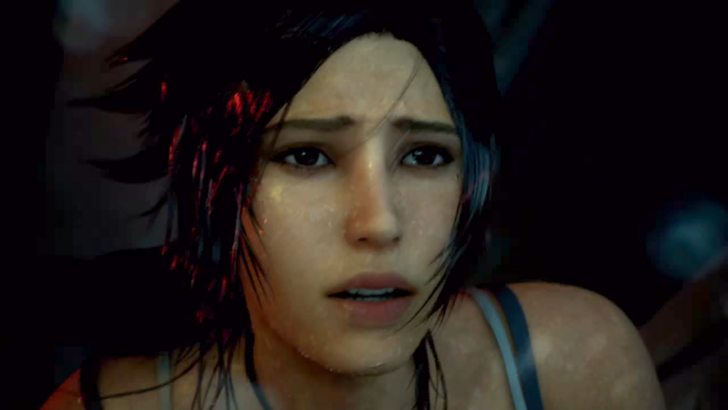
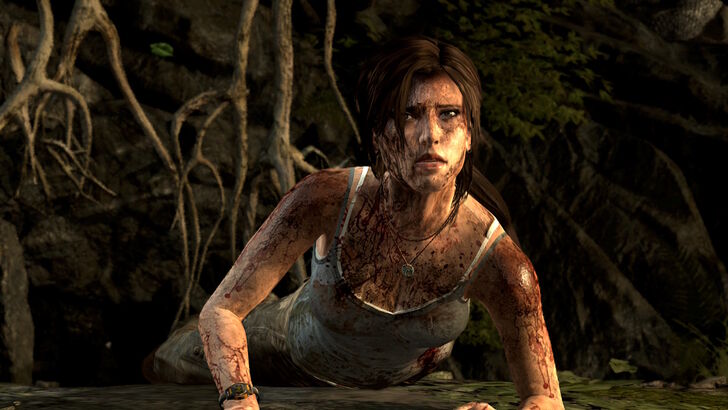
One of the focal points of the reboot is that it explores Lara’s emotional depth, as evidenced by her response to the overwhelming amount of violence she faces early on. It’s a complete 180 on how she was initially portrayed in the past, one that’s noticeably more vulnerable and more emotional. It’s even surprising how she’s functioning at all, as any person would end up either dead or traumatized considering everything that happened to her.
In comparison, her character in the original timeline was more of a thrill seeker, mainly driven by adrenaline, as she found a life of aristocracy boring and mundane. In the Legend timeline, she was more nuanced but evolved more into an antihero as the trilogy progressed and unfolded. So getting a more human version of the dual-pistol-wielding femme fatale was definitely a completely different vibe.
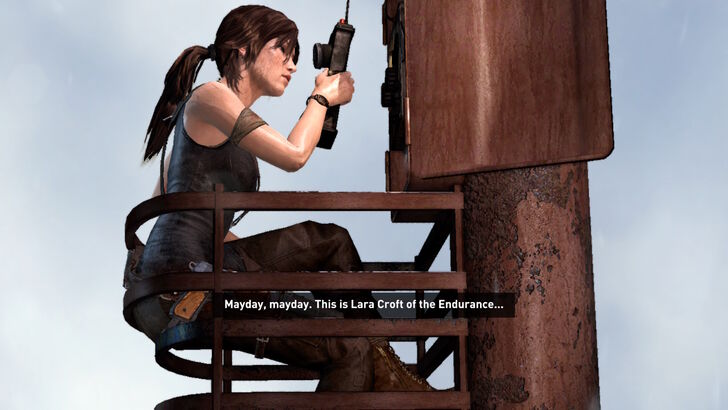
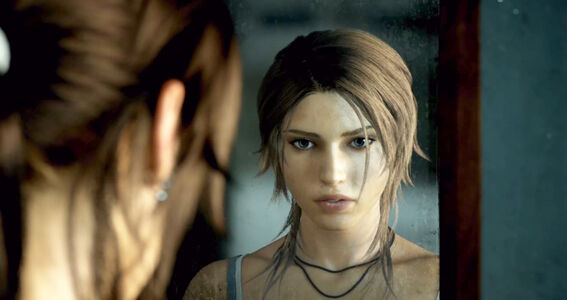
While her appearance is a dead giveaway that changes the more you progress, her behavior from when you started also changes. This is most evident in the scene where she finds herself in her cabin on the shipwreck of the Endurance, where she sees herself in the mirror after everything that’s happened so far. There are also less obvious changes to her demeanor, especially when she stops doubting herself whenever she has to do something later on.
Despite everything she goes through, her attitude towards discovering artifacts and various treasures remains admirable. It’s like her curiosity always gets the better of her anytime she finds something new, which is a bright spot for someone who's gone through as much trauma as her.
Still Plays Like a Dream
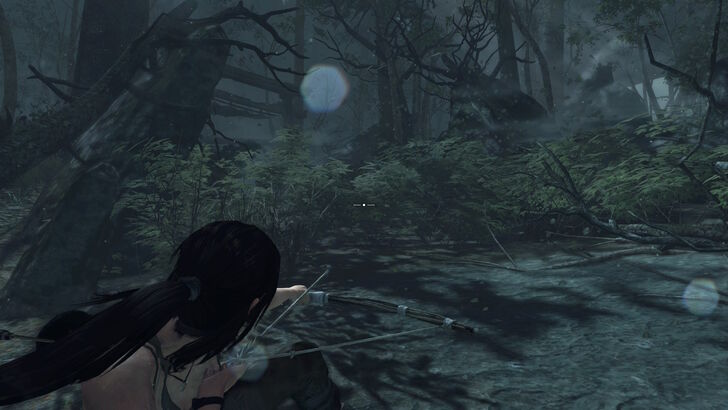
In terms of its gameplay, it still plays really well. The gunplay, stealth, and overall action are still enjoyable despite the game’s release more than a decade ago. However, the age is definitely noticeable, particularly with the forced quick-time events (QTEs) that happen throughout the game.
For the uninitiated, the gameplay is a standard third-person action-adventure, very similar to the likes of the aforementioned Uncharted series. What makes it different is that Lara actually has more weapons, tools, and abilities to play around with. Sure, you could go on full-on gunfights with the enemies, or you could go quiet with the bow and take down groups of enemies silently.
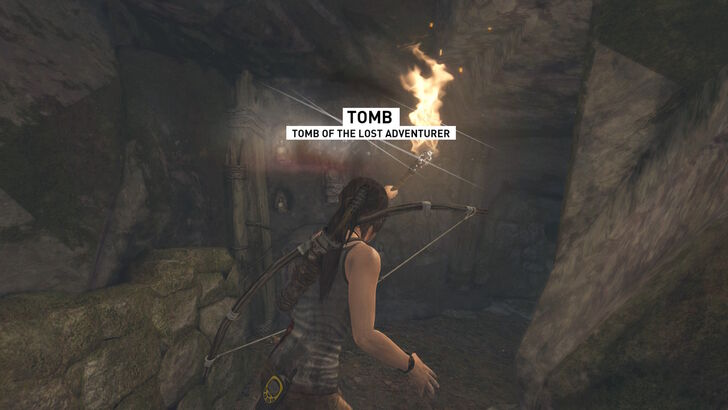
Additionally, the puzzle segments of the game, especially in the optional tombs, change up the pace quite a bit. It gives you a break from all the shooting, and some are even more thought-provoking than expected, which really brings back the classic Tomb Raider feel. It’s also noticeable that there aren’t enough of these in the game, as they definitely needed more of these to break up the intensity of the action later on.
Perfect on Handheld
One thing about action-adventure games is that they transition really well to handheld devices. With the Tomb Raider: Definitive Edition Switch ports, they’re amazing on these platforms. Surprisingly, the base Switch plays at a stable 30 frames per second, albeit with a sacrifice to visual fidelity. On the other hand, the Switch 2 version is at a stable 60 frames per second and has a higher resolution, resulting in a much clearer and smoother visual experience.
Almost Is Never Enough (At Least For Me)

While the Switch port is great considering the console’s age, it’s a significant missed opportunity for Aspyr to not take advantage of everything that the Switch 2 has to offer. In essence, the features that they did take advantage of feel lackluster and unneeded for the most part.
Particularly, the added controls (gyro, touchscreen, and mouse) aren’t particularly useful. The gyro and touchscreen controls only work on menus, which makes these features feel tacked on and just included to say that they were added. The mouse controls, on the other hand, are problematic, mainly because the sensitivity and the overall ergonomics are unwieldy and impractical.
The Switch 2 version of the game is essentially the Switch port, but with 60 FPS, a higher resolution, and additional controls.
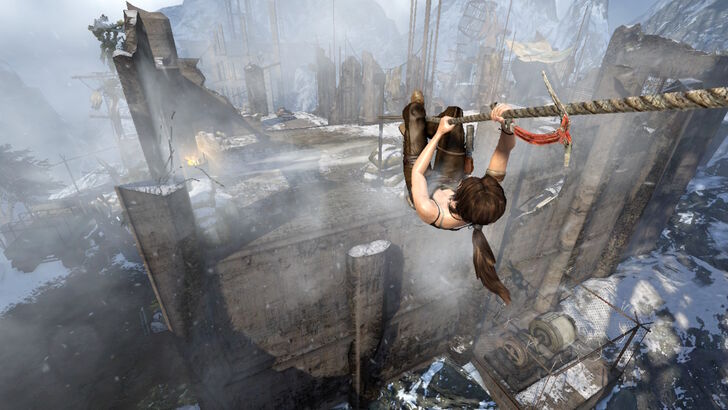
As we all know, the Switch 2 can definitely handle PlayStation 4-level titles, which means that all of the enhancements made in the PS4 version, specifically the TressFX hair upgrades, lighting improvements, texture upgrades, and newer character models, could’ve been in the Switch 2 port. The presentation of the game suffers a big hit due to this, especially since the upgraded resolution also highlights the flaws in its anti-aliasing.
Lastly, given that the Switch 2 port essentially runs the base Switch version but with slight improvements, the lack of an upgrade option from the base Switch version to the Switch 2 version is puzzling. Also, they could’ve added a way to lessen the screen shake in cutscenes, since it’s a very sickening feature that could’ve been left behind.
Is Tomb Raider Definitive Edition Worth It?
Yes, An Absolute Steal For the Price.
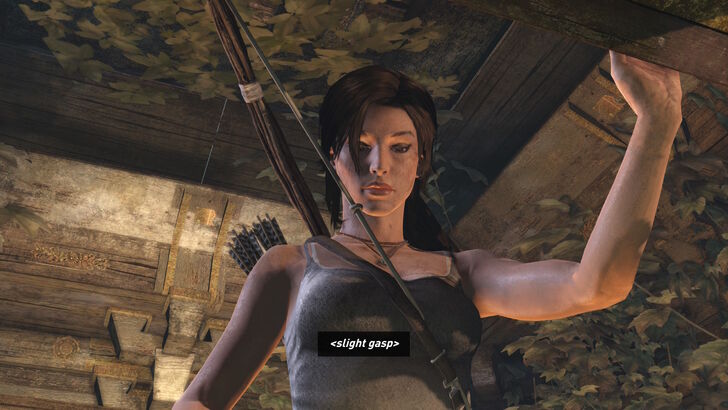
The Switch 2 port of Tomb Raider: Definitive Edition is still, without a doubt, a great port. Priced at $19.99, the game offers one of the better action-adventure experiences of all time, one that ages gracefully even if it’s been more than a decade since its initial release. With the game running at a stable 60 FPS and a higher resolution, it’s already enough to be a good port. But sadly, it could’ve been perfect, especially if Aspyr decided to go all the way.
Regardless, I recommend this game to everyone looking for an action-adventure title or even those new to the genre. I wouldn’t recommend the Switch 2 port immediately, since the game could be played on a handheld PC instead. However, it would be the second option I would recommend, since the portability is just way too good a deal to pass up.
| Digital Storefronts | ||||
|---|---|---|---|---|
| Steam |
Playstation |
Xbox |
Switch |
Switch 2 |
| $19.99 | ||||
Tomb Raider Definitive Edition FAQ
Does Tomb Raider: Definitive Edition Have a Switch to Switch 2 Upgrade?
No. You must buy the version you want independently.
In Tomb Raider: Definitive Edition, Is There a Way to Lessen Screen Shake for Cutscenes?
No. This feature is not available for the first game in the Survivor Trilogy, as it was only added in the second and third releases.
Game8 Reviews

You may also like...

Tomb Raider Definitive Edition Product Information
 |
|
| Title | TOMB RAIDER: DEFINITIVE EDITION |
|---|---|
| Release Date | January 28, 2014 (PlayStation 4, Xbox One), April 24, 2024 (Windows) November 18, 2025 (Nintendo Switch, Nintendo Switch 2) |
| Developer | CRYSTAL DYNAMICS |
| Publisher | Aspyr |
| Supported Platforms | PC (Steam, OS X), PlayStation 3, PlayStation 4, Xbox 360, Xbox One, Nintendo Switch, Nintendo Switch 2 |
| Genre | Action, Adventure |
| Number of Players | 1, 4v4 (Online Multiplayer) |
| ESRB Rating | M 17+ |
| Official Website | Tomb Raider Definitive Edition Official Website |