


| Metroid Prime 4: Beyond | |||
|---|---|---|---|
| Release Date | Gameplay & Story | DLC & Pre-Order | Review |
Metroid Prime 4: Beyond Review Overview
What is Metroid Prime 4: Beyond?
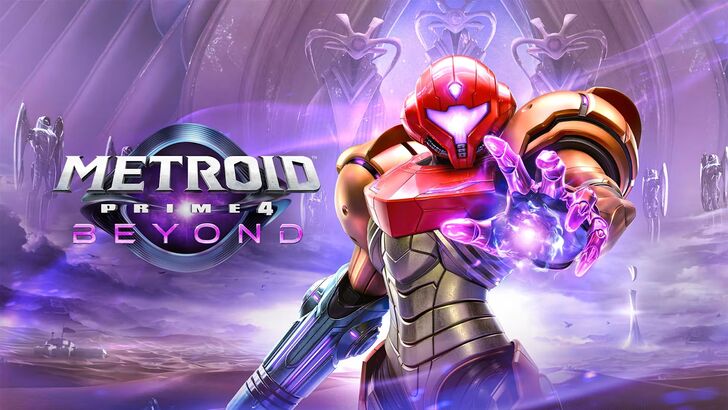
Metroid Prime 4: Beyond is the fourth main entry in the Metroid Prime series. It is a first-person action-adventure game developed for the Nintendo Switch and the Nintendo Switch 2 by Retro Studios and published by Nintendo. Although it follows the previous entries in the Prime series in terms of numbering, the developers at Retro Studios frame it as the start of a new story arc, meaning newcomers can jump in without prior experience of earlier titles.
The game begins with the series protagonist, Samus Aran, responding to an incident at a Galactic Federation base. This confrontation leads to a conflict with the rival bounty hunter Sylux, an antagonist first introduced in Metroid Prime Hunters. An ensuing event transports Samus to the planet Viewros, along with scattered Federation allies. They must, then, investigate the ruins of the extinct Lamorn civilization and secure objects needed to activate the Chrono Tower, which offers a means of escaping the planet.
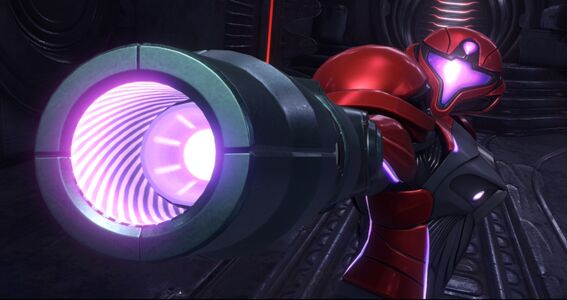
Consistent with the previous titles, gameplay combines first-person shooting, platforming, and puzzle-solving, built around the traditional Metroidvania progression system where new abilities unlock previously inaccessible areas. Players still gather information about the environment and lore by using the Scan Visor, as well as explore small tunnels by transforming to the Morph Ball. New to this installment are psychic abilities gained from the Lamorn. These powers allow Samus to manipulate energy motes for puzzle-solving and utilize an enhanced Control Beam that can target multiple points simultaneously.
Metroid Prime 4: Beyond features:
⚫︎ New Psychic Abilities
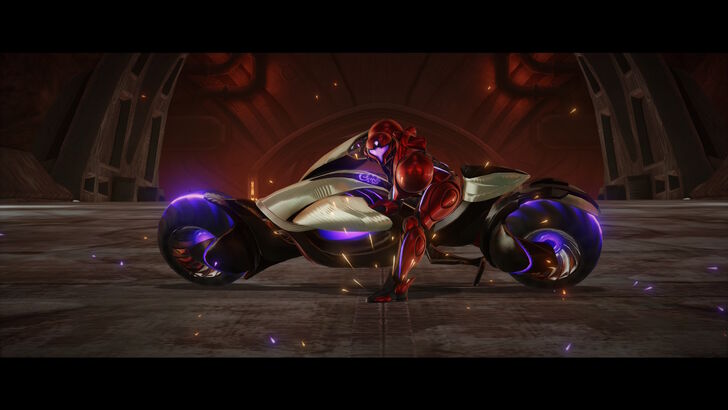
⚫︎ The Sol Valley Desert Hub World and the Vi-O-La Motorcycle
⚫︎ Enhanced Performance and Controls on Switch 2
⚫︎ Galactic Federation Troop Allies and Interactions
⚫︎ Environmental Storytelling
⚫︎ First-Person Mechanics
For more gameplay details, read everything we know about Metroid Prime 4: Beyond’s gameplay and story.
| Digital Storefronts | ||||||
|---|---|---|---|---|---|---|
 eShop eShop |
 eShop eShop |
|||||
| $59.99 | $69.99 | |||||
Metroid Prime 4: Beyond Pros & Cons
| Pros | Cons |
|---|---|
 Looks Absolutely Amazing on the Switch 2 Responsive Controls With Multiple Options, Including Motion Engaging Environmental Storytelling and Puzzles New Psychic Abilities and Memorable Boss Encounters Looks Absolutely Amazing on the Switch 2 Responsive Controls With Multiple Options, Including Motion Engaging Environmental Storytelling and Puzzles New Psychic Abilities and Memorable Boss Encounters |
Sol Valley Feels Empty Unnecessary Hints From Other Characters The Galactic Federation Crew is a Roster of Clichés |
Metroid Prime 4: Beyond Story - 9/10
Prime 4’s story mostly unfolds through the environments themselves, with every ruined facility and alien ruin whispering a history you uncover piece by piece via the Scan Visor. Samus lets the world around her do most of the talking… except for the times when she’s not alone. The Galactic Federation crew tagging along are tolerable, but they’re mostly a parade of archetypes spouting clichéd lines. The game doesn’t chain them to Samus’ hip, fortunately, so most of the time, the game relishes in its ambient solitude.
Metroid Prime 4: Beyond Gameplay - 8/10
The game largely sticks to the series’ tried-and-true formula: explore labyrinthine zones, fight a boss, unlock upgrades, backtrack to access previously unreachable areas, and so on in perpetuity. It’s still the satisfying Metroid loop you expect, now enhanced with new psychic abilities that give new ways to play old toys. My biggest gripes are the game’s occasional handholding when accompanied by the Galactic Federation crew, and the Sol Valley Hub, which frequently interrupts the flow of gameplay by feeling largely empty.
Metroid Prime 4: Beyond Visuals - 9/10
The graphical fidelity of Metroid Prime 4: Beyond often feels like an anomaly on its host console; characters and enemy models are rendered with an immaculate level of detail that defies expectation. Art direction in the environments and the architecture of the Lamorn race, most of all, captures an epic scope. This, however, occasionally stretches thin, particularly when traveling Sol Valley, an area that commits the sin of being aesthetically competent yet fundamentally uninteresting across its sandy miles.
Metroid Prime 4: Beyond Audio - 9/10
The audio design in Prime 4 effectively channels the isolation and tension established by previous titles. New electronic and choral scores are well-matched to the moods of the unexplored biomes. However, not all tracks are equally memorable, and many are overshadowed by the far louder sound effects of weapons, machinery, and enemies.
Metroid Prime 4: Beyond Value for Money - 9/10
Metroid Prime 4 clocks in at around 15–20 hours for the main campaign alone, which is on par with the other titles in the series. Its $70 price tag might feel relatively expensive to a lot of players, but there are a lot of incentives for a second run after the first. It’s pricey, but the ride on Vi-O-La is smooth enough that you probably won’t mind handing over the fare.
Metroid Prime 4: Beyond Overall - 88/100
The return to the view behind Samus’ visor is utterly magnetic, especially with the isolated atmosphere that defines the best entries in the series. Unfortunately, this experience is intermittently kneecapped by a hub area that feels almost empty and excessive handholding. Although it doesn’t quite ascend to the legendary status of its predecessors, it is still an excellent first-person action-adventure that makes the eight-year wait worthwhile.
Metroid Prime 4: Beyond Review: Goes Far and Beyond
This Morph Ball Fits Differently
I only really got into Metroid not too long ago. In the weeks leading up to Metroid Prime 4: Beyond, I figured the best way to prepare for it was to track down a used copy of Metroid Prime Trilogy on the Wii and run through all three games again. It felt like the obvious move if I wanted a better sense of where the 3D side of the series had been before stepping into the newest entry. I had played bits and pieces of the trilogy when it first came out, but I never got far. I was a kid who didn’t know what to expect from a first-person action-adventure filled with hostile aliens, and I didn’t have the patience or the understanding to appreciate what Retro Studios was actually doing with the franchise.
Revisiting them as an adult made all of that feel almost funny in hindsight. The games didn’t change; I did. And seeing how those ideas were put together, how much intention and restraint went into them, gave me a new respect for the trilogy that I just didn’t have the first time around.
Almost twenty years have passed since 2007’s Metroid Prime 3: Corruption, and even with all the familiar names attached, the new game doesn’t feel like a simple continuation. After almost two decades, you’d expect a game like this to lean on familiarity to keep expectations in check, but it doesn’t feel like it’s treating its own history as a cage. If anything, it seems comfortable borrowing from Nintendo’s other big series, The Legend of Zelda, in how it approaches one of its big additions. How it’s being integrated with the traditional Metroid Prime formula, however, I feel, is a point of contention.
Samus is the Chosen One, Again

The game opens with Samus being pulled back into Federation business, this time to help defend an outpost that houses yet another unknown artifact. The Federation treats it like it’s the next big thing in their catalog of hazards, and the Space Pirates treat it like it’s theirs for the taking, so naturally Samus ends up in the middle of the siege. It’s a cutscene-heavy introduction, and it doubles as the game easing you through its systems while still letting Samus feel like she’s at the top of her game.
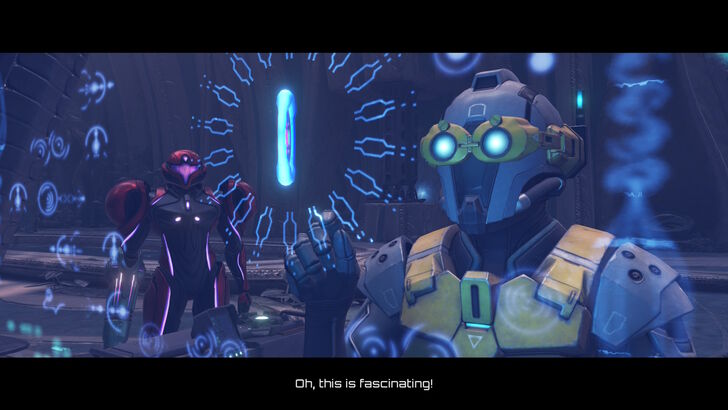
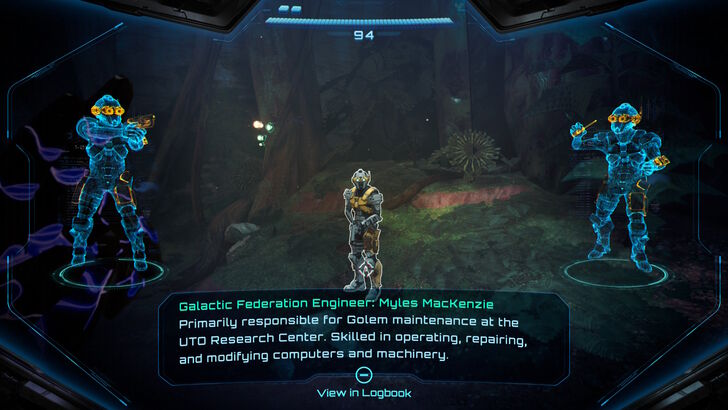
The tension ramps up when Sylux (a character originally introduced in Prime Hunters and long teased in Prime 3) shows up and eyes the artifact. Whatever it is, he wants it either under his control or erased entirely. In the ensuing fight, the artifact is activated, which then creates an energy anomaly that consumes the surrounding area. Samus and a handful of Federation survivors (including engineer Myles MacKenzie, whose reputation has been doing laps around the community lately) are thrown across the galaxy and dumped onto an uncharted planet called Viewros. In typical Metroid fashion, Samus’ suit gets stripped of its upgrades as a result of the anomaly.
It is here on Viewros that Samus discovers the remnants of an ancient and seemingly extinct civilization called the Lamorn who bestows upon her a new set of psychic abilities and they appoint her as the "Chosen One" who will carry their memory forward. Her main goal, though, is simple: Find a way off Viewros and bring the stranded federation crew home, everything else—the prophecy, the powers, the artifact, Sylux—a hum in the background she can’t fully shut out.
Prime 4 gives you a solid enough narrative to guide you through the game’s many areas. Its story isn’t going to make anyone cry or recoil from the tragic hubris and mea culpa of the game’s cast, and thankfully it avoids the overwritten introspection that torpedoed Other M. It is more interested in the Lamorn themselves: how they lived, how they fell, and what remains of their world for Samus to piece together. Most of that discovery comes through the Scan Visor, which returns with its familiar sound effect.
You sweep your visor across murals, remnants, machinery, and traces of wildlife, and the game hands you fragments of a culture that’s been wiped clean. The broad strokes are easy enough to follow, but the depth comes from allowing yourself to be curious enough to poke around and fit pieces together at your own pace.
If Only the Galactic Federation Crew Could Do as Samus Does
Samus remains silent throughout PRime 4, but silence doesn’t flatten her. Erin Yvette’s performance, built entirely on breaths, reactions, strained effort, and those moments where Samus braces herself or steadies her aim, manages to stay more than spoken dialogue would. You’re reminded she’s still human, biologically complicated she may be, every time she takes a hard hit. Her body language isn’t quite the same confidence that defined Metroid Dread’s version of her, but this is a younger Samus, so she may not be as hardened here as she is in Dread. I still very much like how she is presented here.
The involvement of the Galactic Federation members, however, is going to split opinions. Personally, I didn’t mind them being here; they serve the plot decently enough, and they give the narrative a few anchor points outside Samus’ solitude. Their dialogue is undeniably cliché, though. Not offensively so, but they can feel cringey at times. They bring noise to a series that usually prioritizes silence.
It’s a good thing that the story doesn’t chain them to Samus’ hip. They show up often enough to leave an impression, yet for most of the experience, you’re still moving alone through the game’s regions.
If only their presence in the gameplay were as restrained. When you are with them, the constant companion chatter becomes grating fast. They give out unnecessary hints that feel as though the game has lost trust in the player’s ability to connect dots and problem-solve.
I’m not opposed to games giving hints. Metroid Prime, for instance, has always given nudges when players wander too far and too long outside the main objective. However, Prime 4 hits with a much heavier hand. They often feel like someone tapping you on the shoulder every few seconds to say, "so-and-so would probably work with this and that." A simple option to mute companion tips, the same way tooltips can be turned off, would have been much appreciated here.
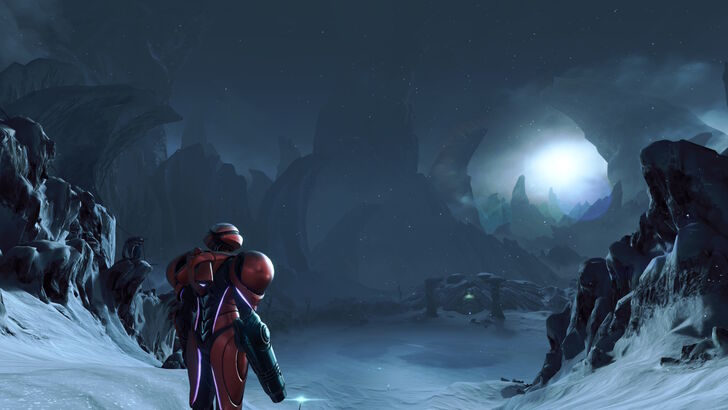
Fortunately, these moments don't happen often. Most of the time, you’re alone, trudging through the five regions of Viewros with only Samus, the hum of alien machinery, the distant sound of something moving in the dark. This is where Prime 4 feels most itself. Exploration becomes a conversation with the world you’re exploring. Samus stands alone in some broken corridor or volcanic stretch, and the environment tells her more about itself than any side character ever could.
Sol Valley Feels Soulless
It helps that these environments look immaculate. Lighting is convincing whether you’re trudging through Fury Green’s jungles or exploring the gothic factories of Volt Forge. Textures on Samus’ redesigned suit, the Vi-O-La motorcycle, and the industrial installations scattered across the locations are sleek enough to catch your eyes, even if your attention should really be elsewhere.
The areas themselves are also clever in how they evolve as you progress. Volt Forge is probably my favorite example. At the start, almost everything is out of power. As you work through the level and turn the forge back on, the environment responds in ways that shift how you traverse it. Towers become more hazardous, previously dormant machinery whirs back to life, and even enemies that were inert at the beginning suddenly are out to get you thanks to the power surge.
The world reacts, almost grudgingly, to your actions. It’s another form of environmental storytelling that I adore from the Metroid Prime series.
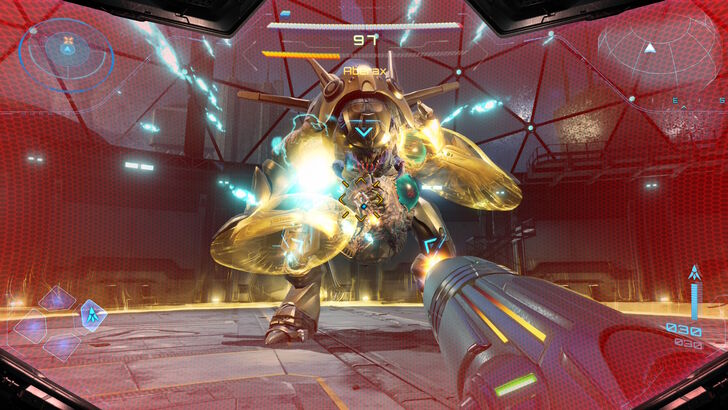
The game runs exceptionally well, too. On the Switch 2, the default Quality Mode pushes 4K at a solid 60fps, and even after long sessions, I didn’t notice a single hitch. For those who prefer higher framerates, there’s a Performance Mode that runs at 1080p, 120fps. On the regular Switch, it runs 1080p at 60fps, which still keeps the experience consistently fluid.
Performance aside, the art direction is really where Retro Studios truly earns its pay. Returning to the classic biome structure (ice level, fire level, forest level, and so on) could have felt rote, but each level brims with density. Alien flora wraps every cavern, and derelict installations feel both functional and hostile at the same time. The atmosphere practically compels you to scan every scrap of alien signage, every wall’s whisper of forgotten utility.
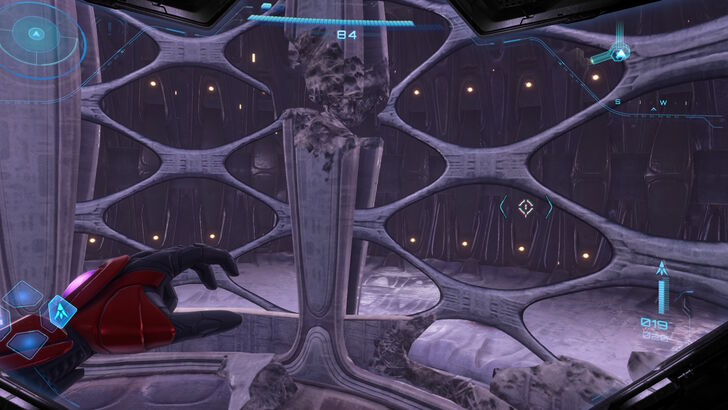
Of course, no presentation is without blemishes. Certain textures still look muddy when examined closely, even on the Switch 2’s Quality Mode, though it’s minor, almost pedantic to notice.
The real blemish, though, is Sol Valley, the desert hub that you’ll explore on the Vi-O-La. Against the richness of the primary locations, it feels hollow. Sure, there are enemy encounters and a few underground puzzles that reward a small power-up, but mostly it’s just sand stretching to the horizon.
I can see what Retro Studios was trying to build here: a connective tissue between mini-labyrinths, something that echoes the open-world design of many modern games. However, not all games need to have a large open world; a game can have substance even without this level of padding.
This decision perplexes me. Metroid Prime thrived on the interconnectivity of its locations, the way a 2D Metroid world folds back on itself. Prime 2 refined this with shortcuts and clever area loops. Prime 3, though moving between planets, still felt cohesive enough to navigate in.
Prime 4 abandons this for an overworld that's reminiscent of The Legend of Zelda: Skyward Sword's The Sky, only with much less things to do. Its five locations sit isolated in the desert like exhibits in a gallery. If you want to use your newly unlocked, say, ice missile on a door in a different area, the backtracking involves you trekking from one end of Sol Valley to the other. The desert isn’t particularly vast, but its emptiness makes journeying it feel like a chore. It offers nothing but sand, sun, and little else.
Playing With Old Toys in New Ways
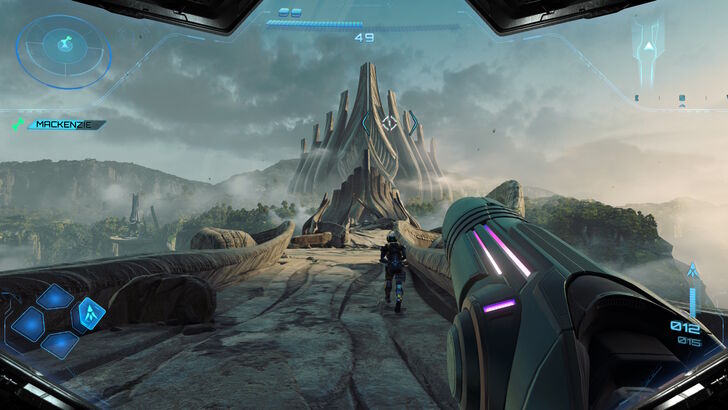
Thankfully, once you leave the emptiness of Sol Valley behind, the five primary locations of Viewros snap the game back into the groove you expect from Metroid Prime. This is the territory where the series’ core DNA flourishes: exploration, combat, puzzle-solving, and the gradual accrual of upgrades that open paths in previously visited areas.
It’s the classic Metroidvania loop, transposed into first-person 3D. And unlike the desert hub, not every addition in Prime 4 feels like an exercise in tedium. Some genuinely enhance the experience, to the point where I hope they survive into future entries as bona fide series upgrades.
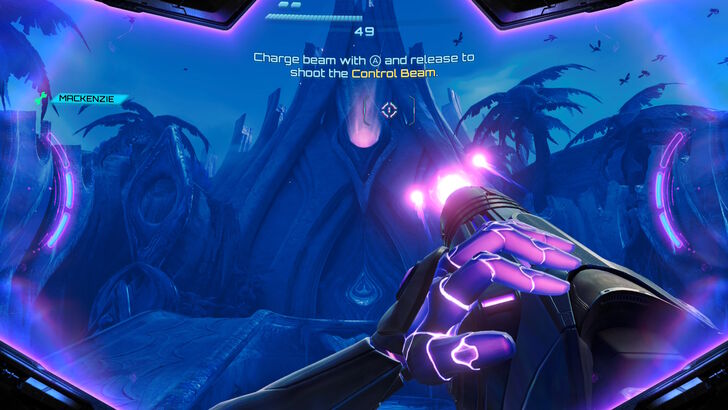
The best addition to Samus’ arsenal are her new psychic abilities, which can fundamentally transform the way you can interact with the world. The Control Beam, in particular, is a small marvel. While channeling her psychic power, Samus charges a beam and fires it. You then manually guide it through in slow motion.
Other upgrades benefit from the psychic abilities in similar ways, and like with the Control Beam, they essentially become new ways for you to play with old toys.
The true test of these new mechanics, however, is in the game’s boss encounters. Without spoiling much, Prime 4 has some of the best boss fights in the series. Each one had me at the edge of my seat, scrambling to fire missile after missile while strafing left and right to avoid bullet-hell-like attacks.
One memorable early-game boss fight was against "Sylux," which has you juggling the Control Beam, switching into the Morph Ball, timing jumps to dodge shockwaves, lining up shots mid-scramble, and more. It’s memorable partly because he appears almost out of nowhere, and partly because the encounter creatively makes use of the upgrades you’ve earned up to that point.
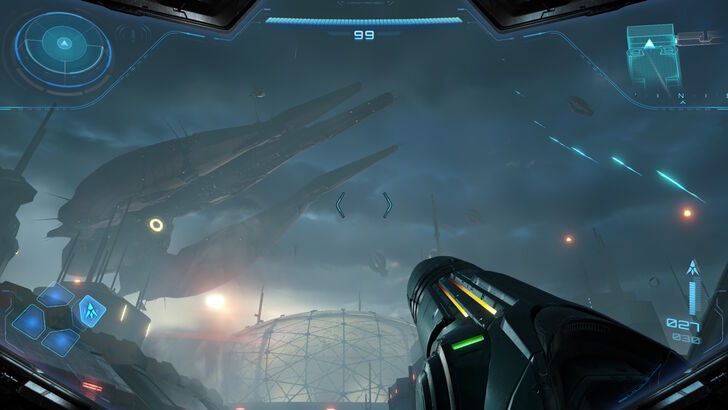
This demanding design is supported by its responsive controls, which you can cater to your preferences, as the game allows button-remapping. Mouse mode works adequately, though the discomfort that comes with it can be more of a reflection of the Switch 2 hardware than the game itself. Traditional stick aiming is solid, but my preferred method, and the one I used for most of my run, are motion controls.
These control similarly to Prime Trilogy on the Wii, updated for the far more accurate gyroscopic sensors of the Switch 2. There’s a minor inconvenience in having to recalibrate the reticle occasionally, but that’s a small price to pay for precision aiming.
Is Metroid Prime 4: Beyond Worth It?
Yes, It is Still Satisfyingly Metroid
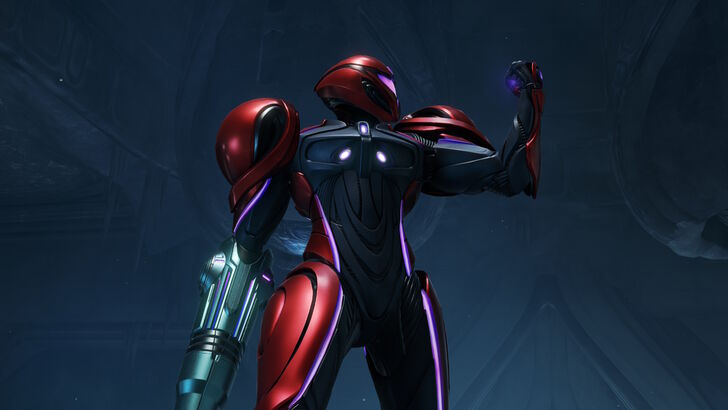
Metroid Prime 4: Beyond clocks in at roughly 15 to 20 hours for a standard run, which might feel brief if you’re counting every dollar against the $70 price on the Switch 2. However, despite my grievances about Sol Valley’s emptiness and the occasional moments of handholding, the game manages to feel weighty enough. It’s a modern Metroid Prime experience in almost every way, taking what worked in the trilogy and layering on a couple of updates that make it feel fresh despite being a decades-old formula. Some sections, like the hub, falter, but those flaws never fully undercut the momentum the game builds as Samus moves from one biome to the next.
A full normal run unlocks hard mode, and chasing 100% completion means scanning every crevice, every alien corridor, every abandoned room. For someone who enjoys uncovering every secret, that alone could double your playtime. The game is compact, yes, but it’s dense, and there’s always something to notice if you slow down and look.
Prime 4 will never fully escape the shadow of its eight-year hype, but that doesn’t mean it’s not a great game. There are flaws, sure, but if there’s a single thought to carry away here, it’s this: The ghost of anticipation is a hungry one, but Beyond offers a feast that will keep it quiet for years.
| Digital Storefronts | ||||||
|---|---|---|---|---|---|---|
| eShop |
eShop |
|||||
| $59.99 | $69.99 | |||||
Metroid Prime 4: Beyond FAQ
What Are Metroid Prime 4’s Amiibo Functions?
⚫︎ The Samus amiibo provides a daily full health restore and a temporary 99-damage shield.
⚫︎ Samus & Vi-O-La amiibo allows for bike color changes and a boost to Vi-O-La's boost energy regeneration
⚫︎ The Sylux amiibo also unlocks a special post-game cinematic without the need for 100% completion, which is the alternative unlock method.
To learn more about what other Metroid Amiibos unlock, check out our article below!
Game8 Reviews

Metroid Prime 4: Beyond Similar Games

Metroid Prime 4: Beyond Product Information
 |
|
| Title | METROID PRIME 4: BEYOND |
|---|---|
| Release Date | December 4, 2025 |
| Developer | Retro Studios |
| Publisher | Nintendo |
| Supported Platforms | Nintendo Switch 2 Nintendo Switch |
| Genre | Action, Adventure, Shooter |
| Number of Players | 1 |
| ESRB Rating | ESRB Teen |
| Official Website | Official Website of the Metroid Series |