| Mega Man Star Force Legacy Collection | |||
|---|---|---|---|
| Release Date | Gameplay & Story | Pre-Order & DLC | Review |
Overview
What is Mega Man Star Force Legacy Collection?
Mega Man Star Force Legacy Collection is a compilation released in 2026 that brings together the complete Star Force subseries of the long-running Mega Man franchise. Developed and published by Capcom, the collection contains all three main entries of the Mega Man Star Force series that were originally released for the Nintendo DS between 2006 and 2008. This includes variants, totaling seven playable titles.
This collection offers the quintessential and improved Mega Man action RPG and deckbuilder experience along with enhanced visuals, competitive online matches, and full access to previously time-limited Bonus Cards. It will be released on March 27, 2026 for PC via Steam, PlayStation 4, PlayStation 5, Xbox One, Xbox Series X|S, and Nintendo Switch.
Mega Man Star Force Legacy Collection features:
⚫︎ Mega Man Star Force Trilogy All in One
⚫︎ Narrative Focused Deckbuilding RPG
⚫︎ Unique Futuristic Sci-Fi Setting
⚫︎ Online Features
⚫︎ Quality of Life Additions
⚫︎ Post-Game Challenges
For more gameplay details, read everything we know about Mega Man Star Force Legacy Collection’s gameplay and story.
| Digital Storefronts | |||
|---|---|---|---|
 Steam Steam |
 PS PS |
 Xbox Xbox |
 Switch Switch |
| $39.99 | |||
Mega Man Star Force Legacy Collection Review: An Underrated Mega Man Spin-off You Should Play
Capcom’s Best Legacy Collection So Far
I have a confession to make. My love for card battlers and deckbuilders never started with the roguelikes we have today.
Sure, Slay the Spire and Balatro have sharpened and reinforced it, but they weren’t responsible for why I liked the genre. That distinction goes to what I consider underrated card battlers, Mega Man Battle Network and its spiritual sequel, Mega Man Star Force. These games were a weird blend of narrative-focused RPG card battlers with their own unique twists, and were only available on older Nintendo handheld consoles.
Until now, that is.
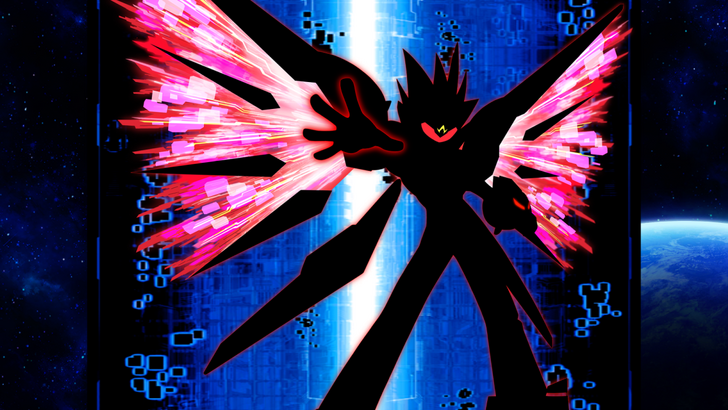
After the announcement of the Mega Man Battle Network collections, I thought, “There’s no way Star Force is going to get the same treatment, right?” After all, it was a trilogy that didn’t really live up to the standard that its predecessor held up. Yet, Capcom went for it. I was excited. I could finally play through the other variants and super bosses I missed out on, similar to what I went through with the previous Battle Network Collection two years ago.
As with most remasters, I went in with tempered expectations. Mainly because I didn’t really know what would be included or excluded, even. Like, how were they going to integrate the touch controls and all the other exclusive content? Regardless of what I felt and thought, I was extremely surprised.
I simply wasn’t prepared for a release that’s possibly Capcom’s best collection to date, even if it had a pretty middling story.
Not The Best Narrative, But Delivers When It Needs To
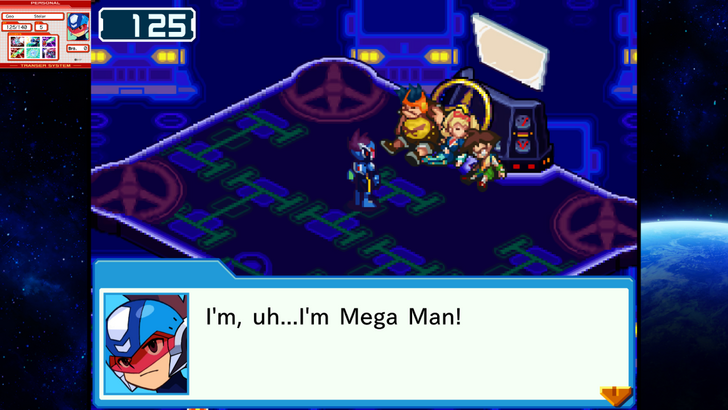
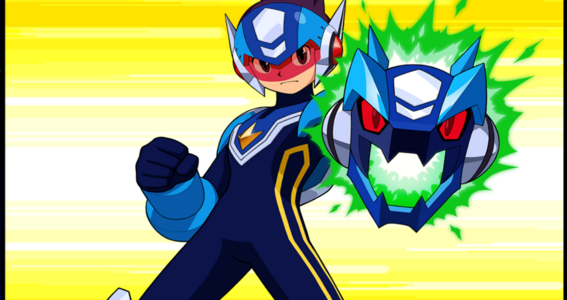
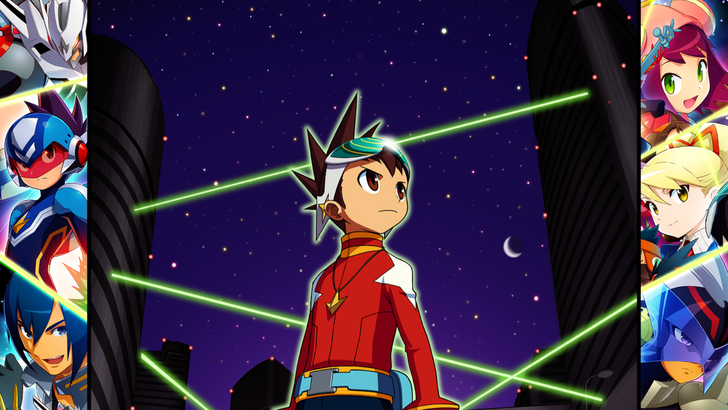
The Mega Man Star Force trilogy is set in the year 220XX, about 200 years after the Battle Network series, in which technology has advanced significantly through the use of EM (electromagnetic) waves. Throughout the trilogy, you follow the journey of Geo Stelar, a young, introverted boy, who meets an extraterrestrial being by the name of Omega-Xis (nicknamed Mega). Together, they utilize the EM Waves to merge into the titular Mega Man.
While I’ve loved the games to death, the narrative starts to crumble when you start to break it down. There’s an overarching narrative in each game, but not all of them are executed well due in part to the forgettable and trope-y side characters and villains. In my case, I actually forgot about some of the villains in the second game, like Yeti Blizzard and Terra Condor. Yes, there are exceptions to this, but it probably would’ve been better if it weren’t the case.
However, that’s not the biggest problem. The main issue is that the storytelling becomes repetitive in how it handles its scenarios. Every “chapter” is a cycle of Geo and his friends doing something, followed by a comically obvious villain showing up to ruin the day, and then finally the day is saved by Mega Man. After all that, the comically obvious villain turns out to be affiliated with an even bigger, comically obvious villain organization, which Mega Man takes on to stop them from ruling or destroying the world.
Of course, it isn’t all negative, as the series does excel at creating a relatable and lovable main cast.
One of the things that makes Geo’s story compelling is that he’s relatable in the sense that he isn’t your typical hero. Over the course of three games, he undergoes a hero’s journey of learning how to deal with the grief of his father’s disappearance due to an accident in space, how to connect with others, and the importance of purpose. His demeanor changes throughout the trilogy as he matures and begins to trust others.
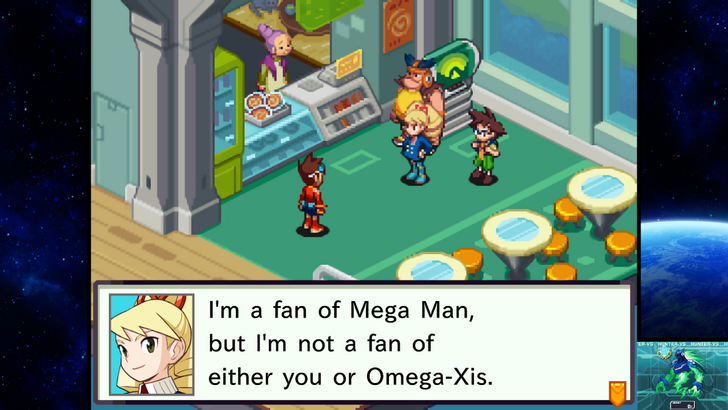
As for his friends, they do end up falling into the realm of tropes, but they’re consistent with how they change throughout the story. The biggest example of this is Prez, or Luna Platz, one of Geo’s best friends. While she’s your typical rich, bossy class president type, she is one of the main proponents of Geo’s acceptance of becoming Mega Man and of opening up to others.
Keep in mind that the series was intended for young teenagers. So while its storytelling may have its flaws, the beauty of its narrative lies in its main characters, as they develop in a way that feels like you’re growing with them. The emotional parts of the story also hit hard at their respective climaxes, tying up their stories perfectly.
Unique Card Battler RPG You’ve Never Played
Let’s move on to its gameplay. It’s hard to visualize an action card-battler RPG, but when you see it in motion, it’s actually a pretty simple game.
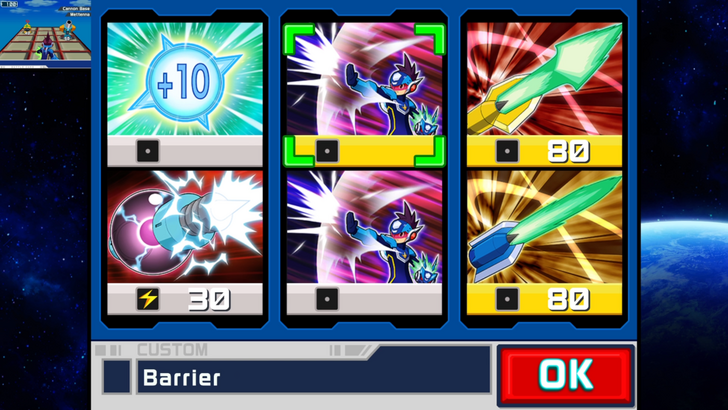
At the start of the battle, you get to choose a number of cards listed as a 2x3 grid following certain rules. Some of the rules may vary from game to game, but the universal principle is that you can choose cards in the same column, and the same cards, regardless of their arrangement. Once you’ve chosen your cards, we move to the combat phase.
Combat is framed in third person and arranged on a grid three spaces wide. You control Mega Man by moving him left and right, as well as the ability to shoot his patented Mega Buster and even block certain attacks. There’s also a command to turn on the lock-on system to help with targeting when using melee-oriented cards. Lastly, there’s also a Counter system, where if you attack an opponent right before they’re about to, you will get rewarded with a random bonus card for that particular turn.
After a set amount of time during combat, you can choose to “check your hand” and move on to the next turn. This cycle goes on until the enemy is defeated, and once you do, you will be rewarded based on your performance in said battle. Rewards mostly come in the form of money, or Zenny in this case. However, a higher rank gives you a copy of the card that’s based on the enemy’s attacks, further reinforcing the Mega Man design of taking the enemy’s ability after defeating them.
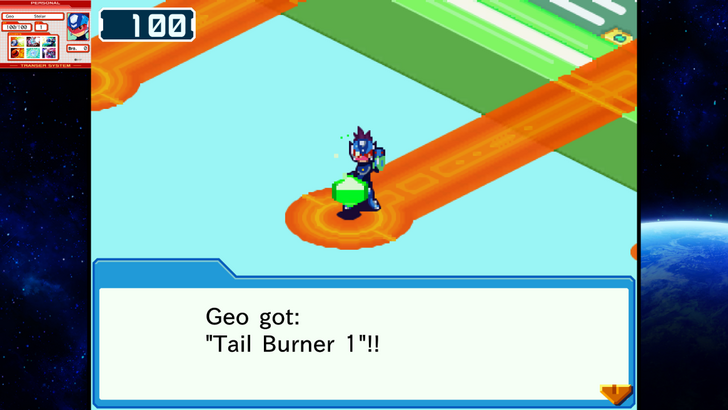
At the time, Mega Man Star Force had a unique blend of action and card battler that I’ve never seen before. While it’s derived from the preceding series, Mega Man Battle Network, the third-person perspective and the emphasis on exclusive mechanics in each title make it a completely unique experience.
Throw in the fact that there’s massive enemy variety, gradual progression, great boss design, and the exploration aspect you'll find in most RPGs and you have the makings of a very entertaining gameplay loop. But that’s not where the fun ends, as the best part of what makes this game shine is with its build variety and deckbuilding mechanics.
Engaging Build Variety
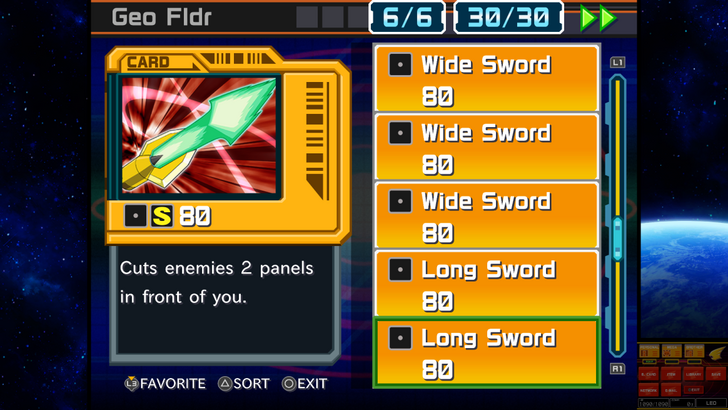
Progression is important in any RPG, and the trilogy nails it in how you build up Mega Man. One part of it is deckbuilding, as it’s a core part of the experience. You collect cards through various means, like defeating enemies, buying them from vendors, getting them from chests, and many more. As you progress through the story, you’ll gain access to higher-tier cards, enabling you to create a deck of synergistic cards to combo with.
However, that’s actually just one part of the build.
Throughout the games, you’ll be introduced to Abilities and even Form Changes. Abilities are slottable passive skills that enhance Mega Man in various ways. These range from simple stat upgrades like an increase in HP, the ability to not flinch when hit, and even an ability that prevents you from taking fatal damage once per battle. Although simple in execution, the number of options you’ll eventually have enhances how you play.
There’s also the topic of Form Changes, which directly enhance Mega Man’s capabilities, like adding damage to certain card types, elements, and more. They double down on this the most in the third game, where there are 10 forms in total and combine 2 of them at a time.
Everything falls into place when you combine all these aspects—forms allow you to create specialized decks, abilities provide you with enhancements to push a particular playstyle, and deckbuilding is the cornerstone of combat. It’s an intuitive system that rounds out the gameplay loop, one that pushes the combat as you gradually progress with newer decks and better abilities.
Challenging Post-Game Content
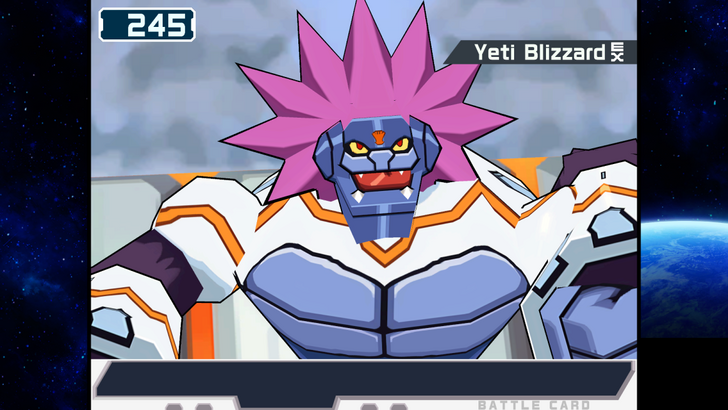
After defeating the big bad in the main story, there are even more challenges that await you post-credits. These come in the form of a short additional story that introduces you to optional superbosses and even reintroduces older bosses from the previous entries in the trilogy. They’re usually gated by a number of things, like completion rate of the Card Library, finished side quests, and many more.
It becomes a gigantic collectathon of grinding enemies to find that one missing card in the collection, as well as a skill check of beating bosses efficiently to earn their higher-tier cards as you beat harder versions of them. And when you’re done with collecting everything? The superbosses are no walk in the park, either.
It’s a true JRPG experience where the post-game is a real challenge that tests your capabilities in understanding the combat mechanics, especially since you’ve already shown that you’ve delved deep enough to challenge them. It’s actually one of the main reasons why I loved the series so much, as there was more to do for players who loved the gameplay.
Online is There, But The Lack of Cross-Play Hurts
On the topic of online matches, the bottom line is that they're there and they work. There’s even a function where you can queue up on all three games at the same time, further quickening the process of finding a match.
But there’s a gigantic flaw at the moment: there’s no cross-play. Sure, I was able to match with fellow players on launch day, but in the following weeks and even months after they’ve finished the post-game content, the player count will dwindle, and online will probably be an afterthought.
Yes, I understand that this isn’t an easy fix or even an easy addition on Capcom’s end to add that functionality. However, it does seem like a big oversight not to include cross-play, as in the Battle Network Legacy Collection, especially given how dedicated the fans are to keeping it alive. I do wish they would add cross-play in the future so I could play against even more players, but I’m not getting my hopes up.
Even Better Than I Remembered
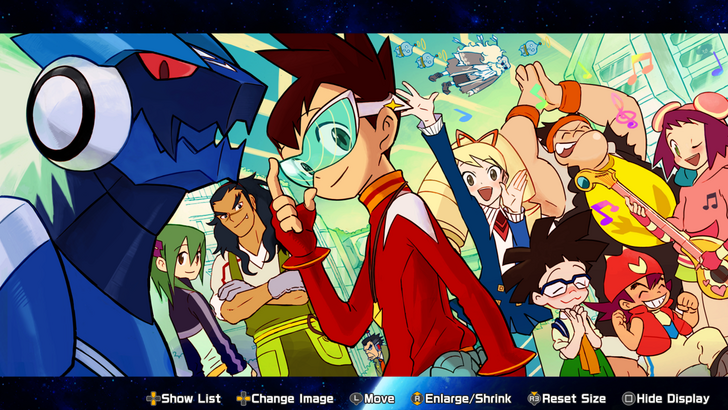
This brings us to what the collection actually adds to the table, especially since there’s actually a lot of it. On the visual side, all of the portraits and card art have been redrawn in HD, making everything look so much better than before. In contrast, though, the upscaled graphics don’t look as good as they should, and I actually suggest you play with the original detailed pixel art instead.
There’s also a ton of Gallery content showcasing never-before-seen concept art, as well as a compilation of all the series' music tracks. Speaking of music, there are new arrangements of every track in each game, which you can freely change on the fly during gameplay.
In addition to all of this, there’s also the inclusion of a much-needed Auto-Save feature and even the ability to create multiple save files for that much-needed safety net. And before I forget, they even added voice acting, adding life to regular gameplay as you explore and beat down enemies.
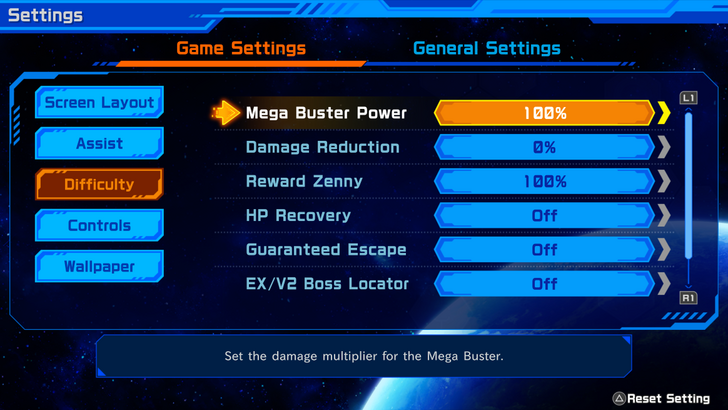
On the gameplay side of things, the collection also adds assist features like a dash button to speed up Mega Man during exploration, a slider to adjust enemy encounter rates to ease the backtracking and eventual grind you’ll have to do for the post-game content. There are even difficulty sliders that you can adjust, like changing the damage multiplier for your Mega Buster, adding HP recovery after every battle, and even the amount of money you receive after winning a battle.
Lastly, previously inaccessible and cut content from the entire series is included in the game. All of the crossovers like the Battle Network side content, the Boktai crossover, and even the additional cards from exclusive merchandise from back in the day, are included in the game. Things like Wave Command Cards, Noise Cards, and unique Cipher Codes are available as soon as you start a playthrough, making it the actual complete version of the series.
Is Mega Man Star Force Legacy Collection Worth It?
Definitely. Don’t Sleep on the Star Force Franchise!
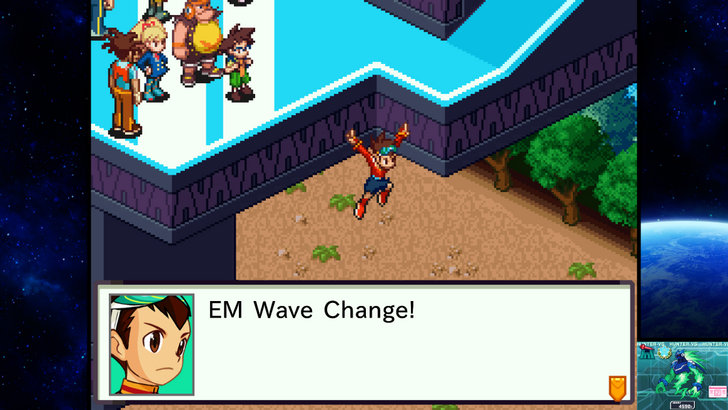
Capcom has quite literally outdone themselves on this collection, and I’m willing to admit that I was wrong to think they were only going to do the bare minimum or at least just as much as the previous collection. What we got instead is what I think is the best overall work in their recent effort to remaster past games, not just in the context of the Mega Man games.
They absolutely did everything to really showcase the best of the Star Force franchise by letting you play any and every variant in the trilogy, adding quality-of-life features, and even restoring exclusive content so that you no longer need cheats to add them in.
Not to mention that the games themselves are amazing to their core; every game feels like a step above the last, and they never omit or make mechanics redundant with each entry. Sure, the story isn’t the greatest, but it manages to impress where it counts, and sometimes that’s what matters most.
It’s quite literally the best way to play Mega Man Star Force, and I would urge everyone to try it out, even if you know nothing about the franchise or about deckbuilding in general. It’s an underrated franchise that deserves the spotlight, one that I think should be recognized now that deckbuilders are becoming the wave.
FAQ
Do I Need to Play Mega Man Battle Network to Understand Mega Man Star Force?
No. Mega Man Star Force, set 200 years after Battle Network, is a standalone sequel with a completely different story.
Are There Variants That Are Considered Canon in Mega Man Star Force?
No. The differences between the variants lie in the forms you can use directly, and nothing that affects the story.
Game8 Reviews