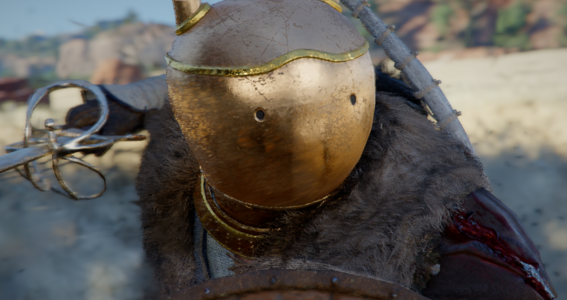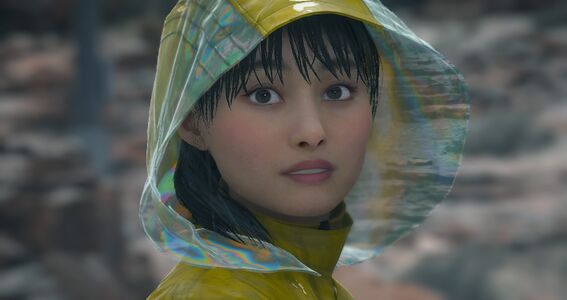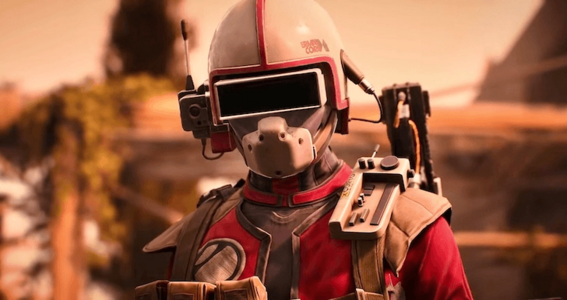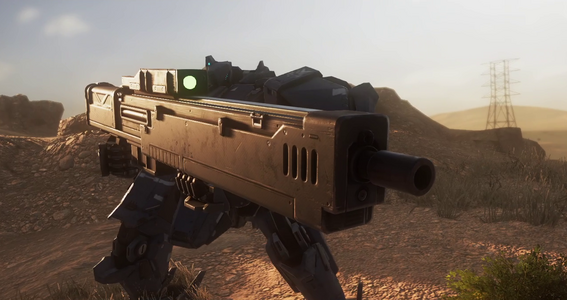

Mecharashi is a tactical, turn-based mecha game that features a unique part-destruction combat system. Read our review to see what it did well, what it didn't do well, and if it's worth buying.
Mecharashi Review Overview
What is Mecharashi?
Set on Milkhama Island, a war-torn land filled with competing mecha factories and deep political intrigue, players take command of a mercenary unit that soon becomes a major force in the ongoing conflict. As you explore the world and take part in battles, you’ll uncover a narrative woven with themes of war, rebellion, and hope. Whether you're strategizing your next encounter or assembling the perfect squad, Mecharashi offers both tactical depth and rich customization in a world shaped by mechanical warfare.
Mecharashi features:
⚫︎ Turn-based tactical gameplay
⚫︎ Part destruction mechanics
⚫︎ Character and mech gacha
⚫︎ PvP arena modes
⚫︎ Mecha customization
⚫︎ Pilot specialization
⚫︎ Various PvE modes
| Digital Store Pages | |||||
|---|---|---|---|---|---|
 App Store App Store |
 Google Play Google Play |
 Steam Steam |
|||
Mecharashi Pros & Cons
| Pros | Cons |
|---|---|
 Decent English Voice Acting Combat is Challenging Yet Fair Pretty Robust Mech Customization Lots of Content Decent English Voice Acting Combat is Challenging Yet Fair Pretty Robust Mech Customization Lots of Content |
Voice Acting Just Disappears Often UI Throws You Back to the 2010s AI Priorities are Backwards Audiovisuals Are Quite a Mixed Bag |
Mecharashi Overall Score - 66/100
Mecharashi is clearly a passion project, but one where the focus on core gameplay came at the expense of everything else. It has a deep, satisfying turn-based combat and robust mech customization, but is constantly undermined by horribly-designed menus, forgettable audio, and underwhelming visuals outside of the mecha models. It’s quite a mixed bag that will overall depend on the player whether or not it’s worth sticking around for.
Mecharashi Story - 5/10
If you’re looking for a cohesive story with solid pacing and meaningful character development, Mecharashi might not hit the mark. Its narrative often gets bogged down by overly complex faction politics, making many scenes feel more convoluted than necessary. It's also paced like the writer was running away from the mafia. Thankfully, it doesn’t completely sink the story—it’s more like extra baggage the game would be better off shedding. At its best, Mecharashi shines when it leans into its identity as an unapologetically dramatic tale of rebellion with giant mechs as part of its claim to fame.
Mecharashi Gameplay - 8/10
While I’d love to shower Mecharashi with praise for its surprisingly deep and satisfying turn-based combat, the overall experience is a mixed bag of delightful highs and frustrating lows. The contrast mostly lies between the gameplay itself—tight, tactical, and quite satisfying—and everything surrounding it, which are really just clunky, low-effort loop of endless menu scrolling. Thankfully, the robust mecha customization system helps lift the overall experience well above just being good.
Mecharashi Visuals - 7/10
Much like its gameplay, Mecharashi’s visuals are a mix of highs and lows. Unfortunately, unlike the gameplay, its impressive mecha models and outstanding cutscenes aren’t enough to pull the presentation out of mediocrity. The dated and clunky UI, a low-effort narrative delivery medium that even modern visual novels would struggle not to outdo, barely passable Live2D character art, and repetitive mecha combat animations all drag the experience down to a barely passable level.
Mecharashi Audio - 6/10
If there’s one word to sum up Mecharashi’s audio, it’s “forgettable.” Honestly, even after several hours of play, I can’t recall a single track—not because the music is bad (it’s actually decent), but because “decent” doesn’t leave an impression. And while the English voice acting is quite solid, the sound effects, which sometimes disappear altogether, wear thin fast thanks to the lack of variety across damage types and combat actions in general.
Mecharashi Value for Money - 7/10
Mecharashi, unsurprisingly for a free-to-play mobile game, features a gacha system—but it’s a fairly generous one at first glance. SSR pilots, for example, have a 1.5% base drop rate, with a 60–40 chance of pulling the rate-up character. Meanwhile, their signature mechs boast a seemingly high 4.5% base rate—but there’s a catch. That 4.5% only applies to one pull within each 10-pull batch, which will always provide a complete mech; the rest use a much lower 1.5% base rate that gives just a single mech part, and you’ll need four to assemble the complete unit. That’s where the generosity starts to feel more like a technicality, really.
Mecharashi Review: A Brilliant Game Wrapped in Duct Tape and Dreams
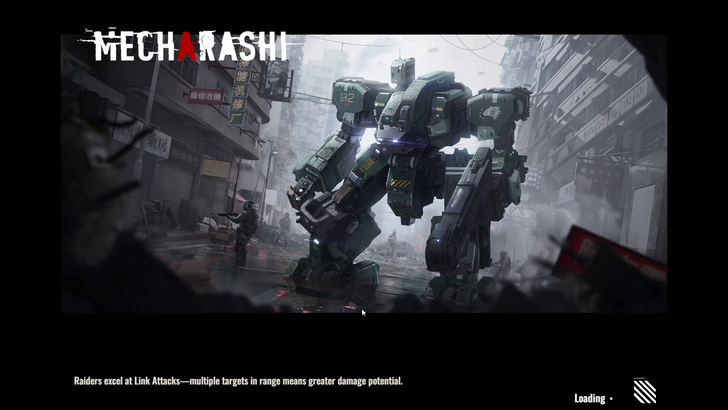
Before we begin, I should be upfront: I’ve never played a single Front Mission game. So while Mecharashi is often described as a spiritual successor to the series, this review comes from the perspective of someone entirely new to that legacy.
That said, after spending over a dozen hours with it, I can confidently say prior knowledge isn’t necessary to enjoy what Mecharashi has to offer. Despite all the criticisms I’ll get into later, it’s a very approachable experience for anyone who loves mechs or turn-based tactics.
So, what’s it actually about? In short, Mecharashi throws you straight into a war between factions because… well, that’s where we hit the game’s first real stumbling block because—
Context? What’s That?
You take on the role of Kaidan Newman, an ex-mercenary with a notorious record and a complete lack of discipline. Despite that, your sheer charisma somehow draws in all sorts of talented individuals from wildly different backgrounds, all eager to join your morally questionable enterprise after your betrayal by the military.
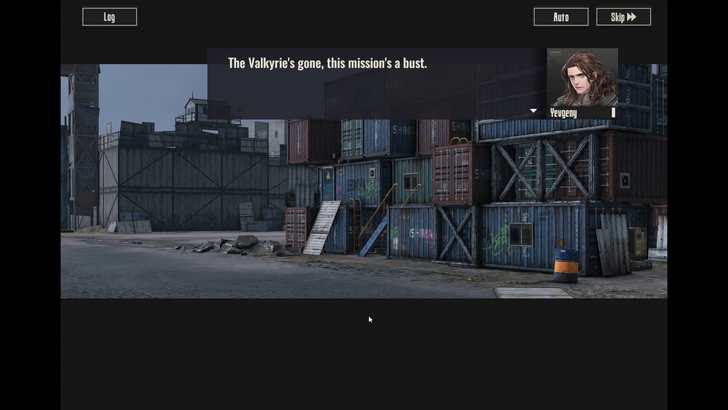
As for why you were betrayed, the game offers no real explanation—neither narratively nor contextually. It treats the incident like some grand mystery that’s meant to shape the fate of the world, yet fails to give it the buildup or importance it clearly wants it to have.
Now, this sort of mystery could’ve worked fine if it had been part of your backstory, to be unraveled slowly across the game. After all, a character’s history is often best explored when tied into major story beats that reinforce their growth or the overarching conflict. But Mecharashi doesn’t give it that chance.
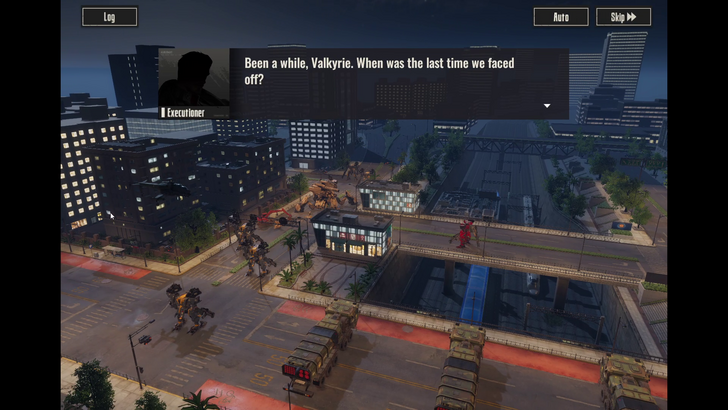
Instead, the betrayal is dropped almost immediately with zero setup, and worse, it’s heavily implied to be tied to a past that the game makes no effort to develop or make the player care about. It feels like the writer was so eager to kick off the “real” story that they skipped all the groundwork needed to make those twists feel meaningful. They even threw in a cliché badass sendoff for a supposedly major character early on… except it falls flat, because we barely knew her enough for it to mean anything.
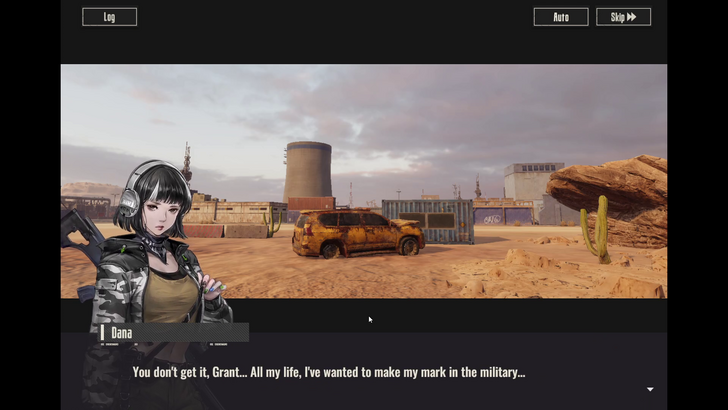
This oversight doesn’t just hurt the main character—it drags the supporting cast down as well. Characters like Dana, your closest ally who once dreamed of rising through the military ranks, end up with no major emotional arcs that go completely unresolved right when it should have mattered the most, simply because the story refuses to slow down and earn its own drama.
At Least the Game Itself is Great
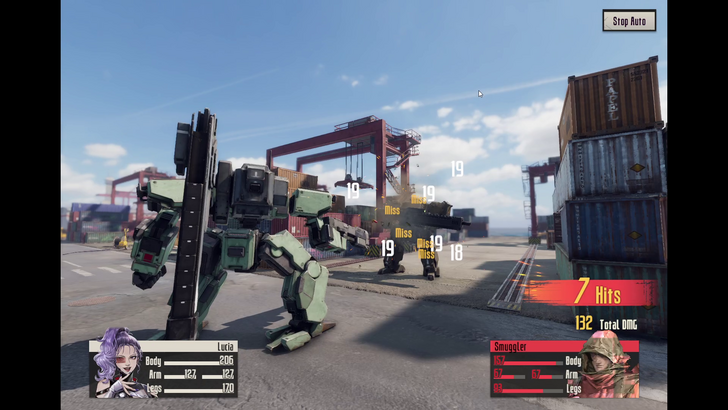
Thankfully, Mecharashi’s messy storytelling is just a minor speedbump hiding a surprisingly gritty, challenging, and rewarding tactical experience—one that fans of turn-based strategy games will likely appreciate. On the surface, it plays like other genre-adjacent titles such as Sword of Convallaria or Disgaea, but the real magic lies in its mechanical depth, particularly in how damage is handled and strategically exploited.
Unlike most games where units rely on a single HP bar, every mecha in Mecharashi has four: one for the body, one for each arm, and one for the legs. Attacks can hit any of these based on targeting priorities, or the complete lack thereof, and each part plays a distinct role in combat. Destroy the legs, and the unit is reduced to crawling across a single tile per turn. Take out an arm, and the weapon attached becomes unusable—or significantly weaker if it’s wielding a two-handed weapon. And if the body is destroyed? They’ll explode in spectacular fashion and evaporate from existence itself.
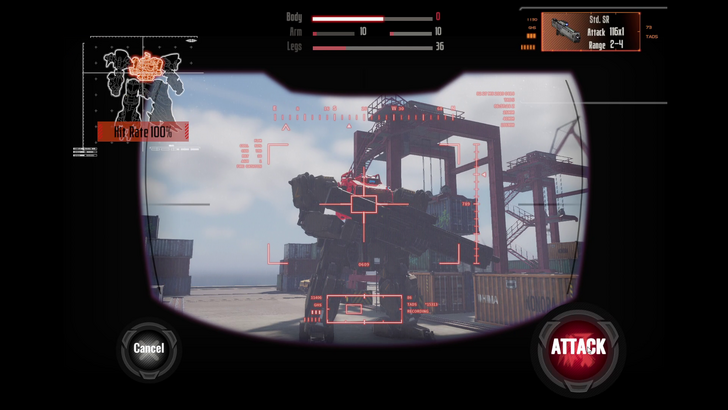
This is where Mecharashi’s excellent combat balance shines. Depending on the weapon or skill, mechas can deal damage in one of three ways: spreading it across all parts, hitting multiple random parts with several instances, or focusing everything on a single target for massive impact. Each approach has its pros and cons, and choosing the right mix is crucial when building your team.
Take pile bunkers, for example. They focus all their damage on a single part, making them great for quickly breaking specific limbs or the body. However, any excess damage is wasted, which can feel inefficient when you’re trying to maximize your offense. On the other hand, heavy machine guns hit multiple parts at random and ensure active limbs keep taking damage—but their spread can be unreliable, often leaving high-priority parts like the body untouched after an entire burst.
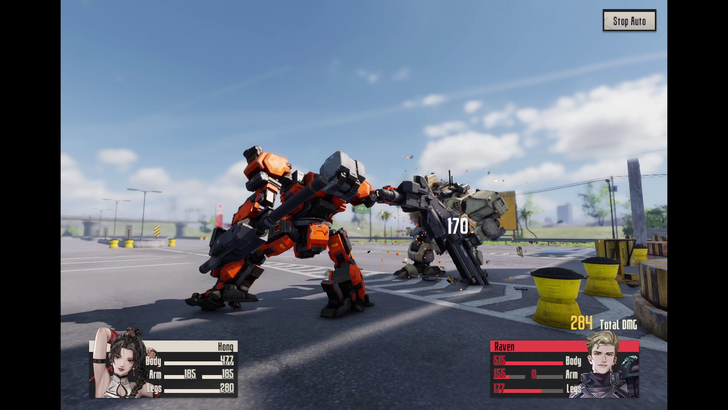
This delicate balance—managing enemy mobility, offensive potential, and overall presence on the field—is the heart of every battle, and what makes Mecharashi so consistently challenging. Unless you’re vastly overleveled, you’re never truly certain whether you’ll walk away unscathed or limp to victory with half your squad down and your back against the wall.
Which brings us to one important tip: don’t trust the AI to play the game for you, especially for difficult or objective-based stages. Its targeting logic is baffling at best, often prioritizing low-HP enemies regardless of distance or tactical urgency. This frequently leads to broken formations and exposes your vulnerable backliners to attacks. Mechanics are especially bad offenders; despite being your main source of healing, they’ll often choose to attack enemies or heal the nearest ally instead of the one who actually needs help, even if they could easily reach them with just a few more steps.
Mecha Customization is Pleasantly Deep
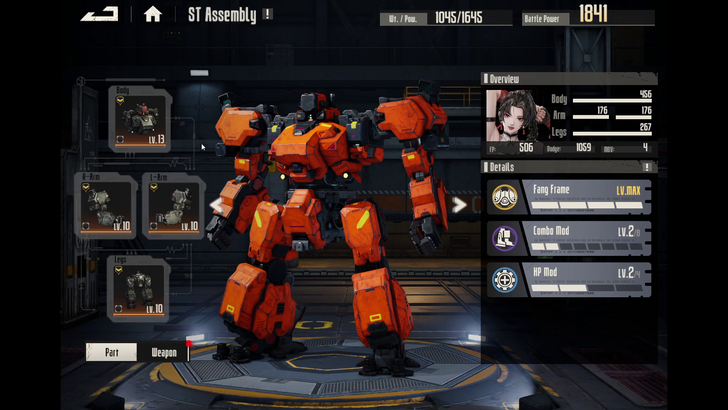
What’s a good mecha game without the freedom to slap on your favorite coat of paint or swap out parts? Mecharashi delivers on that front—and then some. Not only can you customize your mechs visually, but you can also change out weapons and equipment, of which there’s a lot of, provided their frames can handle the weight. Each mech part even comes with passive skills you can mix and match, allowing you to stack effects for hyperspecialization or build versatile, all-purpose units.
Pilots also add yet another layer of customization, functioning as more than just faces for your mechs. Each one brings unique skills and stat specializations that affect how their mech performs in battle. Take Hong, for example—a light-frame specialist with excellent melee instincts, making her ideal for fast, close-range builds using bare fists or pile bunkers. Melissa, by contrast, shines in a support role thanks to her high technical aptitude, making her perfect for field repairs and utility setups.
To top it off, every pilot has unique talents that further define their role, even within the same class. Hong, for instance, gains increasing critical chance as she breaks enemy parts, making her deadly in aggressive pushes. Meanwhile, her fellow Fighter-class pilot Kaidan excels at holding the line, punishing enemies with counterattacks whenever they act within his reach.
An Audiovisual Mixed Bag
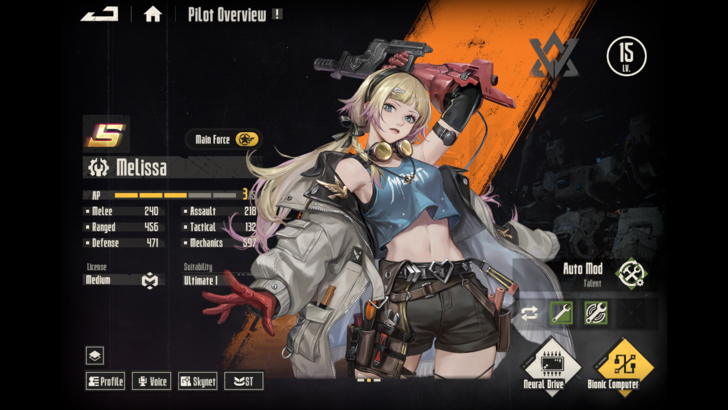
As a whole, Mecharashi feels like a game built on a tight budget—one that clearly prioritized gameplay systems and flashy 3D mech renders, but left little room for everything else. The result is a combat experience that’s genuinely engaging, with impressive visual effects and animations, wrapped in a package that often falls short of even the mid-tier standard for mobile games.
Take the character artwork, for instance. While all portraits are Live2D, which adds some movement and personality, the overall quality is lackluster. In fact, Soccer Spirits, a game that launched all the way back in the ancient year of 2014, boasts smoother, more polished animation work, despite only adopting Live2D midway through its lifecycle. And that was over six years ago.
Then there’s the UI, which feels outdated and slapped together without much thought for user experience. Animations are stiff, with menu transitions that feel more like clicking through PowerPoint slides than navigating a dynamic interface. The layout is equally questionable—core functions like mech customization, pilot progression, and gacha are tucked neatly into the upper right, while equally important features like the shop, archives, inventory, and crafting are reduced to plain text links along the bottom. Meanwhile, the Operation Center—the hub for game modes—sits awkwardly in the bottom-right corner, completely detached from the rest of the UI.
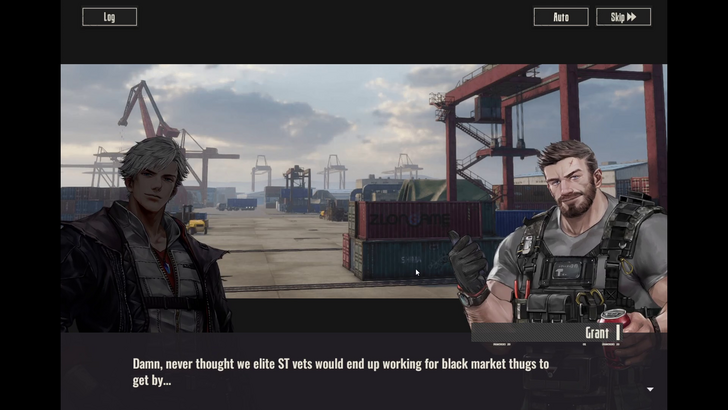
And that’s not all. Surprisingly, the English voice acting—often a weak point in mobile games—is actually quite solid here. The cast delivers their lines with energy and confidence, avoiding the awkward stiffness that usually plagues English dubs in the genre. That’s why it’s such a shame the voice work is so inconsistently implemented. That is, it’s completely absent in random sections, even within the same mode where it’s otherwise present, making the experience feel uneven and incomplete.
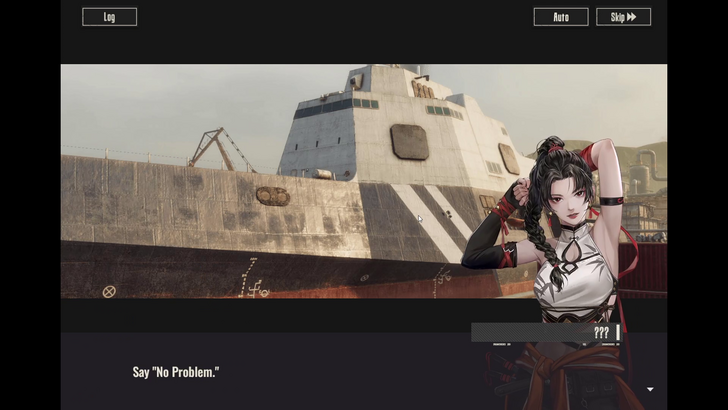
Even the dialogue delivery—presented in a visual novel-style format—suffers from a surprising number of issues. For starters, the game inexplicably limits on-screen characters to just two at a time. There’s no lip-sync at all, even though many low-budget indie visual novels manage to implement it, sometimes despite the lack of voice acting (which begs the question, what’s being lipsynced there?). Worse, when more than two characters speak in succession, the game awkwardly rotates them in and out of the frame, making conversations hard to follow and visually disorienting.
Honestly, if the gameplay wasn’t worth sticking around for, I would’ve dropped it within the first hour.
Is Mecharashi Worth It?
Despite the Score, It’s Worth a Try
If you’re a fan of turn-based tactics and don’t mind the usual trappings of a gacha game, I genuinely recommend giving Mecharashi a shot. It fumbles in more than a few areas, sure, but the core gameplay clearly has heart. And despite all my complaints, I found myself thoroughly enjoying every hard-earned win, and even the crushing losses against bosses I wasn’t ready for. There's also a generous amount of content available from the start, letting you shape your experience however you like—whether that means skipping PvP entirely or diving straight into it.
| Digital Store Pages | |||||
|---|---|---|---|---|---|
| App Store |
Google Play |
Steam |
|||
Mecharashi FAQ
Is Mecharashi a gacha game?
Yes. Depending on your preferences, that may be a fortunate or an unfortunate thing.
Who should I reroll for in Mecharashi?
On release, both Hong and Rosa are excellent pilots to aim for. Hong is a very powerful melee fighter that can destroy parts very quickly, while Rosa brings surprisingly strong AoE damage for a class that typically lacks it.
Game8 Reviews

You may also like...




Mecharashi Product Information
 |
|
| Title | MECHARASHI |
|---|---|
| Release Date | July 31, 2025 |
| Developer | BlackJack Studio |
| Publisher | HK TEN TREE LIMITED |
| Supported Platforms | PC, Mobile |
| Genre | Turn-based tactical, RPG, Mecha |
| Number of Players | 1 |
| ESRB Rating | TBA |
| Official Website | Mecharashi Website |