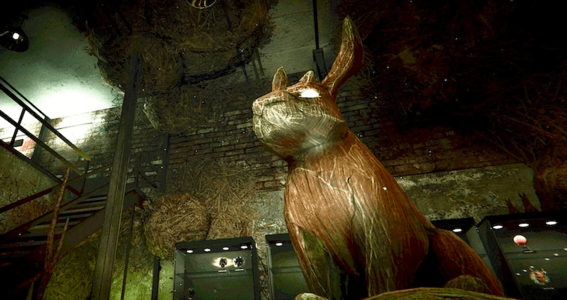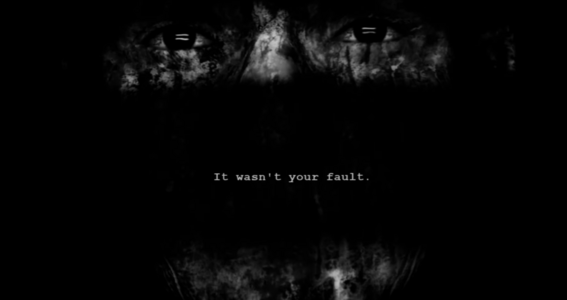

Luto is a first-person psychological horror game about grief, isolation, and a mind caught in a loop. Read our review to see what it did well, what it didn't do well, and if it's worth buying.
Luto Review Overview
What is Luto?
Luto is a first-person psychological horror game that places players in the role of Samuel, a man unable to leave his own home. As days repeat and the environment subtly shifts, players must navigate a looping house, solve environmental and audio-based puzzles, and uncover fragments of Samuel’s story.
Luto features:
⚫︎ First Person Psychological Experience
⚫︎ Day Loop Structure
⚫︎ Environmental Puzzles
⚫︎ Narrative Driven Gameplay
⚫︎ Single Evolving Setting
| Digital Storefronts | |||||||
|---|---|---|---|---|---|---|---|
 Steam Steam |
 Epic Epic |
 PlayStation PlayStation |
 Xbox Xbox |
||||
| Price | $19.99 | ||||||
Luto Pros & Cons
| Pros | Cons |
|---|---|
 Exceptional Atmosphere Great Sound Design Effective Storytelling Exceptional Atmosphere Great Sound Design Effective Storytelling |
Some Puzzles Are Too Obscure Minor Polish Issues Lack Of Replayability |
Luto Overall Score - 80/100
Luto is a masterclass in psychological horror atmosphere, and while it doesn’t reinvent the genre, it does refine it into something sharp and deeply personal. The experience sticks with you because of how deeply it settles into your mind. However, several polish issues hold it back from reaching its full potential. Placeholder text, untranslated subtitles, and puzzle logic that occasionally leans into the overly obscure break the immersion more than once. It’s a game with a lot to say and mostly excellent delivery, but the missteps are noticeable enough that they can’t be ignored.
Luto Story - 9/10
The narrative in Luto is where it hits hardest. There’s no exposition dump or overt explanation, and yet every hallway, every scribbled note, and every shift in scenery adds weight to Samuel’s emotional journey. The game sticks to its internal logic, maintaining emotional and thematic consistency even when environments twist into surreal territory. Samuel’s motivations are never explicitly outlined, but they’re felt deeply through implication, pacing, and sound. The story lingers, haunts, and dares you to interpret it your own way. The only reason it doesn’t score a perfect ten is the reliance on a narrator that, for some players, might disrupt the otherwise subtle experience.
Luto Gameplay - 8/10
Mechanically, Luto is minimal by design, walking, solving puzzles, observing. There’s no inventory, no combat, no direct challenge beyond navigating Samuel’s fractured world. The puzzles are at their best when tied closely to environmental or symbolic cues. But when the game overreaches—introducing puzzles that are so abstract they border on guesswork—the flow breaks. There's also no accessibility option to ease motion sickness, which can be a problem in confined, looping spaces. The gameplay succeeds more than it stumbles, but those stumbles can be jarring in such an otherwise smooth psychological descent.
Luto Visuals - 7/10
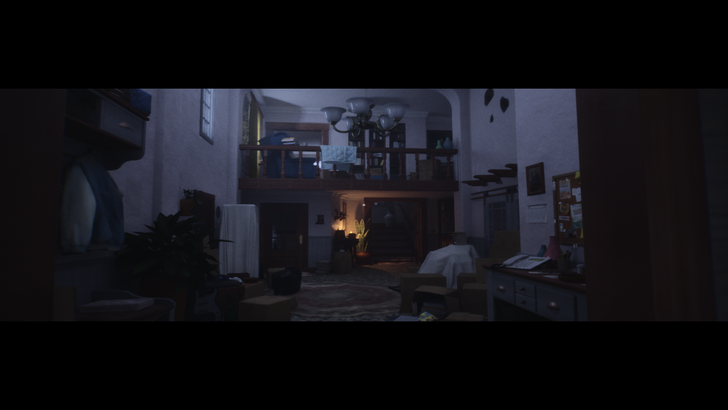
Visually, Luto is evocative rather than flashy. The house and environments are meticulously crafted, with incredible lighting, shadow work, and set dressing that constantly hint at Samuel’s mental decay. However, the art direction plays it safe compared to the game’s narrative ambitions. There’s a sameness to some of the hallways, which can make stretches of the game blur together. Technical performance is solid overall, but there are moments of jank, including jarring placeholder transitions that feel unfinished. It doesn’t feel unpolished enough to distract from the overall experience, but it does stop the visuals from being as memorable as they could’ve been.
Luto Audio - 8/10
Sound is Luto’s greatest weapon. Every creak, ticking clock, and quiet thud builds dread without ever needing to resort to cheap scare tactics. It’s a symphony of subtlety. That restraint in sound design sets Luto apart. The narrator’s voice acting is especially effective, walking a delicate line between clinical and sinister. The only minor ding is the soundtrack—or lack thereof. While the silence is deliberate and thematically fitting, a few more composed pieces might have helped anchor certain emotional beats. Still, it’s some of the best horror audio design in recent memory.
Luto Value for Money - 8/10
At $19.99, Luto delivers a focused, memorable experience that respects your time. Its 4-6 hour runtime is exactly right for its pacing and themes. Any longer, and the loop might’ve felt exhausting. There’s no replayability in the traditional sense, no branching paths or alternative endings, but it doesn’t need them. This is a single-story experience that benefits from one unbroken dive into darkness. The lack of fluff or filler content is a strength, though it does limit long-term value. Still, if you’re the kind of player who values a strong, curated emotional arc over quantity, Luto earns its asking price easily.
Luto Review: Paralyzing Descent Into Grief
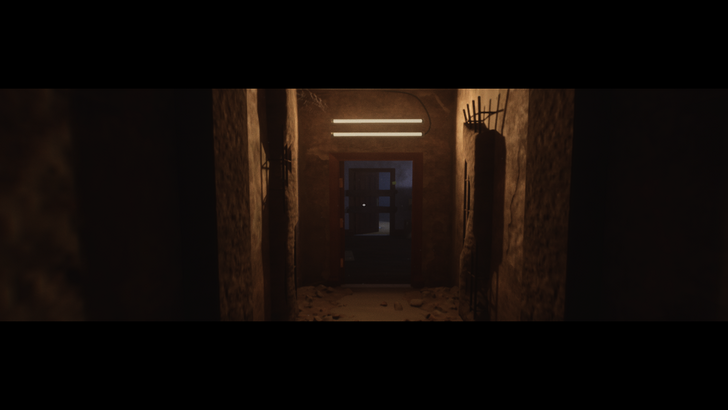
I hate jumpscares. There, I said it. They’re the fast food of horror—loud, cheap, forgettable. A scream here, a loud bang there. But they don’t stick. They don’t crawl under your skin or take up residence in your thoughts three days later when you’re brushing your teeth in the dark. They don’t linger. Luto does.
Within minutes of starting Luto, I found myself frozen in place. Not because I was waiting for some monster to chase me or because I had to conserve ammo—there’s none of that here—but because I didn’t want to move. I didn’t want to leave the bathroom. Not because it was safe, but because I hoped it was. That paralyzing fear, the thing I’ve said time and time again is my gold standard for what makes a great horror game, hit me almost instantly. And yet, the game, in that slow, deliberate way only psychological horror knows how to wield, made me move. Through whispered story threads, a creeping sense of wrongness, and narration that tugged at my curiosity just enough to offset my dread.
You see, Luto doesn’t scream. It suffocates. It begins with a home. Not a haunted mansion, not an asylum, not some overdesigned nightmare factory. Just a home. Familiar. Claustrophobic. Unsettling in how normal it is. And then the house starts to shift. Not with grand fanfare or visual effects, but with subtleties. Sticky notes go missing. Doors change where they lead. Hallways stretch or loop. It's the kind of horror that doesn't show its hand until you've already picked up the cards.
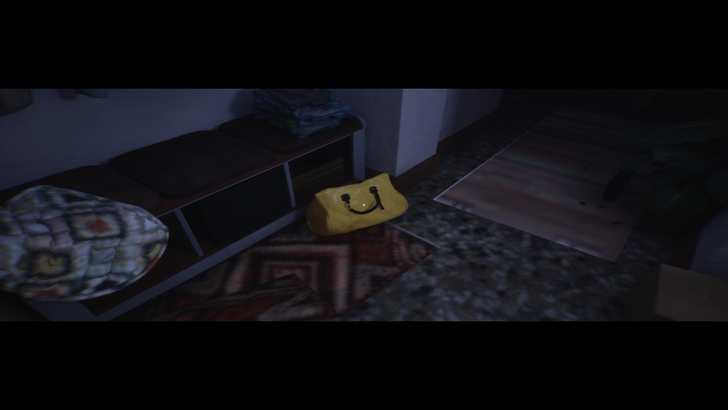
This is not your typical walking sim, though let’s be honest—Luto will be called that, both fairly and unfairly. Yes, you walk. You observe. You solve puzzles, sometimes by listening, sometimes by noticing the minuscule difference between two rooms. But the act of walking here is not passive. Every step feels like a decision. Every corner feels like a test of your resolve. And it's not just what you see or hear, but what you feel, in that lizard-brain, heart-rate-spiking kind of way. Luto isn’t just scary, it’s fascinating.
There’s a story unfolding here, drip-fed through the environment, through narration, and through the subtle disintegration of reality. You play as Samuel, a man who is not only physically trapped in his home, but also mentally imprisoned—grief, trauma, guilt, it’s all in there. But Luto doesn’t spell it out. It trusts you to piece things together. It wants you to be uncomfortable, but it also wants you to understand. Which is why I can’t stop thinking about it.
The Spiral Begins
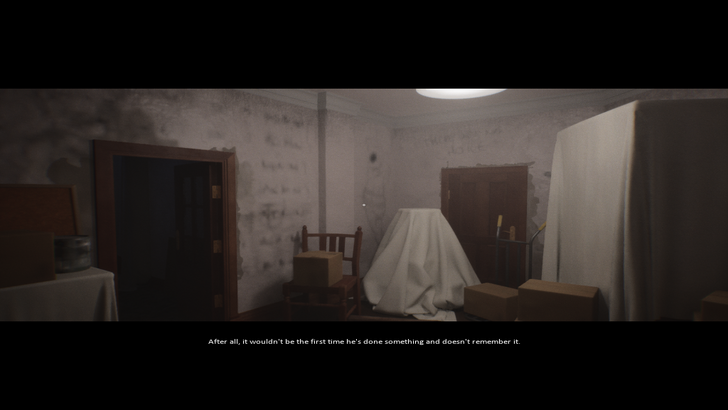
There’s a moment early on in Luto—maybe ten minutes in, maybe less—where you realize you’re not just walking through a house. You’re walking through Samuel. Through his memories. Through the same day. Again and again. At first, it’s easy to be fooled. There are rooms. A front door that won’t open. It all feels domestic, familiar. But then the loop begins. Not of architecture, but of time. You’ll step through a doorway only for the game to declare that the day has changed. But everything looks the same. Feels the same. Until it doesn’t.
That’s the trick Luto plays so well. You’re not stuck in place—you’re stuck in time. Samuel is reliving the same day, over and over, and so are you. The calendar may tick forward, but nothing moves. Not really. The decor changes. Shadows grow longer. Drawings multiply. But the house stays. The grief stays. He stays. There are no monsters here. No chase sequences, no quick-time events, no sanity meter to keep track of. The only thing unraveling is you.
And yet, the tension never lets up. Because Luto weaponizes the mundane. It preys on your expectations. You’ll pass by a perfectly normal room a dozen times, only to find one tiny change—one drawer open that wasn’t before, one new sticky note, one toy out of place—and your brain lights up like it’s spotted a ghost. It’s psychological horror through subtraction, not addition. The horror is in what’s missing. In what you almost saw.
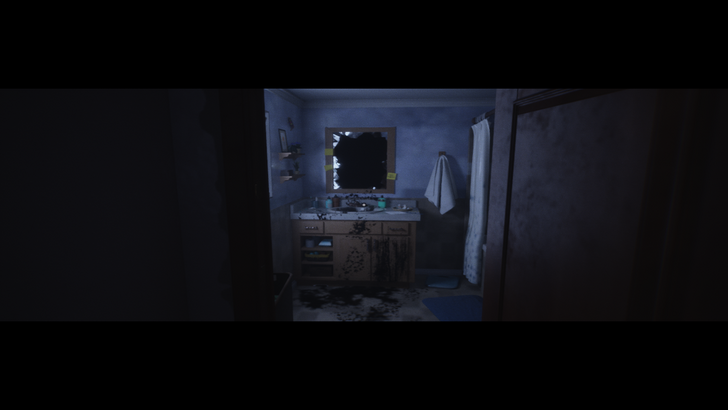
You’ll start to anticipate changes. You’ll want them, because at least change means progress. And that’s how Luto gets you. That’s how it breaks the part of your brain that keeps track of time, of days, of normal. By the third or fourth loop, you’re no longer asking where you are. You’re asking when you are. And at the center of all this is Samuel. Or rather, what’s left of him.
The narrative doesn’t hold your hand. You get fragments—sketches, photographs, the echo of a voice, a narrator you think you can trust. Emphasis on think.
The voice begins calm, even comforting. Think The Stanley Parable if it studied Freud. But the longer you listen, the more that calm starts to curdle. What once felt helpful becomes condescending. What once felt informative turns manipulative. At one point, I stopped walking not because I was scared—but because I didn’t want to do what the voice was asking. Luto creates this fascinating psychological push-pull, part of you is trying to escape, and part of you starts wondering if maybe escape isn’t the point.
Because here’s the twist—there’s no monster hunting you. There’s just you. Your grief. Your guilt. The parts of yourself you buried because they hurt too much to carry. That’s the real loop. That’s the horror.
Haunted By Sound
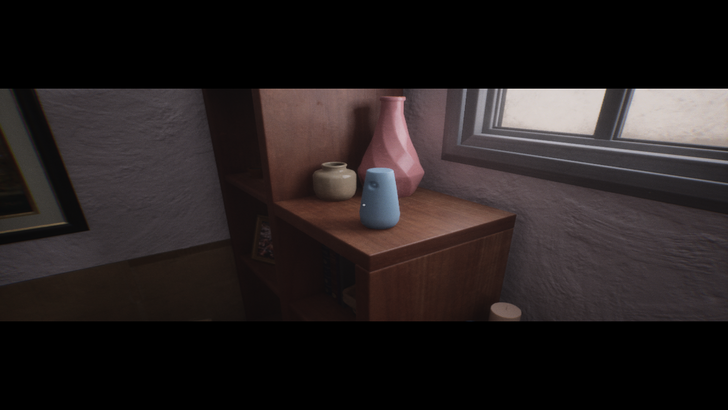
Where most horror games crank the volume for cheap thrills, Luto goes the opposite direction. Its greatest weapon is restraint. You’re not startled by orchestra stabs or jump-scare strings—you're unsettled by what’s barely audible. Its sound design was used not just to enhance tension, but to create it.
One of the first moments that truly got under my skin wasn’t a visual at all—it was a sound. A subtle hiss from the second floor of the house. The kind a motion-activated air freshener makes. Except… I was alone. On the first floor. And nothing had moved upstairs. Or so I thought. It was a small sound, easily missed. But my brain caught it, filed it under "wrong," and panic bloomed from there.
And this isn’t a one-off moment. Sound becomes your most reliable—and most treacherous—guide through Luto's looping narrative. In one puzzle, you follow the ticking of clocks to move forward. The solution isn’t visual. It’s auditory. You have to pause, breathe, and listen. You’re forced to engage with your environment in a different way, relying on audio as a literal compass.
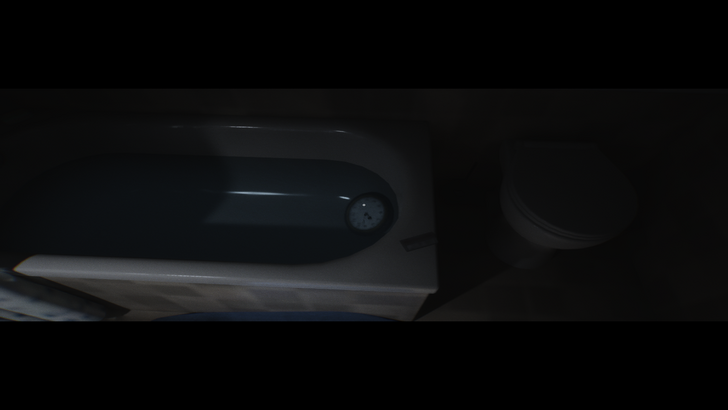
Even the narrator, who at first feels like a detached observer, adds to the oppressive soundscape. His voice echoes, flat and clinical, sometimes a little too eager. At times, he feels helpful. At others, his silence is deafening. You're never quite sure if he's still with you, or if you’ve gone somewhere he can’t reach.
What’s especially remarkable is how often Luto uses silence just as effectively as noise. It lets moments breathe. It lets your brain fill the gaps. And more often than not, your imagination creates something far worse than any monster could. If you’re wearing headphones—and you should be—Luto isn’t just something you see. It’s something you feel. One creak, one breath, one faint chime from a room you didn’t know existed, and suddenly you’re paralyzed. Not because anything’s there, but because the sound says maybe something is.
Where the Puzzles Fracture
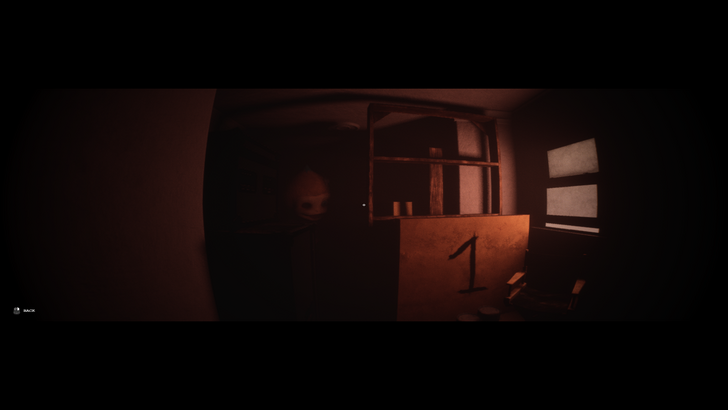
For all its elegance in atmosphere, Luto doesn’t always stick the landing when it comes to puzzles. To its credit, some puzzles are brilliantly integrated, haunting, even. There are puzzles where it’s more than a task, it’s a moment of tonal alignment, where gameplay and narrative are locked in perfect sync. These are the highs, where the puzzles serve the story and keep you engaged in Samuel’s spiraling mental state.
But then there are the lows. A few puzzles veer into the realm of the obscure, demanding logic that feels detached from the rest of the experience. You’ll occasionally find yourself stuck not because the challenge is difficult, but because it’s unclear what the game wants from you. There were points where I had to brute-force a solution or backtrack endlessly, hoping to trigger the next invisible flag. And in a game built so much on mood and momentum, that kind of pacing hiccup can break immersion fast.
Worse still, some of those breaks come not from design, but from polish. A number of transitions are jarringly marked with placeholder-style text like "change of day." Maybe it’s intentional—an abstract motif about fractured time? Or maybe it’s something that slipped through QA? Either way, it pulled me out of the experience every time it popped up.
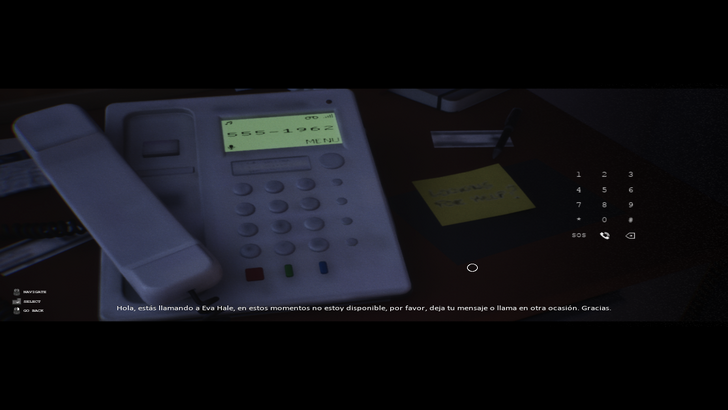
Subtitles were another sore spot. Even when choosing English for the language interface, some lines were still in Spanish. For a game so dependent on its atmosphere and psychological narrative, clear and polished text isn’t just a bonus—it’s essential.
Then there’s the motion sickness. Luto’s narrow FOV, subtle head bob, and slow walking speed combine into a formula that’s not kind to sensitive players. There are no comfort options like FOV sliders or camera shake toggles, which made long play sessions a literal headache. It’s frustrating, because it feels like such a solvable problem—especially when everything else is so meticulously crafted.
The result is a game that feels like it’s on the cusp of brilliance, but occasionally trips over its own feet. The core ideas are there, and they’re strong. But when the execution falters, it leaves you staring at a wall—not because it’s haunted, but because you’re just not sure where to go next.
Mental Illness Made Tangible

At its core, Luto isn’t a horror game about ghosts or monsters. It’s a game about grief. About trauma. About what happens when a person becomes a maze they can’t escape from.
The longer you spend in Samuel’s looping reality, the clearer it becomes—Luto isn’t trying to scare you. Not really. It’s trying to show you something. What it feels like to live in a mind that won’t stop replaying the worst day of your life. What it feels like when every hallway leads back to the same moment, the same memory, the same guilt. And when it breaks the fourth wall—subtly, chillingly—it’s not for the sake of a twist. It’s because the line between the player and Samuel was never supposed to be clear in the first place.
This isn’t just metaphor. The game’s structure is the spiral. Each chapter digs deeper into the psyche, not just narratively, but spatially. Rooms shrink. Hallways fracture. Time skips. Doors return you to places you already swore you’d left behind. It captures, in environmental language, the way depression makes every day feel like a variation of the last. Slightly different, but never new.
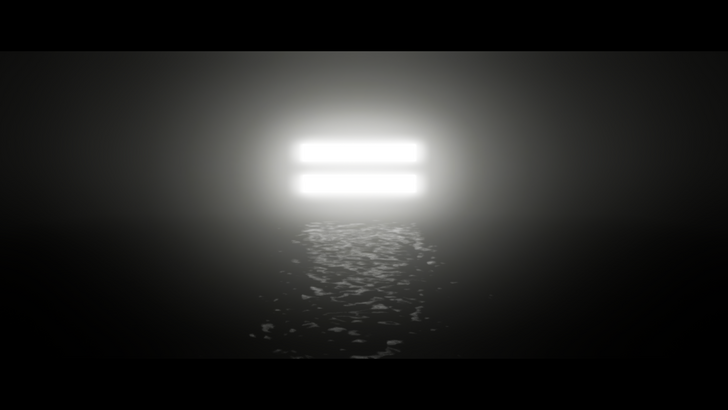
Even the gameplay choices reinforce this. There’s no combat because you’re not supposed to fight anything. No enemies because the enemy is you. There’s no running from grief. There’s just learning to live in its presence. Or not.
Luto doesn’t sensationalize these topics, nor does it offer easy answers. It presents a world that’s already broken, already too far gone, and asks you to sit with that discomfort. The final chapters, in particular, dive into this so fully, so unflinchingly, that it almost stops being horror. It becomes something sadder. Something more honest. It’s not perfect. But it is powerful. Luto doesn’t just want you to understand Samuel’s pain. It wants you to feel it. And by the end, you do.
Is Luto Worth It?
An Unmissable Experience
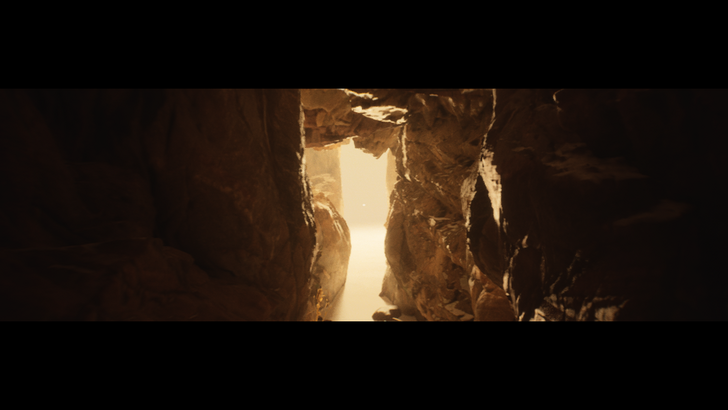
At $19.99, you’re not getting a sprawling, multi-hour thriller filled with combat and collectibles. You’re getting a tightly-wound, 4 to 6-hour descent into the mind of someone who’s stuck in a grief loop he can’t escape. It’s not trying to be a blockbuster. It’s trying to be a mirror. A quiet, broken one.
The game excels where it matters most, atmosphere, sound design, and narrative weight. It uses its limited mechanics to dig deep into psychological horror, avoiding tired jump scares in favor of lingering dread. Its puzzles range from clever to frustrating, and the occasional polish issue—like untranslated subtitles or confusing placeholder text—can pull you out of the moment. But when Luto is firing on all cylinders, it's an incredibly immersive experience that lingers long after it’s over.
This is not a game for everyone. But for players who crave psychological horror with thematic bite, and who don’t mind a little patience (and a little disorientation), Luto is well worth the price of admission.
| Digital Storefronts | |||||||
|---|---|---|---|---|---|---|---|
| Steam |
Epic |
PlayStation |
Xbox |
||||
| Price | $19.99 | ||||||
Luto FAQ
What Are Luto’s System Requirements?
| System | Minimum | Recommended |
|---|---|---|
| OS | Windows 10 / 11 64 bits | Windows 10 / 11 64 bits |
| Processor | Intel Core i5 4690 / AMD Ryzen 3 1200 | Intel Core i7 8700K / AMD Ryzen 5 3600 |
| Memory | 8 GB RAM | 16 GB RAM |
| Graphics | NVIDIA GeForce GTX 1060 6GB / AMD Radeon RX 580 | NVIDIA GeForce GTX 3060 / RX 6600 XT |
| Storage | 22 GB available space | 22 GB available space |
Game8 Reviews

You may also like...
 |
KARMA: The Dark World Review Horror, Adventure |
 |
MOUTHWASHING Review Horror, Adventure, Indie |
 |
Post Trauma Review Adventure, Horror, Puzzle, Simulation |
 |
A Quiet Place: The Road Ahead Review Action, Survival, Horror |
 |
Silent Hill 2 Remake Review Horror, Survival |
Luto Product Information
 |
|
| Title | Luto |
|---|---|
| Release Date | July 22, 2025 |
| Developer | Broken Bird Games |
| Publisher | Broken Bird Games, Selecta Play, Astrolabe Games |
| Supported Platforms | PC (Steam, Epic), PlayStation 5, Xbox Series X|S |
| Genre | Psychological Horror |
| Number of Players | 1 |
| ESRB Rating | M |
| Official Website | Luto Website |