
Fire Emblem Shadows Review Overview
What is Fire Emblem Shadows?
Fire Emblem Shadows is a mobile spin-off in the Fire Emblem series, shadow-dropped on September 24, 2025 for Android and iOS. Distinguished from the mainline tactical RPG series, it is the second mobile spin-off following Fire Emblem Heroes.
The game opens with a conflict between divine forces of light and shadow. Players follow Prince Kurt of the fallen kingdom of Ast and his allies who are caught in this struggle between the two goddesses. The story is structured in two parallel "paths" or perspectives; one aligned with light and the other with shadow. The player’s journey alternates between these, with them uncovering different facets of the conflict and characters depending on which side’s viewpoint they explore.
Where Fire Emblem Shadows diverges most from prior entries is in its incorporation of social-deduction mechanics into the familiar strategy framework. Battles are multiplayer events involving three allied players; however, one of them is secretly a disciple of shadow, a traitor whose goal is to sabotage the group’s efforts. After a battle, all players vote to determine who they believe the traitor is. Whether the light disciples correctly identify the traitor (or the traitor successfully hides) affects how favorable or difficult the next battle becomes.
Fire Emblem Shadows features:
⚫︎ Real-Time Tactics with Social Deduction Gameplay
⚫︎ Traitor Mechanic
⚫︎ Light and Shadow Dual Narrative
⚫︎ Consequential Voting Outcome
| Digital Storefronts | |||||
|---|---|---|---|---|---|
 App Store App Store |
 Google Play Google Play |
||||
| Free-to-Play | |||||
Fire Emblem Shadows Pros & Cons
| Pros | Cons |
|---|---|
 A+ Soundtrack Great 2D Art The Two Narratives are Compelling Enough A+ Soundtrack Great 2D Art The Two Narratives are Compelling Enough |
Can Often Feel Pay-to-Win Gameplay is Repetitive and Dull at Times Matches are Incredibly Short |
Fire Emblem Shadows Story - 7/10
The story in Fire Emblem Shadows grabbed me more than I expected, mostly because of how it’s built around a dual narrative. Following Kurt and their allies on the path of Light while also seeing how the Shadow side tempts characters with their desires gives the plot a natural tension, and it definitely feels like it has the makings of something compelling. I also like how the characters’ designs shift depending on their alignment, which adds weight to the choices and themes at play. That said, the story being gated behind grinding online matches really kills the pacing, and the chapters themselves are too short to flesh out the larger cast beyond a surface level.
Fire Emblem Shadows Gameplay - 6/10
Fire Emblem Shadows makes it clear from the start that it was built for mobile, with quick matches that are easy to pick up and play. It’s not Fire Emblem in any real sense, though; outside of tweaking equipment and skills, the tactical depth fans might expect just isn’t there. Combat often feels too automated, with skills that should be exciting falling flat because the game rarely demands much thought in how you use them with how quick matches tend to be. After a few rounds, the repetition sets in, and without more depth or variety, it’s hard to stay hooked for long.
Fire Emblem Shadows Visuals - 7/10
The 2D character art in Fire Emblem Shadows is gorgeous, easily the highlight of the presentation, while the 3D chibi models add a certain charm during matches. Having said that, the appeal dips a bit when you notice how plain the backgrounds and UI look in comparison. It’s as if the polish went into the characters but not the world around them.
Fire Emblem Shadows Audio - 9/10
I may be a little biased here, but the soundtrack in Fire Emblem Shadows is easily one of the things I’ve enjoyed most so far. The main theme’s leitmotif weaves its way into different tracks, whether you’re on the path of Light or Shadow, giving the music a nice sense of cohesion. I also love how older Fire Emblem themes make a return in fresh remixes, like "Apex of the World" playing when Dimitri shows up as a furry traitor. The voice acting is also solid, though after the tutorial the spoken lines become a lot more limited.
Fire Emblem Shadows Value for Money - 6/10
Since Fire Emblem Shadows is free-to-play, there’s no harm in giving it a try, and you can get a fair amount out of it without spending a dime. The catch comes with unlocking characters, since most of them require grinding or buying into the premium battle pass to actually recruit. Progression also leans into pay-to-win territory, with stronger weapons and upgrades often tied to premium currency. It’s not the worst setup out there, but it does mean that how much fun you have depends a lot on how willing you are to either grind or pay.
Fire Emblem Shadows Overall Score - 70/100
Fire Emblem Shadows is a baffling spin-off that takes the series in a completely different direction by trading its usual strategy roots for short, social deduction matches. The setup is easy to pick up and has some fun ideas, yes. However, the gameplay feels shallow and, at times, the pay-to-win elements get in the way of its potential. Right now, it’s more of a mildly entertaining distraction, though there’s enough here that its mechanics could grow stronger with time.
Fire Emblem Shadows Review (First Impressions): Who Asked For This?
Furry Emblem Shadow-Dropped Out of Nowhere
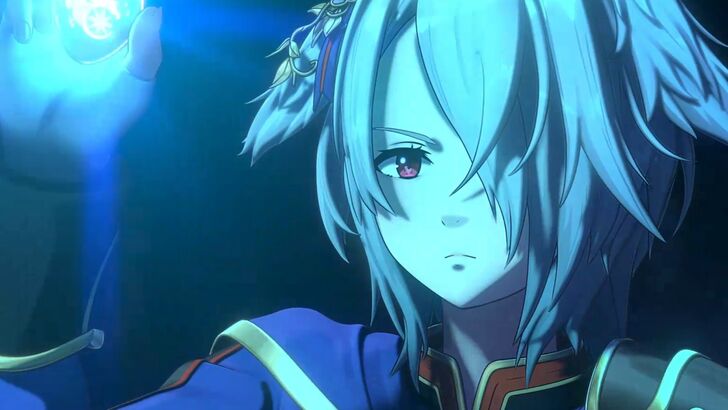
There’s a new Fire Emblem game out, and no, it isn’t Fire Emblem: Fortune’s Weave, the big mainline title fans have been waiting for. Instead, Nintendo and Intelligent Systems shadow-dropped a mobile game called Fire Emblem Shadows. Nobody expected it, I’m pretty sure nobody asked for it, and yet here it is. It wasn’t announced at a Direct, it wasn’t even teased in trailers or social media, and there was no marketing build-up at all. This thing just appeared out of nowhere, released the day before Tokyo Game Show 2025, and it’s honestly one of the most baffling things I’ve experienced this year..
However, before diving into my impressions, it’s important to clarify that this piece isn’t meant to be a full, final review. The game literally just came out, and I’ve only had a couple of hours to spend with it. A proper score for something like this would need much more time and context. What you’re reading here is simply my early take on what Fire Emblem Shadows is doing, how its early hours feel so far, and my understanding of its appeal.
As this is a first impressions piece, it’s important to note that the score and opinions here are based on only a few hours of gameplay. They are subject to change once I’ve had more time with the game and can provide a full review. The temporary score reflects how I feel about the game right now, not necessarily where it will land later.
“There’s a Traitor Among Us”
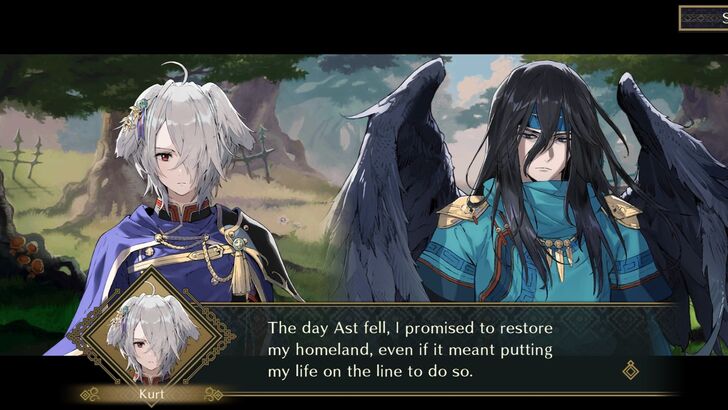
I’ll start with the game’s premise and work my way down. Fire Emblem Shadows opens in a way that feels familiar to long-time fans of the series. The backdrop is a war between two opposing forces: the goddess of Light and the goddess of Shadow. This larger struggle trickles down to the kingdom of Ast, where Prince Kurt, the sole male (wink, wink) heir to the throne, suddenly finds their life in danger. Ast is overwhelmed by forces loyal to Shadow, and Kurt is forced to flee with a band of knights. It’s a simple enough setup that provides enough to justify the events that follow while also leaving space for the game’s focus on deception and mistrust to take center stage.
The best way I can describe the story is that it’s almost neat in how it lays out its premise, but it doesn’t feel like it’s trying to be more than that, at least early on. After a few chapters, I found myself more interested in Kurt as a main character than in the broader cast around them. That’s partly because you spend the most time inside their perspective, and partly because there are a lot of side characters, but they never quite got the same level of attention. Many of them exist to fill out the suspicion-driven framework of the game—who can you trust, and who is apparently out to betray you?
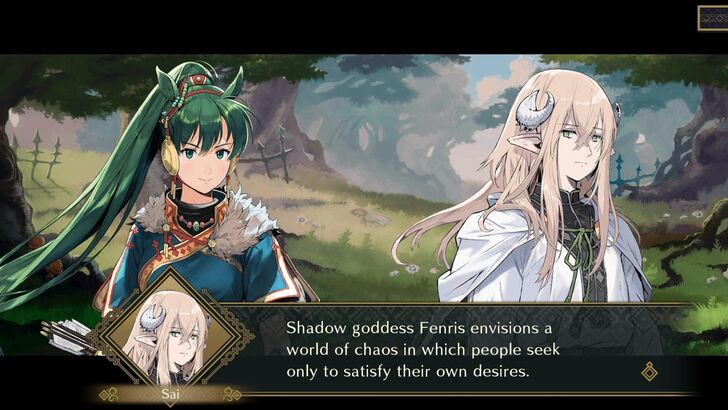
The game’s story unfolds primarily in a visual novel style. So far, I've only encountered one combat-focused chapter, and it doesn’t seem like there will be more, at least for now; otherwise, the narrative is largely used to underscore the pervasive theme of uncertainty. There are always factions at play, and the possibility of betrayal lurking in them.
I agree that the story has great potential. It feels like a natural fit for a Fire Emblem spin-off, frankly, but its main purpose is clearly to support and justify the social deduction mechanics. The chapters are often short, which can sometimes make the narrative feel light, as characters aren’t fleshed out as much as one might expect from the series. It makes sense, though, in the context of what the developers were aiming for.
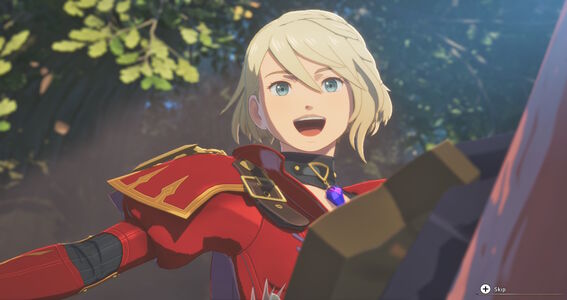
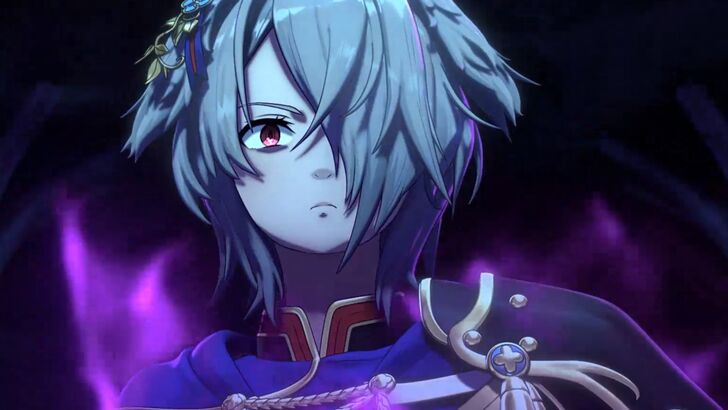
Most of the characters in Fire Emblem Shadows carry animal-like traits, and their designs shift depending on whether they align with Light or Shadow. Kurt, for example, takes on a violet tone when walking the path of Shadow, and their canine features become sharper and more pronounced.
That theme is also where the story’s hook lies. On the path of Light, you follow Kurt and their allies as they travel across Ast, recruiting companions and trying to restore their fallen kingdom. But cracks in the group begin to form when the suspicion of a traitor arises. Enemies always seem to be one step ahead, and the implication is that someone within the party might be feeding them information. I haven’t seen the full scope of the narrative yet, but the Shadow path makes the idea more explicit. Disciples of Shadow directly tempt members of Kurt’s crew by tempting them with what they most desire, with the catch being that the only way to obtain it is by forming a pact with the goddess of Shadow.
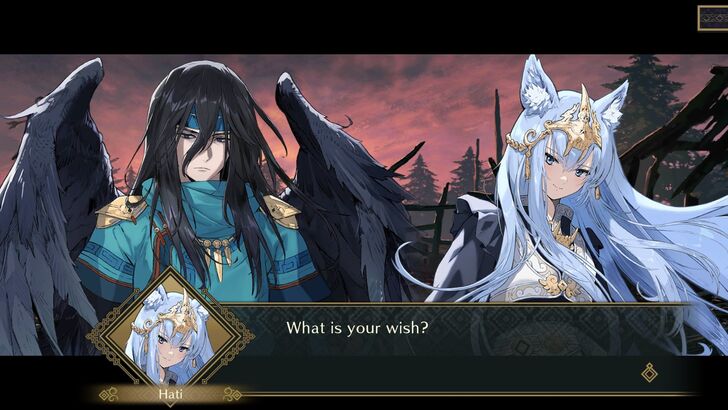
It’s a clever way of planting seeds of doubt across the entire cast. At times, I’ve even found myself wondering if Kurt could somehow be complicit, though the story hasn’t gone that far yet. Right now, the game only offers "Book 1," and while there may be more layers waiting in future updates, there’s already enough here to raise questions about where the plot could go.
That said, it’s not ideal that the story is gated behind online play. Progression is tied to unlocking "Story Fragments" by completing online matches. I don’t mind integrating gameplay with narrative, but it’s frustrating to have the momentum stall simply because you need to grind battles to keep the plot moving.
Not Fire Emblem, Not Even Among Us
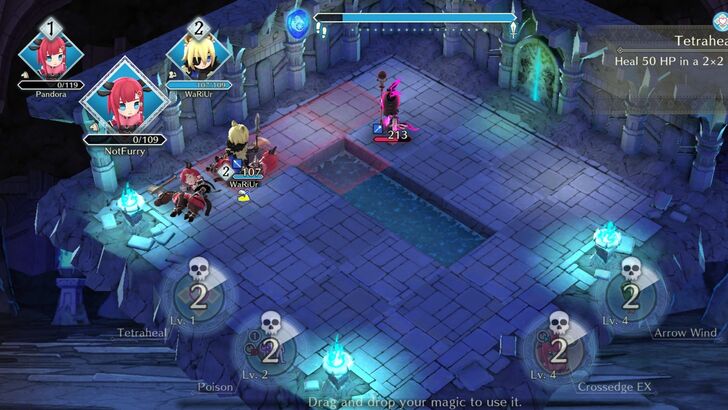
That, however, makes Fire Emblem Shadows feel like its story mainly exists to prop up the gameplay. That’s not necessarily a bad thing, but the gameplay itself doesn’t always land the way it probably should. It’s a decent game, yes, and it’s inoffensive as a whole. It works, it’s definitely easy to understand, and it’s quick to get into, but it rarely leaves you feeling fulfilled after a session.
Anyone installing it expecting a traditional Fire Emblem strategy game—or even something close to Fire Emblem Heroes—will probably walk away surprised. It needs to be made clear that, outside of its audio and maybe even visual design, this doesn’t resemble Fire Emblem at all, and at times I honestly wonder why the name is even attached to it, outside of maybe Nintendo trying to make sure more people notice it.
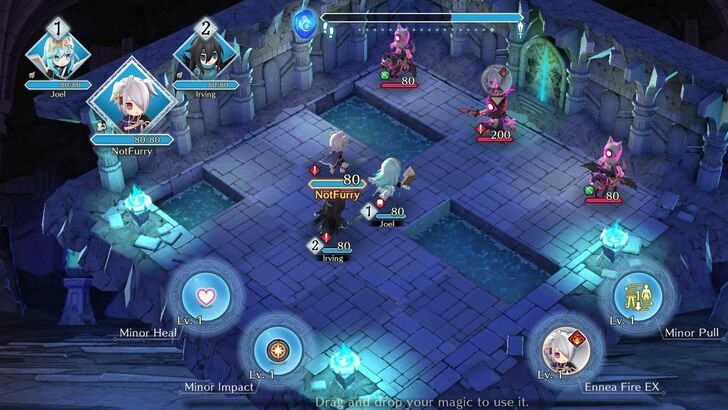
Here’s how it plays: Fire Emblem Shadows mixes real-time tactics with social deduction, but "tactics" here is a bit of a stretch. Each match starts with three players on the side of Light going up against a group of computer-controlled enemies on a grid-based map. The catch is that one of the three players is secretly aligned with Shadow. The first round is basically a warm-up, where everyone charges forward automatically to attack.
The player’s role in this phase is limited; you can activate skills, but the characters themselves attack on their own. It almost plays like an idle game, and while there’s some strategy in when to heal or when to cast certain abilities, it doesn’t feel particularly deep. Skills such as damage-over-time effects or short teleports across the grid sound useful, but they lack impact because the game doesn’t demand much precision or creativity in how you use them. More often than not, the combat boils down to simply spamming skills until the inevitable conclusion, a lack of nuance that's compounded by the rounds being too short for deep strategy to truly matter.
Things heat up after the first round. This is when the social deduction part kicks in. Once the fight ends, the game asks all three players to guess who among them is secretly the traitor. This might sound tough at first, but there are small clues you can pick up from the previous round.
The Shadow player has access to two extra skills that they can use while pretending to be on the Light side. Usually, the game shows everyone who cast which ability. Shadow skills are an exception; when they go off, they appear anonymous. That anonymity gives the traitor some room to play mind games. They can use their Shadow skills to hurt themselves and appear as though they are being targeted, or they can go ham and try to sabotage the team outright.
The second round builds on this by escalating the conflict. If the Light players correctly identify the traitor, they gain two extra lives for the next fight, while those who guess wrong only get one. Meanwhile, the Shadow player evolves, gaining the ability to summon minions and shape the battlefield in ways the Light players can’t.
Playing as the Shadow disciple was easily the most fun I had. Summoning monsters at key points on the grid and forcing the others to scramble felt rewarding. On the other hand, the Light side can start to feel repetitive. Once you’ve gone through a couple of matches, the second round doesn’t play that differently from the first, except you’re dealing with extra enemies.
My biggest issue, though, is how stripped down the deduction phase feels. Fire Emblem Shadows makes it very clear that this was built first as a mobile game, and that shows in how much it prioritizes quick, pick-up-and-play matches. As mentioned, matches rarely last more than three minutes, and the deduction phase itself is quick, with players only getting about ten seconds to lock in their choices, which barely gives you time to think critically, let alone actually discuss with teammates. Compared to other social deduction games, part of the fun is in the arguments, the defense, the tension of those longer debates. This doesn’t have those. You only need to tap on the screen, then the match moves on.
Granted, again, I’ve only spent a few hours with the game so far, and I can see potential for things to open up. Unlocking new equipment and skills you can share with one character to another, reaching higher levels, and going up against more experienced players could easily make the matches more fun. For now, though, it’s mildly entertaining. Fingers crossed that my opinion changes for the better in the full review, especially seeing as how skills and equipment play a large role in this game.
Is Fire Emblem Shadows Worth It?
Sure, but Don’t Expect it to be a Fire Emblem Game
I don’t see Fire Emblem Shadows trying to cash in on the faded hype of Among Us or ride the coattails of every social deduction game that popped up during and after the global pandemic. It feels like its own thing, for better and worse. What it absolutely isn’t is a traditional Fire Emblem experience. If you come in expecting terrain bonuses or strategic grid fights, you won’t find them here. The closest you’ll get is tweaking loadouts, but the depth that defines the series is missing. What the game does instead is try to carve out its own spot in the social deduction space, and in that regard, it offers something different enough to somewhat stand out. It’s not the most complex take on the genre, but there’s at least some fun to be had if you approach it with the right expectations.
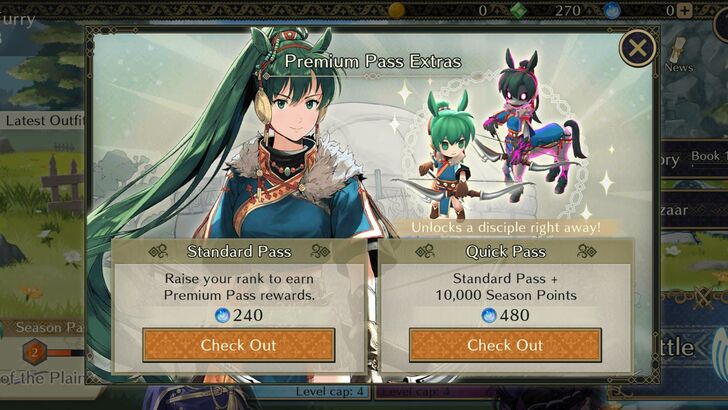
Since this is a free-to-play title, trying it costs nothing but your time. However, spending money on it is another matter. It appears that, since the game doesn’t have a gacha system, unlocking featured characters is tied to a Battle Pass. To unlock a unit, you need 12 copies of that character’s "Soul." The free pass only gets you three, but the premium pass hides the rest. Some characters are unlocked through the story or by grinding matches, but if this is how things continue, then anyone who wants access to the newer units will eventually need to pay. That’s where the concern about pay-to-win starts creeping in, especially since the current pass character, Lyn, is noticeably powerful.
That imbalance shows up in other parts of the game, too. Progression is heavily tied to currencies you earn from playing, which let you upgrade characters or buy better weapons. The stronger your loadout heading into a match, the higher your chances of winning. The problem is that if you don’t have enough resources to keep up, the game is quick to remind you that you can bridge the gap with Gems—its premium currency. It’s a system that puts spending power directly into competition, and while that’s common in mobile games, it undermines the sense of strategy Fire Emblem is known for.
Even so, I can’t say I’m walking away from Fire Emblem Shadows without some interest. The game has a decent framework, even if the execution might feel uneven. It’s not the Fire Emblem many fans might have wanted, but it could grow into something more with time. I’m planning to keep playing over the next few days and weeks, partly out of curiosity and partly out of hope. A game like this lives and dies on how its systems evolve. Although it hasn’t wowed me yet, it has just enough potential that I want to see where it goes.
| Digital Storefronts | |||||
|---|---|---|---|---|---|
| App Store |
Google Play |
||||
| Free-to-Play | |||||
Game8 Reviews

Fire Emblem Shadows Similar Games
Fire Emblem Shadows Product Information
|
|
| Title | FIRE EMBLEM SHADOWS |
|---|---|
| Release Date | September 24, 2025 |
| Developer | Intelligent Systems |
| Publisher | Nintendo |
| Supported Platforms | Mobile (iOS, Android) |
| Genre | Real-Time Strategy, Social Deduction |
| Number of Players | 1-3 |
| ESRB Rating | ESRB E10+ |
| Official Website | Fire Emblem Shadows Website |