





| Resident Evil Requiem (RE9) | |||
|---|---|---|---|
| Release Date | Gameplay & Story | Pre-Order & DLC | Review |
Resident Evil Requiem Review Overview
What is Resident Evil Requiem?
Resident Evil Requiem is a survival horror and action hybrid game that alternates between Grace and Leon. The story is set in Raccoon City and revolves around uncovering the truth behind the Elpis Virus.
Resident Evil Requiem features:
⚫︎ 2 Playable Characters
⚫︎ Hybrid Gameplay
⚫︎ Multiple Endings
⚫︎ Achievements with Rewards
⚫︎ Item Box is Back
⚫︎ Switchable POV (1st Person & 3rd Person)
For more gameplay details, read everything we know about Resident Evil Requiem's gameplay and story.
| Digital Storefronts | |||||
|---|---|---|---|---|---|
 Steam Steam |
 Epic Games Epic Games |
||||
 PS PS |
 Xbox Xbox |
 Switch 2 Switch 2 |
|||
| $69.99 | |||||
Resident Evil Requiem Pros & Cons
| Pros | Cons |
|---|---|
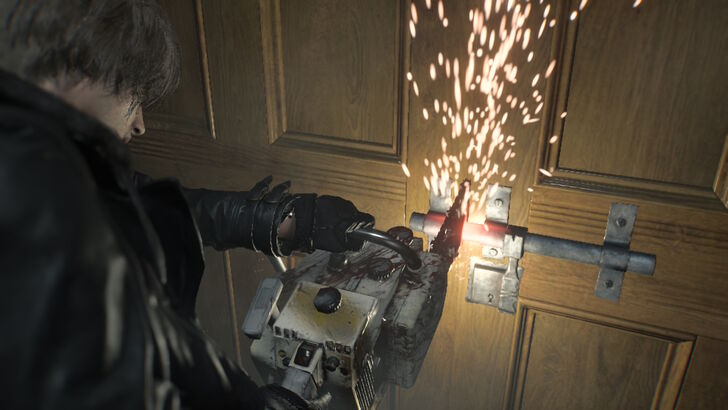
 Dynamic Gameplay Between Tense Horror and Fast Action Immersive Story that Consolidates the Raccoon City Incident Well-Crafted Puzzles Modernized the Classic Resident Evil Atmosphere Dynamic Gameplay Between Tense Horror and Fast Action Immersive Story that Consolidates the Raccoon City Incident Well-Crafted Puzzles Modernized the Classic Resident Evil Atmosphere |
Dense Lore May Overwhelm Those Unfamiliar with the Series |
Resident Evil Requiem Story - 9/10
Requiem expertly consolidates decades of Resident Evil lore into a coherent narrative that balances tension, mystery, and payoff. It delivers memorable moments, strong character motivations, and satisfying revelations, though newcomers may need to engage with logs and documents to fully appreciate the connections.
Resident Evil Requiem Gameplay - 10/10
Requiem’s gameplay perfectly blends survival horror and action, alternating between Grace’s horror filled exploration and Leon’s action-heavy combat. The mechanics are intuitive and responsive, puzzles are well-crafted, and combat is rewarding, creating a loop that is both challenging and satisfying without feeling repetitive.
Resident Evil Requiem Visuals - 10/10
The visuals are stunning, modernizing familiar locations while preserving the eerie identity that defines the series. Character models are detailed and expressive, and environments are carefully crafted to balance realism with atmospheric tension. Technical performance is strong on the Switch 2, and touches like dynamic lighting and environmental storytelling heighten suspense and reinforce the franchise’s signature mood.
Resident Evil Requiem Audio - 9/10
Audio supports the horror experience exceptionally well, with strong voice acting and immersive sound design. While the soundtrack complements the mood, it lacks a single, iconic track that immediately defines the game’s musical identity, though overall execution is impressive.
Resident Evil Requiem Value for Money - 10/10
For $69.99, Requiem offers substantial content, including alternating campaigns, exploration rewards, and dual ending. The game’s depth, coupled with its careful design and engaging mechanics, makes it an excellent investment for Resident Evil fans, or action-horror fans in general.
Resident Evil Requiem Overall Score - 96/100
Resident Evil Requiem is a meticulously crafted entry that respects its legacy while pushing the series forward. Its dual campaigns provide contrasting yet complementary gameplay experiences, combining methodical survival horror with cinematic, action-driven sequences. The story weaves decades of lore into a coherent, satisfying narrative. For fans and newcomers willing to engage with its lore and mechanics, Requiem is more than just a continuation of the franchise—it’s a full-fledged evolution of the Resident Evil formula that delivers suspense, strategy, and cinematic thrill in equal measure.
Resident Evil Requiem Review: Masterclass in Survival Horror
What Fans Have Been Waiting For
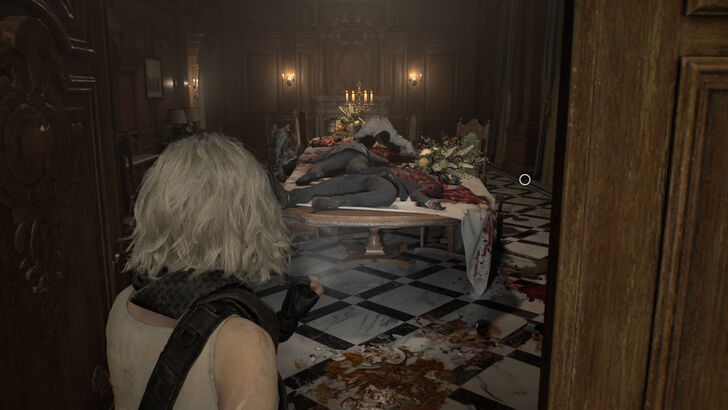
I feel like a broken record every time I say this, but horror is the genre I live and breathe. It’s not just a preference, it’s the backbone of my entire library. If you scroll through what I play, what I finish, and what I end up reviewing here, there’s a very clear pattern, and those are dimly lit corridors, limited resources, and something breathing just a little too close behind me. That’s my comfort zone.
But Resident Evil sits in a different place entirely, because this isn’t just another horror series for me, it’s the first game I’ve ever played. You best believe my lullabies as a child were save room themes. Just as they lulled me to sleep, they also ingrained how these tracks signaled safety in the game. With several entries releasing before I was even born, the series has always been something I grew up alongside.

So jumping in Resident Evil Requiem, I’m not coming at it as someone passing through the genre. If you want a refresher on Umbrella’s lore throughout the series—or don’t mind some series spoilers—I detailed in this article how obsessively Umbrella has been threaded in RE’s history across every entry. But even without it I can happily report that Requiem is unapologetically dense. It leans so heavily on decades of history that it can be difficult to recommend to complete newcomers. But even so, I still do.
Murder Case Leads Straight Back to Raccoon City
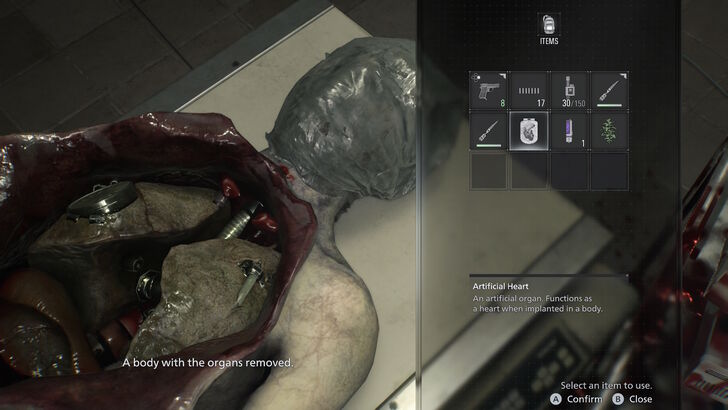
Before anything else, we need to get our timeline straight, because Resident Evil Requiem absolutely does not exist in a vacuum. The game is set in 2028, thirty years after the destruction of Raccoon City, the incident that refuses to stop casting a shadow over this series no matter how far the newer titles try to walk away from it. For anyone coming in fresh, all you need to know is a pharmaceutical giant called Umbrella caused a viral outbreak, the infection consumed an entire city, and the government’s solution was to erase it from the map with a nuclear strike.
We start with Grace Ashcroft, an FBI analyst sent to the Wrenwood Hotel to investigate a string of murders. Yes, just like the S.T.A.R.S. being deployed to the Arklay Mountains all those years ago, the setup deliberately echoes the series’ first steps into horror. But Grace isn’t a field agent, isn’t a super-cop, and definitely isn’t someone trained to roundhouse kick a bio-weapon into submission. She’s a technical analyst carrying a handgun she bought with her own money. Let that sink in for a minute… she’s carrying a gun that she bought with her own money. Not a service gun that was assigned to her by the bureau. Immediately, fear is at the forefront of the gameplay. Every locked door, every noise down a hallway, every moment where something feels off lands harder because she has no business being there in the first place.
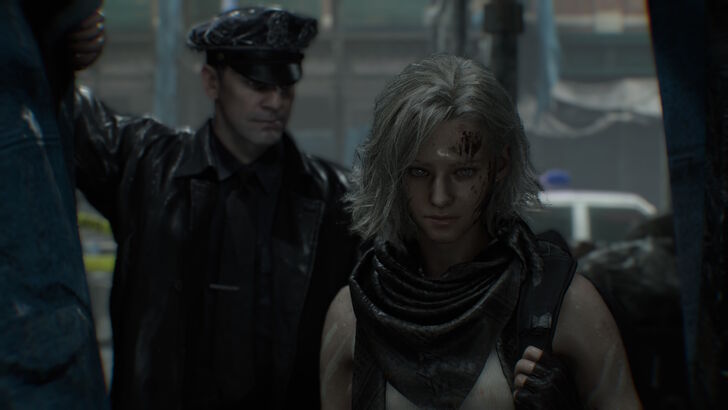
And the hotel isn’t just another assignment. It’s where her mother—Alyssa Ashcroft from Resident Evil Outbreak—was murdered. So the dread isn’t only about what’s causing these murders, it’s also about walking into a traumatic place that has already taken something from her.
Then the perspective shifts with a contrast that is immediate and intentional, in the form of Leon Kennedy stepping back into the spotlight. Where Grace hesitates, Leon moves with the confidence of someone who has survived this nightmare more times than he should have. He still has the one-liners, still has the flair, but this time those famously impractical action instincts are fully integrated into how the game actually plays. He’s here bridging the series’ past and the investigation unfolding in the present.

Both of them are pulled into Victor Gideon’s fixation on the Elpis Virus, something the game positions with the same narrative weight as the T-Virus. I’m not touching the details because the reveal is part of the experience, but it’s the kind of importance that recontextualizes everything about the Raccoon City incident. And where does that trail lead? Back to Raccoon City.
After decades of cover-ups, side stories, distant outbreaks, and spiritual successors, Requiem finally drags the series back to the place it has been emotionally orbiting this entire time. Not as a cameo. Not as a flashback. But as a destination.
Two Playstyles, One Survival Horror Rhythm
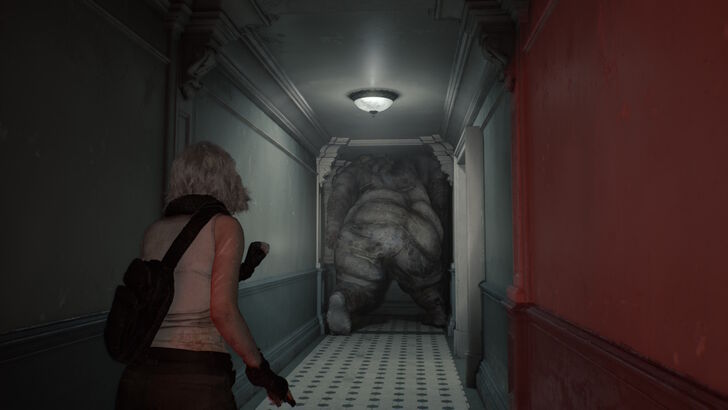
Requiem’s entire design philosophy hangs on the idea of returning to form, so the gameplay loop is exactly what long-time players would hope it to be. It is a methodical push and pull between exploration, puzzle-solving, and combat. The twist is that it splits that identity between Grace and Leon, and then uses their alternating perspectives to control the pacing of the whole game.
The first half leans heavily into Grace, where the classic survival horror structure really settles in. Her sections are built around navigation and problem-solving. Moving through spaces that only slowly reveal how they connect, circling back with a newly acquired key item, and realizing a door you passed an hour ago is finally the way forward. The major puzzle framework sticks to that familiar three-piece lock-and-key structure, where you’re juggling multiple leads at once and mentally mapping the environment as shortcuts open up. Combat exists, but it’s never the point. Every encounter is something you’d rather avoid, which makes each successful run through a hallway feel like a small victory.
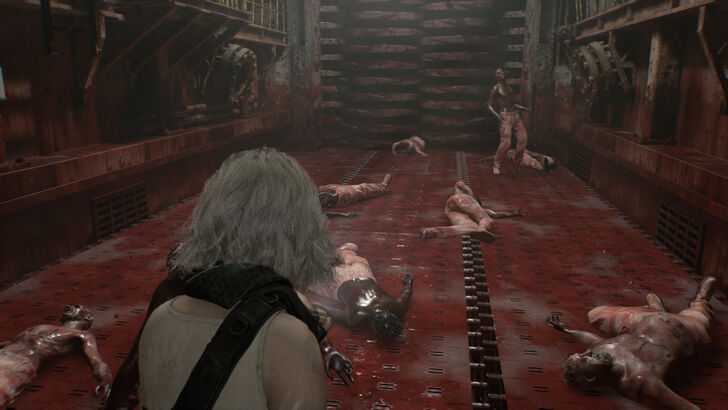
I genuinely enjoyed the backtracking in confined spaces, like escaping Rhodes Hill, where the main doors are locked and the areas containing the keys are also, you guessed it, locked. I love exploring a map that challenges you in that way. It’s not that Requiem is simply reusing the old template, Capcom has managed to refine it. For example, there’s a scene reminiscent of the classic moment when the ceiling falls on Jill in Resident Evil, but this time the floor is moving beneath Grace, massive saw blades block the path ahead, and zombies are closing in, creating a tense, multi-layered challenge.
Leon’s half changes the tempo without breaking the formula. The backtracking and puzzle elements are still there, but they’re no longer the thing driving your momentum. His part is where the game lets loose—larger encounters, sustained fights, and moments where the screen fills with enemies and you’re forced to actually stand your ground. It’s not just more action for the sake of variety; it’s action that makes sense for someone with Leon’s history and skill set. Where Grace is carefully conserving ammunition and second-guessing every corner, Leon is managing space, crowd control, and positioning as entire groups close in.
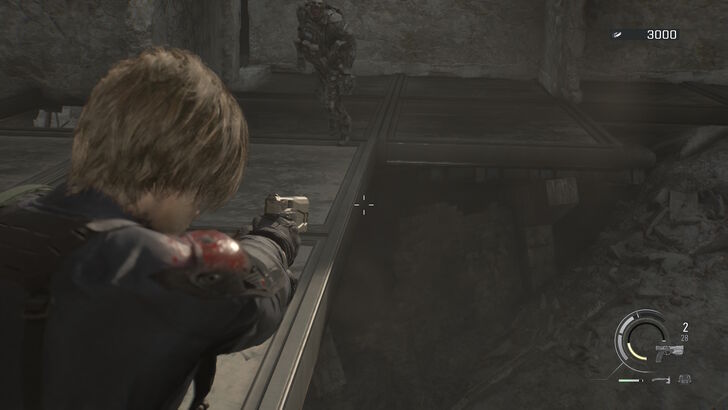
One of my favorite moments in Leon’s sections is when he traverses a fallen building sideways while enemies swarm in. You’re walking along the windows, much like a scene from a post-apocalyptic movie, and the game gives you a choice to shoot the windows and let zombies fall, risking your own safety, or fight them head on. It’s a sequence that perfectly showcases Leon’s skill set in a way Grace’s careful pacing doesn’t.
What makes the structure work is the timing of the switch between them. Just as Grace’s slower, more cerebral progression starts to tighten the tension, the game hands you over to Leon and lets you release it through combat. When Leon’s intensity peaks, it pulls back again into Grace’s vulnerability. That constant rebalancing keeps the experience from ever settling into one note, and it captures both sides of what Resident Evil has been across its different eras without making them feel like separate games stitched together.
Fear You Inherit vs Confidence You Borrow
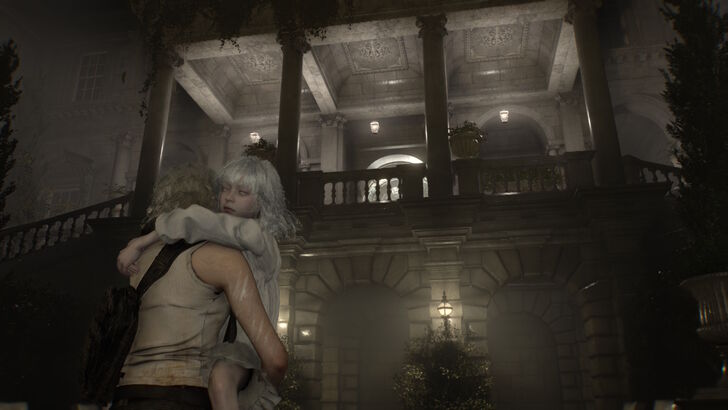
Because of that, Requiem feels like the point where Capcom stops trying to prove they understand what fans love about Resident Evil and simply demonstrates they know. The game is confident in the systems that made the series work and Capcom knows exactly how to apply them to two completely different player experiences.
Grace’s campaign is the purest expression of that classic survival horror dread. The game recommends playing her in first-person, but even in third-person (my motion sickness always wins these battles), the effect is profound. This is the kind of fear that makes you stop moving, not because something is chasing you, but because something might be there. There are main "bosses" that Grace often has to evade, and more often than not, I found myself standing in a well-lit hallway, waiting for them to pass before making my move. And when the game does decide it’s time for you to run, it flips into that panicked, get-out-now terror that defined the older titles.
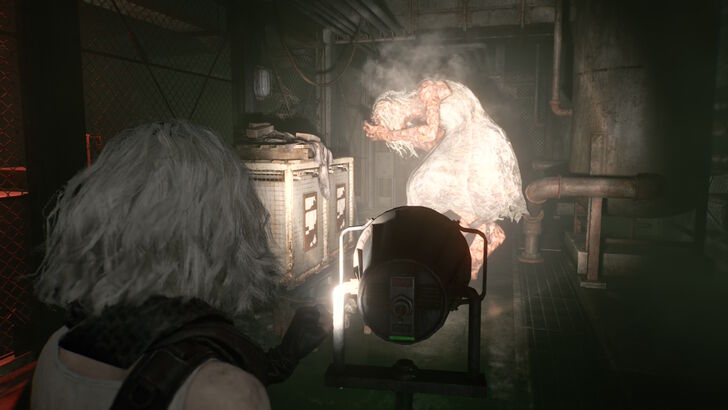
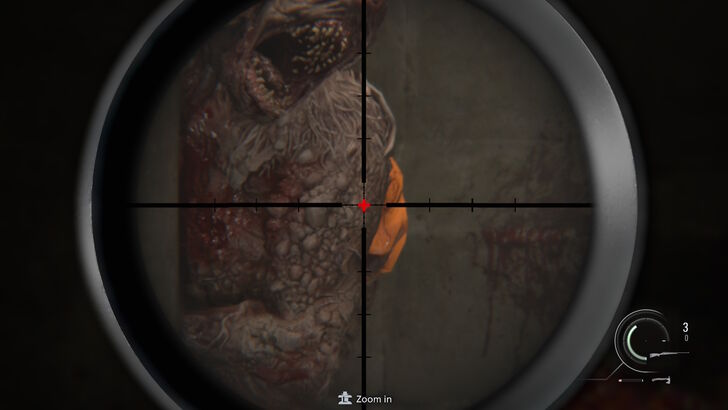
But don’t think Grace is all sneaking and running—remember, she’s an analyst. When it comes time to finally confront a boss, she does so by exploiting their weaknesses rather than brawling like Leon. This is also very reminiscent of older Resident Evil titles, where clever use of the environment was key to defeating powerful enemies.
What also sells it is how completely Grace’s emotional state dictates the way you play. She stumbles when she sprints. Her hands shake when you aim. I went into her sections fully aware, on a metagaming level, that I could handle whatever the game threw at me, but that confidence doesn’t matter when the character you’re controlling is visibly and audibly terrified. You don’t just see the fear, you inherit it. That level of immersion turns even simple navigation into something nerve-wracking, and it’s easily one of the most effective uses of character-driven mechanics the series has ever had.
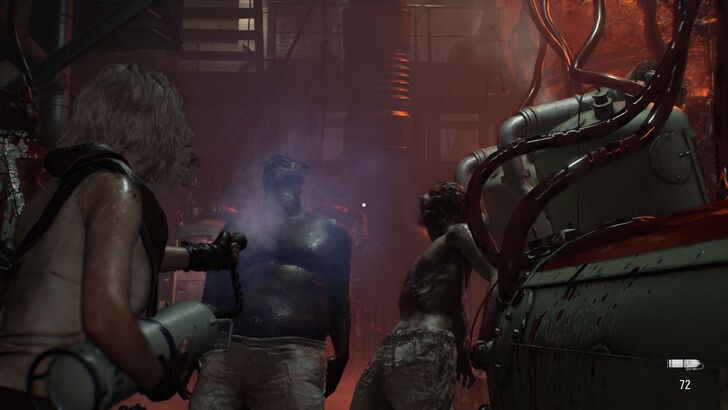
Then the game hands you back to Leon, and the entire emotional temperature changes. Suddenly I’m pushing forward instead of inching around corners. I’m holding my ground instead of calculating escape routes. Leon’s confidence is infectious in the same way Grace’s fear is. The action-heavy encounters are character shifts. Of course the pacing is faster. Of course the combat is more aggressive. This is someone who has lived through Raccoon City, through everything after, and carries that experience into every movement.
And the smartest mechanical evolution is that Leon fights like someone who has learned from all of it. Being able to pick up and use enemy weapons isn’t just a flashy new feature, it reads as growth. As adaptation. As a veteran who no longer survives by barely scraping through encounters, but by turning the battlefield into something he understands better than the monsters do.
Two Progression Systems, One Cohesive Identity
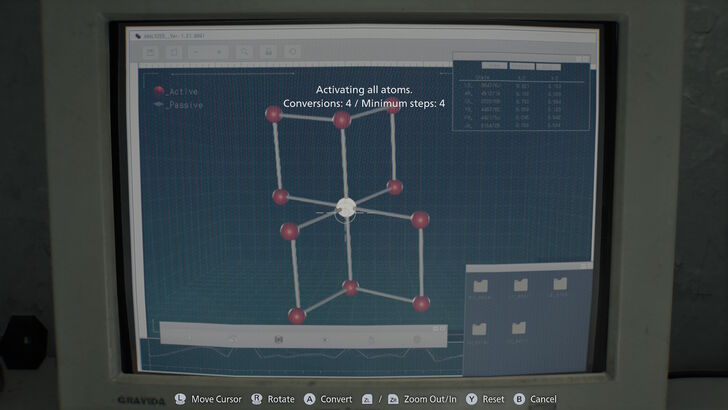
What really locks the dual-protagonist structure into place is that the difference between Grace and Leon doesn’t stop at pacing or encounter design, their mechanics are fundamentally built on two different Resident Evil philosophies.
Grace is rooted in the classic framework. Her inventory is the traditional slot system, with the full return of the item box, which immediately changes how you plan routes and manage resources. That alone brings back a kind of spatial awareness the newer titles moved away from—where you’re not just thinking about what you’re carrying, but what you’re going to stash and when it’s worth making a trip back. It restores that quiet metagame of preparation.
Her upgrades are also entirely character-focused. Instead of tuning weapons, you’re injecting stimulants into her. Every improvement—whether it’s better gun handling, increased hp, or expanded crafting options—comes from blood and experimenting with said blood. Recipes unlock new possibilities for ammunition and healing, but they also reinforce the idea that Grace isn’t a combat specialist. She’s someone trying to make herself more capable in real time, chemically pushing past her own limits just to survive the next encounter. It’s progression that feels anxious and personal.
Leon, on the other hand, operates on the RE4 lineage. The grid-based attache case returns, and with it the familiar ritual of rearranging your loadout like you’re solving a puzzle between firefights. His growth is weapon-driven, not self-driven. You’re not making Leon stronger—you’re refining his arsenal. That keeps his identity intact, again, he’s already trained, already hardened, and already capable. The upgrades are about efficiency, specialization, and maximizing tools he knows how to use.
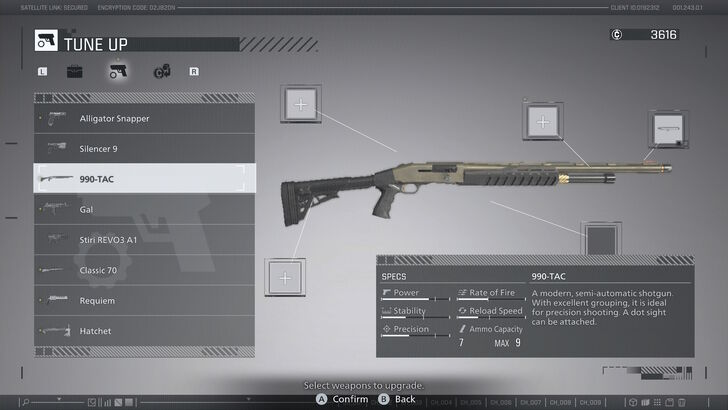
This is also where his combat-heavy sequences are incentivized because you’re rewarded with points for killing enemies, and those points can be used to buy guns, ammo, and upgrade existing weapons. As you progress further into the game, more options and upgrades become available, encouraging you to engage with Leon’s action-oriented gameplay instead of just running away like how it plays out during Grace’s.
On paper, these systems are so different they could belong to entirely separate games. One is about managing a fragile character and carefully rationing survival tools; the other is about optimizing firepower and control. Emphasizing once more that the transitions between them is never jarring. Instead, they prevent the loop from ever becoming monotonous. Just as you settle into one rhythm, the game hands you another, but because both are built on familiar Resident Evil logic, the overall experience stays cohesive.
A Reunion Between the OGs
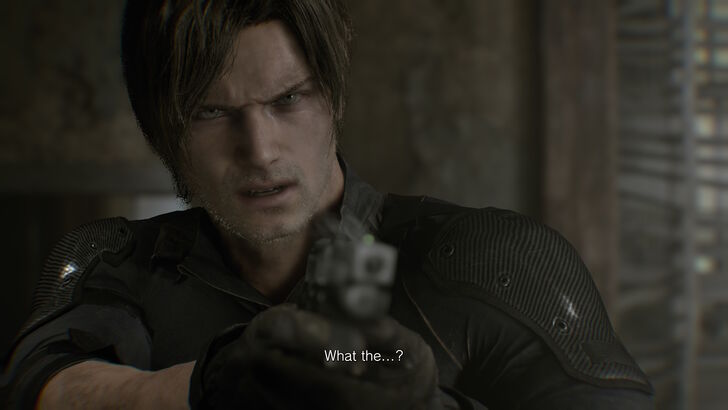
I won’t pretend this game isn’t powered by nostalgia, because it absolutely is. So many of its biggest moments—mechanically, narratively, emotionally—hit harder if you’ve spent years with this series. If you haven’t, the systems still function, the set pieces still land, but that extra layer of recognition? That sharp intake of breath when a familiar face is shown? That’s a long-time fan experience.
And Leon isn’t the only familiar face, the way Requiem handles its returning characters feels like a provocation, if I’m being honest. More than once I caught myself blurting out, "No way. Not you again." It’s that specific Resident Evil brand of disbelief.

And then the game pulls the rug out from under one of those moments. I won’t spoil it, but you'll understand me once you see it. It feels like Capcom is deliberately adding another loose thread to a tapestry that has never been content with neat endings. This is the same series that can’t fully close the book on Umbrella, that keeps finding new angles to revisit its own history, that treats survival not just as a gameplay loop but as a narrative condition. Some stories here don’t end—they mutate, rightfully so. And that character reveal immediately reads as something that will matter later.
Opening the Raccoon City Time Capsule
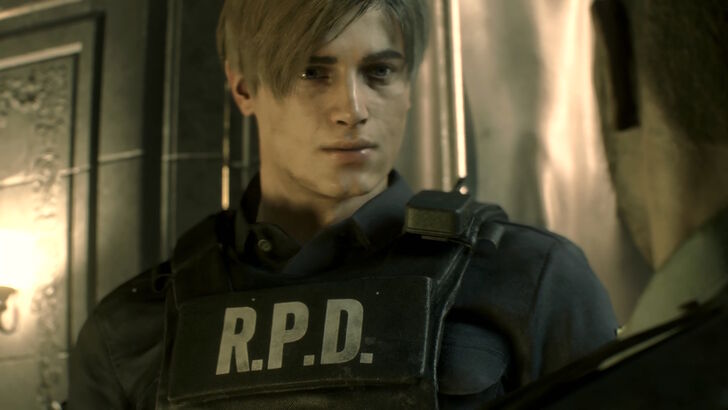
And our conversation leads straight back to the thing this game has been circling from the beginning: Raccoon City. Objectively, this is one of the most significant story developments the series has ever delivered. Requiem, finally, after decades, clarifies the Raccoon City incident. After mainline entries of fragmented reports, cover-ups, side perspectives, and partial truths, the game finally lays out a clean, coherent explanation of what actually happened and why it was handled that way.
Depending on the ending you reach, there’s something even more important… We finally get the first real sense of hope that this chapter might close. For a storyline that has defined Resident Evil for almost thirty years, that’s saying something. We’ve already traced Umbrella back to its earliest ambitions, uncovered the origins of its eugenics program, and watched the fallout ripple across the entire world. Here, we’re not just looking at where it began—we’re looking at what was deliberately hidden, and what the truth of that destruction means.
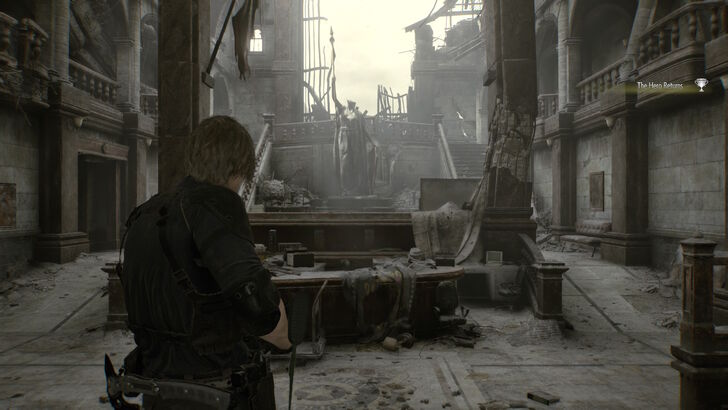
The story doesn’t just clarify past events—it connects everything we’ve seen so far. Even visually, the infected mutations feel like a mix of the T-Virus, Las Plagas, and more, weaving together the series’ bioweapons in a way that’s both familiar and new. I can’t spoil anything, but whatever you think you know… just throw it out the window for a second.
So I guess in a way, this makes the Resident Evil lore for newcomers less daunting, top it off with the game meeting you halfway for any context that you need. Files and logs are everywhere, and they’re written with the clear intent of contextualizing the history. Even locations like the R.P.D. explain themselves—who worked there, what it represented—so you’re not completely locked out of understanding if you don’t already know Leon’s past.
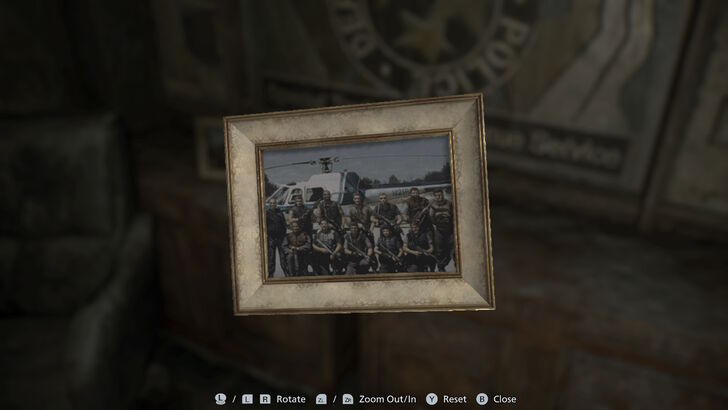
But you do have to meet it on its terms. If you’re the type to sprint past documents and rely solely on cutscenes, there will be moments where names, terminology, and implications blur together. This is a lore-dense game, and it doesn’t always slow down to simplify itself.
Still, when it all comes together, it’s hard not to see it as a massive achievement. This is a story that doesn’t just add another outbreak to the timeline. It consolidates, connects, and gives shape to threads that have been hanging for decades. And more than anything, it makes the return to Raccoon City feel like more than a setting.
Strong Early Game of the Year Contender

Aside from that, audiovisuals were top-notch, with the music solid overall. Grace’s voice actor absolutely stands out, delivering a genuinely impressive performance. Angela Sant’Albano deserves a special mention for moments like Grace’s stutter and that gut-wrenching scream during a scene where she’s trying to protect someone—it’s raw, emotional, and unforgettable.
That said, I found myself wishing for more standout tracks, something on the level of Alexia’s Lullaby from Code: Veronica, which became iconic for its haunting melody and strong thematic identity, or the title theme of Resident Evil Outbreak by Akihiko Matsumoto. The soundtrack here supports the experience well, but lacks that one defining piece that immediately ties the game to a specific musical memory.
With that being said, Requiem is going to be difficult to beat. We’re only in February, yet it already feels like I’ve played a GOTY.
Is Resident Evil Requiem Worth It?
Resistance Is Futile, Buy It Now
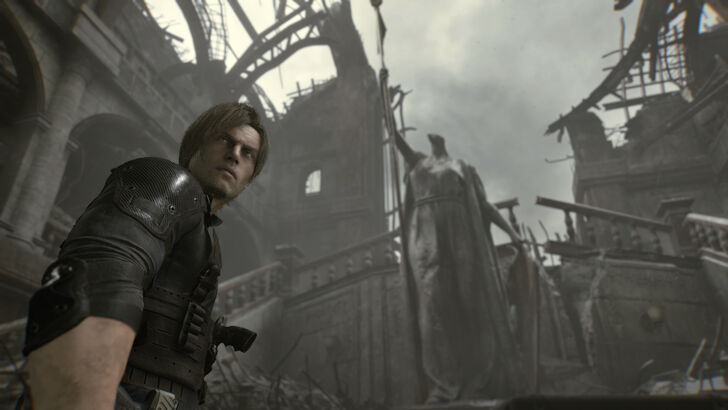
For $69.99, Resident Evil Requiem isn’t just a game, it’s a full-on survival horror and action masterclass that you need to experience. Grace’s tense, puzzle-driven sections will keep you on edge, Leon’s cinematic combat sequences are thrilling and rewarding, and the alternating perspectives make the pacing dynamic from start to finish. Exploration is richly detailed, backtracking is cleverly designed, and every hallway, room, and hidden item reinforces the signature Resident Evil suspense. The story also expertly threads decades of Resident Evil lore into a coherent, satisfying narrative. This is not just a must-play for fans—Requiem earns its place as one of the most complete and satisfying entries in the franchise in years.
| Digital Storefronts | |||||
|---|---|---|---|---|---|
| Steam |
Epic Games |
||||
| PS |
Xbox |
Switch 2 |
|||
| $69.99 | |||||
Game8 Reviews

You may also like...
 |
FATAL FRAME 2: Crimson Butterfly Remake Preview Action, Adventure, Horror |
 |
Crisol: Theater of Idols Review FPS, Horror |
 |
BrokenLore: UNFOLLOW Review Psychological Horror |
 |
Resident Evil Requiem (RE9) News |
 |
How Every Resident Evil Game Connects Back to Umbrella Corporation |
Resident Evil Requiem Product Information
 |
|
| Title | RESIDENT EVIL REQUIEM |
|---|---|
| Release Date | February 27, 2026 |
| Developer | Capcom |
| Publisher | Capcom |
| Supported Platforms | PC (Steam, Epic), PlayStation 5, Xbox Series X|S, Switch 2 |
| Genre | Action, Horror |
| Number of Players | 1 |
| ESRB Rating | M |
| Official Website | Resident Evil Requiem Website |