





Overview
What is Raccoin: Coin Pusher Roguelike?
Raccoin: Coin Pusher Roguelike is a 3D roguelike strategy game where players try to rack up the highest scores on a virtual coin pusher machine. Combining the tactical coin-placement gameplay of a real-life coin pusher with the random chance of roguelikes and the synergy of RPG, Raccoin pushes players to the limit of their reflexes and build-crafting skills to cash the biggest payout.
Raccoin: Coin Pusher Roguelike features:
⚫︎ 6 playable characters with unique skills and synergies
⚫︎ 13 equippable slot cards
⚫︎ 8 difficulty levels with compounding challenges
⚫︎ 100+ coins, chips, prizes, and upgrades
⚫︎ Coin pusher gameplay across 15 levels, each run
⚫︎ Customizable Prize Wheel
| Digital Storefronts | |||||||
|---|---|---|---|---|---|---|---|
 Steam Steam |
|||||||
| $11.99 | |||||||
Raccoin: Coin Pusher Roguelike Review: Can't Stop, Won't Stop Playing
Giving Arcades a Run for Their Money

Yet another existing, real-world game has been turned into a roguelike. We’ve seen cards, pool, and all manner of sports become RNG-reliant strategy games in the past, with titles like Balatro, Rack n’ Slay, and Flickshot Rogues being the first ones coming to mind. This time, it’s coin pusher machines from your local arcade. Yes, the ones that always look like they’re about to cash out a fat stack of coins but never seem to.
Raccoin: Coin Pusher Roguelike (Raccoin) is the name, and putting coins in a machine is the game. On paper, it doesn’t sound all that enticing. Heck, it sounds downright lazy without context. Never in my life have I ever been glad to be wrong, because Raccoin ended up being a mesmerizing, addicting experience that I could barely tear myself away from. It’s charming, it’s deceptively complex, and it’s ten times more worthwhile than the real deal.
Playtesting a Humble Raccoon’s Business
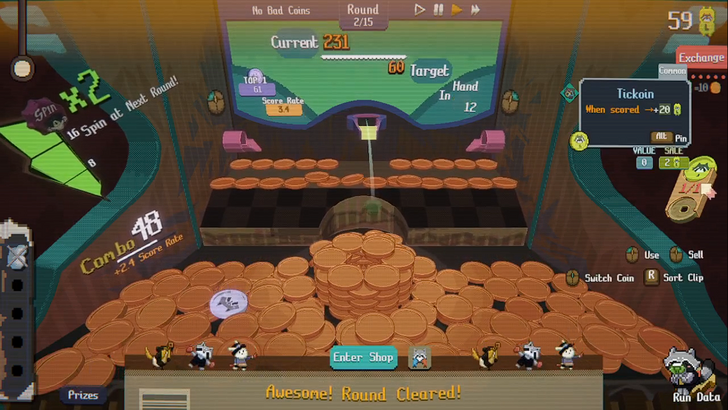
Starting with this game’s story might sound surprising because…well…what sort of tale can one spin from a coin pusher? I half expected a Klubnika-esque dark spin to it, as that seems to be the trend for these, but no. Raccoin tells the tale of a humble Raccoon entrepreneur, tasking you, the player, to playtest their new coin pusher machine for their arcade.
There’s no twist, no double meanings here; just your progression from playtester to repeat customer as you go through many runs, slot hundreds of coins into the machine, and learn new mechanics from the owner’s ever-evolving machine.
Sometimes, no frills is exactly what a game needs. Though this setting is simple and the story is pretty much over when it starts, Raccoin doesn’t need anything more than that to be a good game. Its gameplay takes center stage above everything else, and that’s exactly what this game ought to have done because Roguelikes, as a genre, are generally about gameplay.
Of course, that’s not a hard and fast rule—something like Hades and its sequel proves—, but for something as simple as a coin pusher machine, less is more, lest it look bloated and forced. In Raccoin’s case, it’s right on the money.
Moving on to the gameplay, let’s finally start with the coin pushing, because that’s all you’re gonna be doing after the first coin falls.
Pushing Your Luck By Pushing Coins
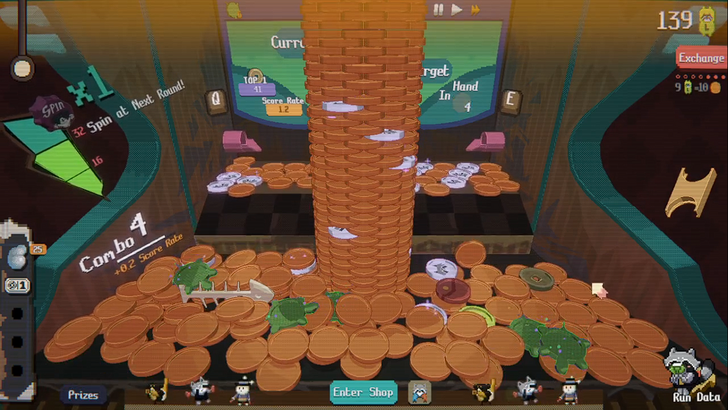
If you’ve ever been to an arcade, you know how those coin pusher machines work. You slot in coins or tokens, and a continuously-moving shelf pushes them back out bit by bit, with the pile-up of coins being pushed over the slot being the prize. The more you put in, the bigger the likely payout, and the more likely the coins are to cascade for you. Sounds simple because it is.
Raccoin does literally that as its base gameplay loop. Throw in coins, hope some fall out, the number goes up, and you move on if you reach the goal. It’s Balatro, but with coins, essentially. As it is, quite boring, but obviously, one mechanic doesn’t make a roguelike. Through the modification of everything in the machine and on your player’s person, from the coins themselves to stickers on the pushing table, many factors can bump up your score to reach the ever-increasing thresholds the machine asks for.
Raccoin has a very deep and complex synergy system that has a lot of moving parts, and I mean that in every sense of the word. Due to the nature of its base gameplay mechanic (i.e., pushing coins around), this game is largely physics-based, and a lot of its roguelike mechanics follow suit in this design.
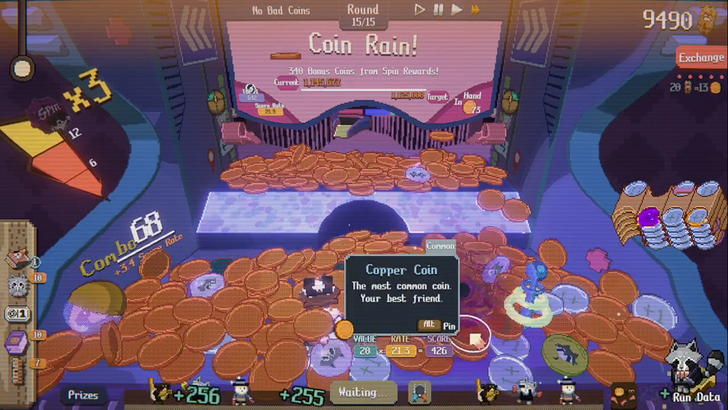
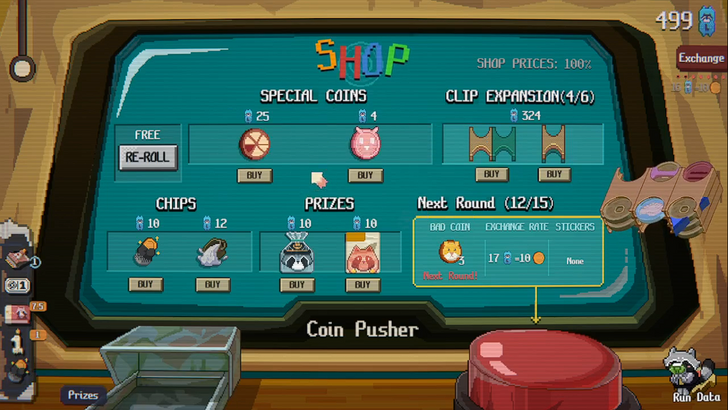
Coins, for example, aren’t limited to basic tokens. You can buy special coins from the shop that triggers at the end of each round to modify what’s in the machine. Usually, it’s through touch, so inserting them at the right time is paramount, but they can also interact with each other in interesting ways, depending on your chosen character.
Other things, like Prizes, which are single-use consumables, can have myriad effects on the coins or their movement as well. My favorite has to be the White Hole, which sucks up all coins in an area and showers them back through the top. If you’ve played coin pushers before, you know how great a move this is.
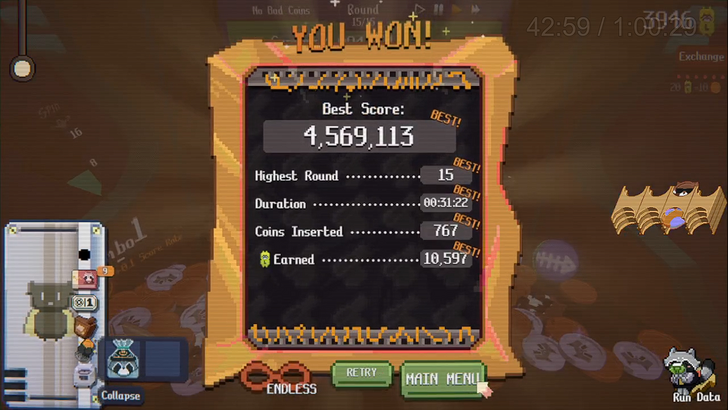
Lastly, there’s your Card, which holds your Chips, which are powerful passives akin to Jokers in Balatro. They define the shape of your run and have the biggest impact on your strategy; that’s why you can only hold a certain number of them.
Together, these variables, along with many others like the Stickers, Character bonuses, Bonus Wheel, and the Coin Clip, can all be used to shift the random odds to your favor. It’s a symphony of synergy that gets addicting really quickly, and it’s all because of one thing: perfect integration.
Roguelike Integration Done Perfectly
Raccoin does what many other roguelike wannabees forget: combining its two halves flawlessly. It doesn’t shoehorn one concept into another, like with Rack n’ Slay, and comes out with something more than the sum of its parts, unlike Flick Shot Rogues. Raccoin achieves this by balancing between its core systems and its roguelike innovations, never letting one be the star above the other.
This is best represented by the physics-based behavior of the coins and how everything revolves around their predictable unpredictability. Players have limited control of coins, largely only having a say on which side it comes from: left or right. Special coins slot in through the swivelling middle, so even that isn’t completely predictable.
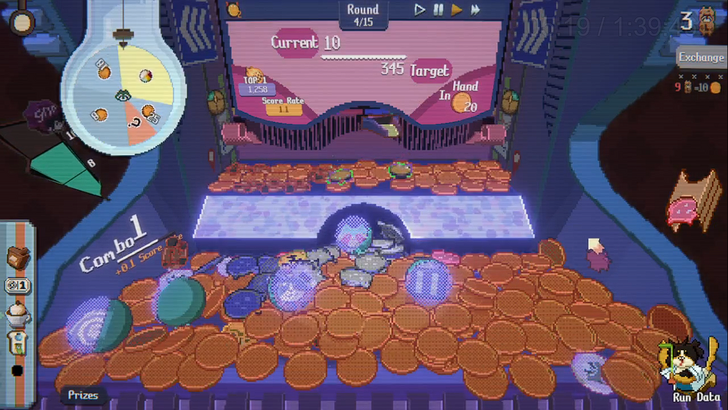
With this in mind, the roguelike additions are tweaked to be wholly in the player’s favor, since the randomness is the player’s biggest enemy. For example, some coins only work while still in the machine, so spamming coins isn’t advisable (not that that would completely prevent it from falling anyway). Some effects only trigger at start and end of rounds, so having the resources to trigger them then is paramount.
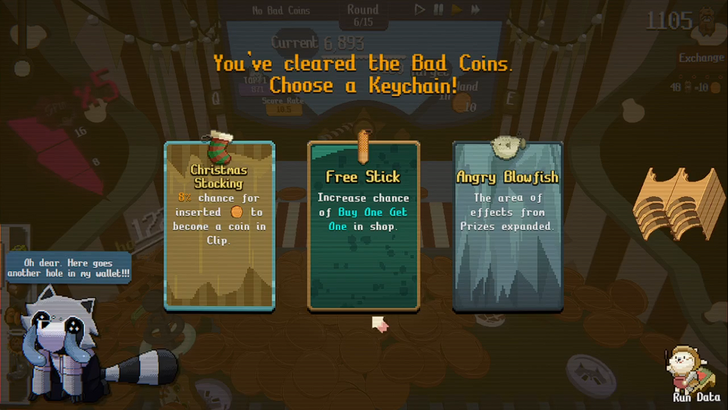
Bad coins also impair the player’s synergies by having counter synergies of their own, which are automatically slotted into the machine every few rounds. These things have few counters, but dropping them out of the machine solves that issue. These are also just coins, though, so that much is also unpredictable.
Overall, this game’s roguelike aspect is tailored and synergistic with its core mechanical concept to a tee. Not too many new things were added, and the devs knew when to stay their hand in the design and where to push the envelope. This is masterful design at its most efficient, and Raccoin is all the better for it.
Surprisingly Just One Cabinet for Now
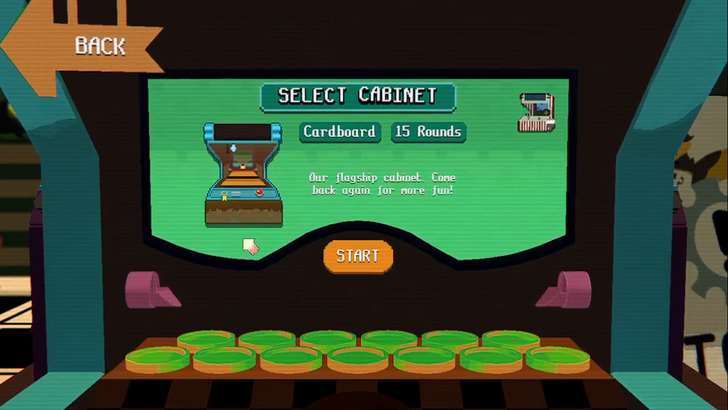
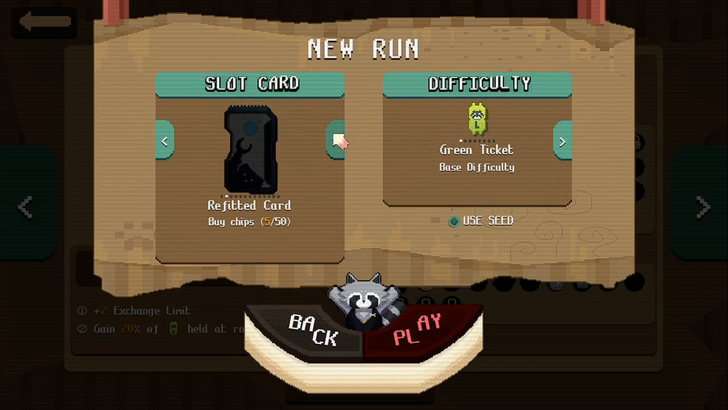
Unfortunately, as purposeful as the devs’ design has been thus far, they did miss a spot in Raccoin. Not really a glaring issue overall, but it’s an odd choice in context. Everything can be set up in this game before your run even starts, pretty much like how Balatro does its Deck and Stakes system, letting you choose your Card, which has a massive overall passive for your run, your Ticket, which determines the game’s difficulty, and your bonus wheel, which triggers whenever you keep a cascade going long enough.
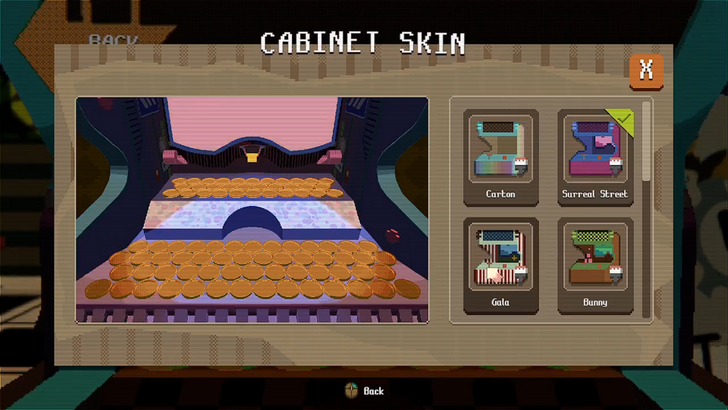
Oddly enough, though there’s a screen for "selecting" a cabinet, the game is limited to just one for now: the cardboard cabinet. Now, I see that this may be a localization error of some sort, as the cabinet does have different skins unlockable through normal gameplay, but that also has its own selection screen, and it being the first thing you choose before difficulty, character, and passive doesn’t make sense.
It could be that some post-release content updates or DLC are on the horizon for Raccoin, but this remains a blemish in an otherwise rather perfect presentation.
Accessible Visuals, Mesmerizing Sounds
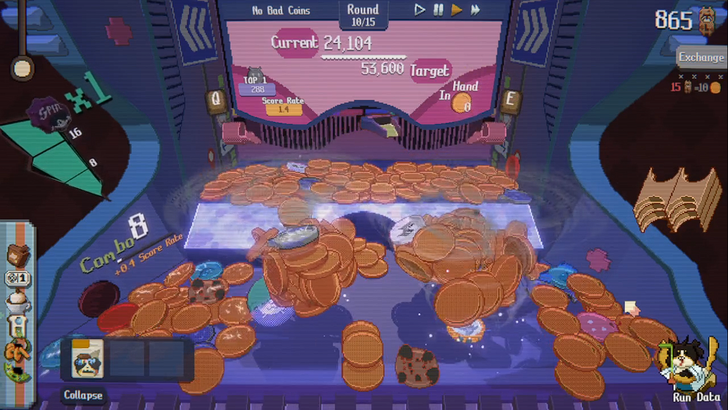
Moving on to accessibility and media, Raccoin hits it out of the park in both respects. Accessibility-wise, Raccoin lets players switch between high-to-low pixelation rates for its visuals, making it easier for people with visual difficulties to parse what’s going on, while also allowing everyone else to retain the game’s unique visual style.
Speaking of, the game employs a false voxel style, as it’s actually 3D models with a pixel filter on top, which can be adjusted in intensity, as stated earlier. It’s perfect for capturing that arcade vibe and is vibrant to boot. The different cabinet screens also help diversify what you look at for hours at a time, but the true MVP goes to this game’s sound.
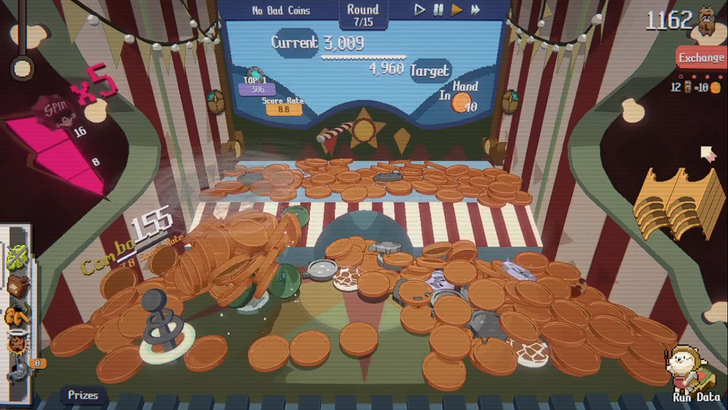
Coins clinking against metal is a mesmerizing sound for many, myself included, and you get a whole lot of that from Raccoin. Naturally, this dopamine hit of ASMR sounds keeps the positive loop flowing, rewarding good plays with a beautiful cascade of coins twinkling in your ears. The music isn’t bad at all, either, considering you’ll be listening to it for hours at a time. Overall, a soundscape worth the coins.
Good Luck Tearing Yourself Away from This One
That’s the last coin for Raccoin. Now it’s time to count its winnings. I must say, this game’s mascot being a trash panda seems rather appropriate, because it’s stolen my heart, attention, and my coins. I say that with appreciation, of course, because in truth all those were given willingly.
Raccoin is an addictive game at half the real-life cost of an arcade bender. You only need to pay once, and all the coins, prizes, and dopamine you want are yours. I really can’t recommend this game enough, despite its weirdly incomplete selection. Everything else about it is perfect, and I consider this a top contender for best roguelikes alongside Balatro.
Try as I might, I can’t, and I won’t, stop playing this. I imagine it’d be the same for you.
Is Raccoin: Coin Pusher Roguelike Worth It?
More Worthwhile Than Any Arcade Trip
Raccoin is absolutely worth the very meager $11.99 it asks for. Not only is it cheap, but it’s also high quality and addictive to boot. Near-endless fun for a little over ten bucks sounds like an absolute steal to me.
The replay value alone repays whatever you spent on this game, and the game has fun interactions and great visual and audio quality to go with that. Get this game–it’s another amazing reason to never go outside again, especially if you were going to an arcade.
FAQ
How Do I Unlock the Customizable Wheel in Raccoin: Coin Pusher Roguelike?
Players can unlock the customizable Bonus Wheel mechanic in Raccoin: Coin Pusher Roguelike by reaching Round 10 with the Chemist character. This also unlocks the Trader Character and Chaos coins.
How Do I Unlock Modifier Prizes in Raccoin: Coin Pusher Roguelike?
Players can unlock the Modifier Prize mechanic in Raccoin: Coin Pusher Roguelike by reaching Round 9 with the Biologist character. This also unlocks the Chemist Character and Elemental coins.
Game8 Reviews














scratches the 'coin pusher machine at the arcade' itch without having to actually spend irl money. god forbid games like these get microtransactions tho lol