| John Carpenter's Toxic Commando | |||
|---|---|---|---|
| Gameplay & Story | Release Date | Pre-Order & DLC | Review |
Overview
What is John Carpenter's Toxic Commando?
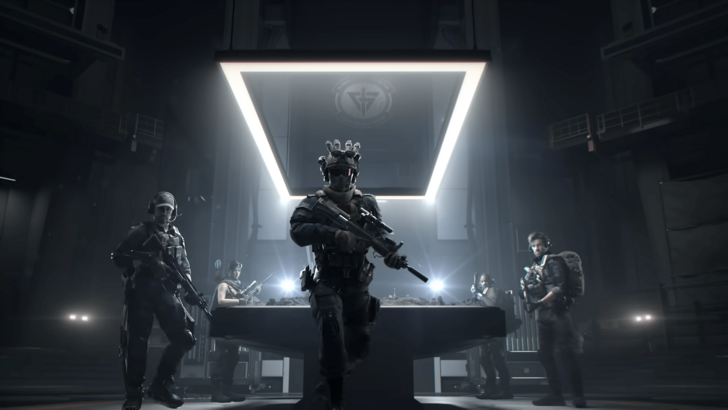
Made in collaboration with legendary film director and known horror buff, John Carpenter, Toxic Commando is a co-op multiplayer horde shooter set in a future where humanity’s efforts to win the energy arms race result in the awakening of a creature called the "Sludge God".
Designed to evoke the thrill of horde shooters like Valve’s Left 4 Dead games, John Carpenter’s Toxic Commando pits four unlikely heroes against an endless tide of mind-controlled humans, sentient tendrils, and various mutated sludge monsters, as they piece together a plan to send the Sludge God back into the Earth’s core.
John Carpenter's Toxic Commando features:
⚫︎ 4 classes with unique playstyles and abilities
⚫︎ 30+ unique perks for each class
⚫︎ 20+ weapons across 8 different weapon types
⚫︎ Common undead hordes with 8+ elite units to encounter
⚫︎ 1 to 4-player online co-op multiplayer
⚫︎ Public and private matchmaking
For more gameplay details, read everything we know about John Carpenter's Toxic Commando gameplay and story.
| Digital Storefronts | |||||||
|---|---|---|---|---|---|---|---|
 Steam Steam |
 Epic Games Epic Games |
 PS PS |
 Xbox Xbox |
||||
| $39.99 | |||||||
John Carpenter’s Toxic Commando Review:
Too Awesome For Its Own Good
Horde shooters have a certain "Je ne sais quoi" about them that just draws me in, and I’m not alone in that corner. Left 4 Dead had the gaming world in a chokehold back in 2008, and its sequel, the creatively named Left 4 Dead 2, made the addicting loop all the more inescapable.
Back 4 Blood was a follow-up to this craze that went belly-up as soon as it hit the shelves. John Carpenter’s Toxic Commando, however, is the game you’re looking for if you’re chasing that horde-cleaving high, just expect to come down sooner rather than later, because it’s a short and narrow experience despite its depth.
It’s a campy, visceral, path of carnage that may be too awesome for its own good in the long run, but it’ll be a hell of a ride until then. Get your one-liners ready, commandos. Things are about to get toxic.
The Sludge God Awakens

Let’s begin this review by going through the game’s setting, because it’s quite the sight to behold and the experience to…well…experience.
Set in a world where journeys to the center of the earth didn’t yield a hidden world, but a roiling mass of slithering flesh called the Sludge God, Toxic Commando tells the story of four mercenaries-turned-heroes cracking skulls and quips as they save the world.
The Sludge God’s influence has reduced local populations to mindless hordes of Undead, with some even developing lethal traits to herald the Sludge God’s awakening. The land itself has been poisoned, and it’ll take a lot of work to get it back to what it was.
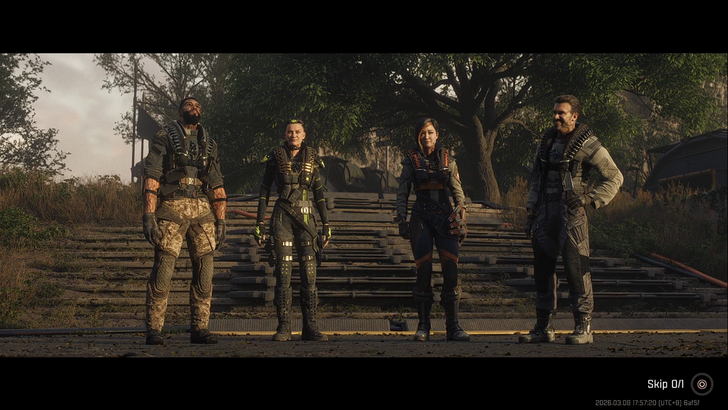
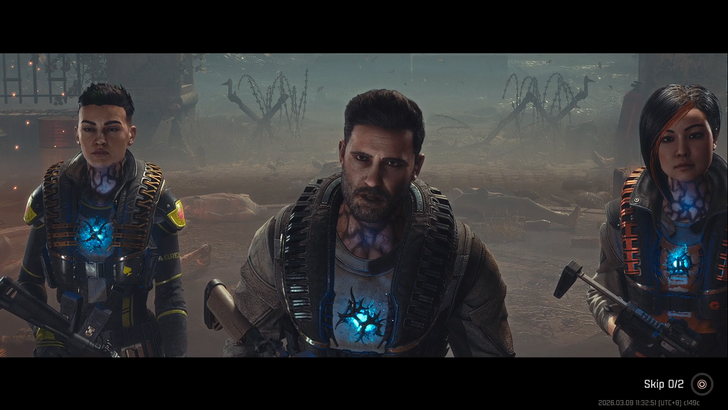
Enter Walter, Ruby, Cato, and Astrid: four capable mercs hired to deliver fuel to an insider trying to contain the Sludge God. Still, they screwed up the mission and ended up getting infected instead. Saved by Leon and given new powers borne from the Sludge God’s own flesh, the four are now equipped to carry out impossible missions throughout the infected land, and, eventually, send the Sludge God packing.
If the name slapped onto the title wasn’t enough of an undead giveaway, Toxic Commando’s setting, story, and overall design language came from the twisted mind of one John Carpenter, and it really shows.
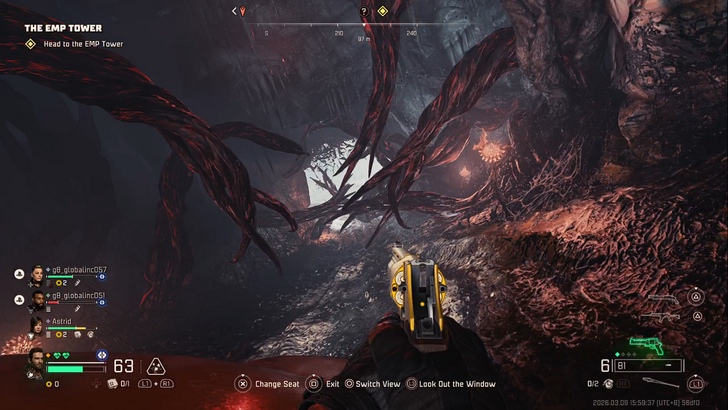
If the pedigree of his horror filmography, including titles like Halloween and The Thing, is anything to go by, then Toxic Commando was fated to deliver something gross, over-the-top, and awesome from the get-go—and it sure did! Not content to slap zombies onto something and call it a day, Carpenter’s mythos of the Sludge God and its influence gives the setting an extra Lovecraftian, body-horror vibe for spice, and the sleekness of sci-fi military futurism for some extra shine.
It has a unique vibe throughout, with very little drawn from existing titles. This is a refreshing distinction that Toxic Commando managed to utilize to great effect, allowing it to tread where none have before.
Wrecking Undead with Guns, Cars, and Everything in Between

Discussing Toxic Commando more as a game, though, it’s quite the smorgasbord of elements all working in unison to bring about a chaotic gameplay loop that can only be described as "Left 4 Dead, but Valve has a better engine, and less space to work with". By that, I mean that everything looks better and has more moving parts, but has all been stuffed into a game that is, by my count, at least 5 levels too small.
Toxic Commando operates on two main pillars: Exploration and Combat. Utilizing a uniquely open world map compared to other horde shooters, Toxic Commando expects players to roam as the hordes do, find gear and currency among points of interest, and engage in skirmishes against the Undead, all before coalescing toward a final mission objective that changes depending on the episode players choose to run.
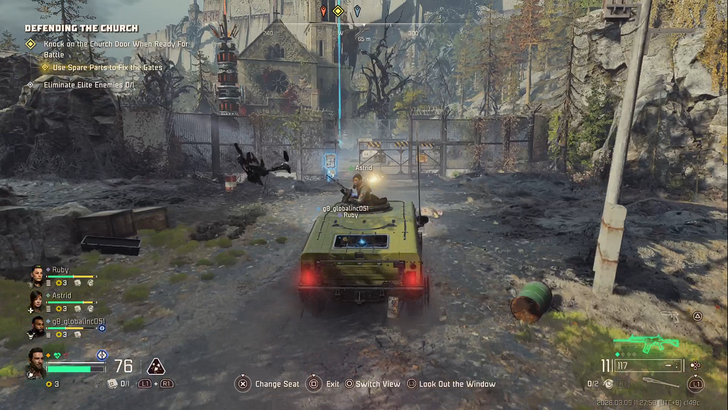
To expedite exploration, players have access to various vehicles, each with unique abilities and niche applications, like the ambulance for team-wide healing or the police car for luring hordes to an explosive finish. These vehicles are usually found while out and about, so the beginning of missions is usually resolved on foot.
Exploration leads to looting, and careful planning of which points of interest are worth going to and what order they should be explored in may make the difference between success and failure. The game’s map pin and world compass functions help with this planning immensely, as direct party communication may not always be possible, particularly for console users who have to type in words using controllers.
It’s a very tight and synergistic system with only one notable loose end so far, and as we discuss the game’s class progression and combat variety next, you’ll come to realize that this quality extends to almost all of the game’s aspects.
Generous Class Progression with the Depth to Support It
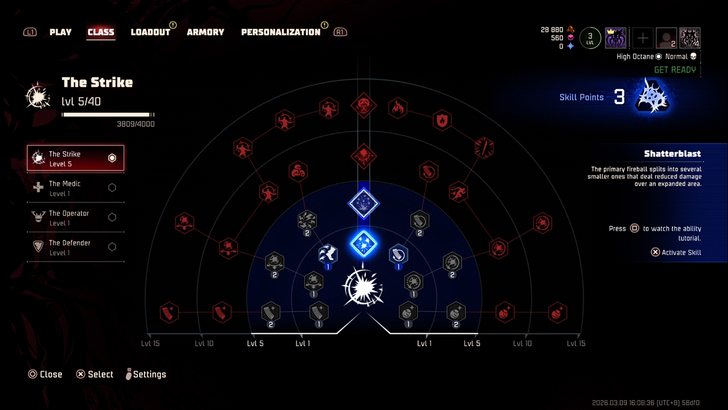
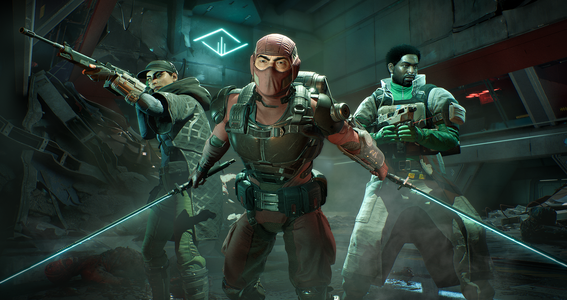
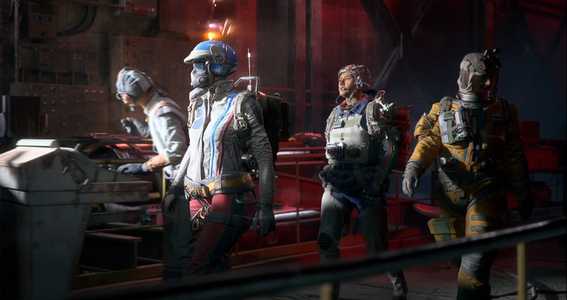
Moving on to the game’s combat, it is entwined with the game’s specialized progression system, as players have access to special classes that determine their role within a party, and these directly determine what they’re capable of and what they can expect in the field. These classes, called The Strike, Medic, Operator, and Defender, represent offensive, healing, utility, and defensive combat styles, respectively, and each comes with its own tree of abilities and perks to unlock.
Progression in these trees requires players to level up through an EXP-based system that rewards them for doing pretty much anything in this game, whether it's clearing out hordes as the Strike, defending their team as the Defender, hacking terminals and objectives as the Operator, or laying down healing fields as the Medic.

Lastly, for combat, players have access to an arsenal of firearms, consumables, and melee weapons that aren’t class-specific, and have their own suite of attachments and upgrades to unlock through their individual EXP-based level-ups.
It’s a lot of gameplay mechanics to go through, much more than the elegant simplicity of L4D2’s mostly cosmetic character selection and complete lack of metagame progression, but considering that this is supposed to innovate the format rather than iterate on it, this was clearly the way to go.
The EXP-based level-up system isn’t at all limiting because the game is more than generous with how much EXP it gives players, while also having the depth of gameplay and unlocks to back it up. Sure, you’ll level up one to three times on a particularly lucrative mission, and the rewards are plentiful from those levels. Guess what? There’s more to come after that.
New perks for your class, new attachments for your weapons, new cosmetics for your guns, commando, and/or vehicles—there’s more than enough unlocks for players to level through, and it’s never a dull moment getting there, especially with how much attention Saber gave this game’s systems.
Most would call it bloated, I call it rewarding, because every upgrade is a significant leg-up on the enemy, and does so much more than just making your stats go higher. Some perks change how each class’s abilities work entirely, like the perk for the Strike that turns their basic fireball into a fountain of smaller fireballs cast in a large area.
The Dead are in the Details

Perhaps the strongest thing Toxic Commando has in its arsenal is its attention to detail. Akin to an artist’s irreplaceable touch to their own masterpiece, Toxic Commando has enough nuance and deliberate design choices woven through its DNA to make the game feel like "it just makes sense".
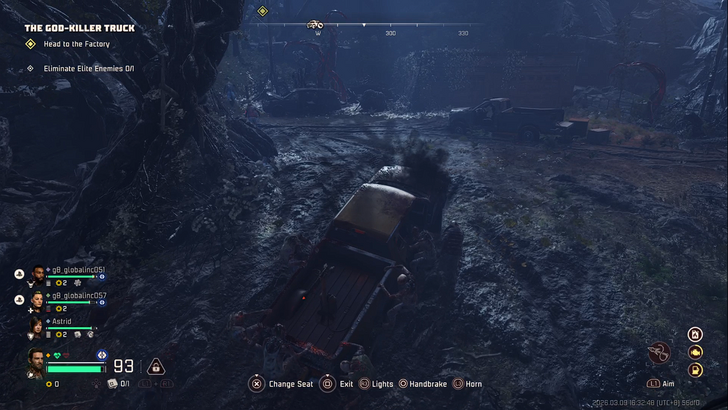
I feel that examples are in order. Let’s take the game’s vehicle mechanics, then. The bombast of exploding cars and vehicle-mounted mayhem is cool and all, but using a car in this mess should come with its own troubles as well. Getting stuck in the Sludge is a common situation parties will find themselves in, often with the looming threat of a pack of Undead close behind. This is normally cause to abandon the vehicle, but if it has a winch, getting back on the road is as simple as a few well-aimed winch pulls.
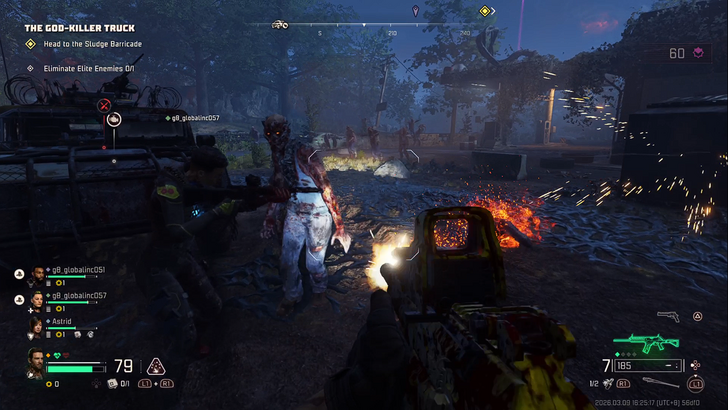
What about horde behavior? The game’s not linear, so having them all pour from the same hallways L4D-style isn’t going to be very engaging, and is easily exploitable to boot. No, hordes roam throughout the map, with very specific and situational rules that players can pick up on as they stack up the hours of gameplay.
There’s a very intentional finger on the scale here, pushing players to learn as they go or risk being overrun by a horde after getting too greedy. Eventually, players will be able to sniff out the patterns and plan accordingly, seeing as the order of objectives is almost always their choice.
Last stand finales are also affected by this nuanced approach to horde behavior, as waves of enemies come from different directions at different times, and often can be corralled by player intervention if they are prepared enough to do so. This, along with the game’s largely free timeline of objectives, incentivizes further exploration because such actions require Spare Parts scattered around the map, which themselves are often guarded by their own mini-horde.
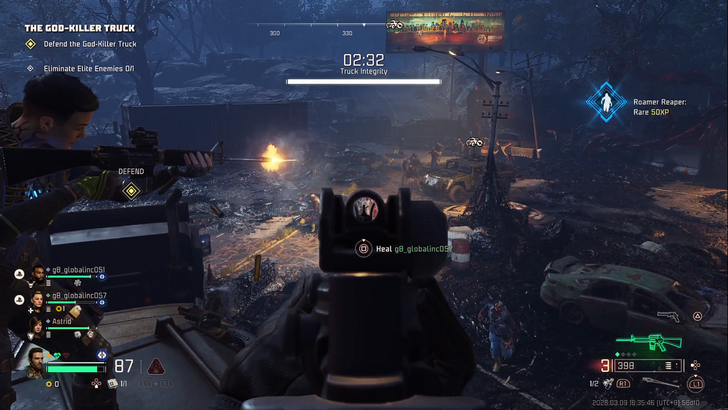
The loop then defines itself as explore, fight, explore, fight, last stand, with plenty of time to re-equip, plan, or sniff out more loot in between each one. Heck, you can drive right up to the final objective in some levels, then head back out to gather the loot you need to make that final stand count.
The dead are in the details here, and it’s clear that there was a vision for this game from the start. I find it hilarious that it manages to pack so much thoughtful design into the core of its gameplay, but can’t find the steam to run for more than a handful of levels. At least the gameplay has benefited greatly from this nuanced approach, though it isn’t the only facet of its make that does so.
Gotta Love that 80’s Sci-fi Horror Camp

Toxic Commando’s story and dialogue all show this vision quite clearly as well, because the campiness of the game’s protagonists (or at least one of them) is off the charts. The design inspirations for the game’s big bad, their underlings, and the themes they represent are almost peak 80’s horror sci-fi, to the point that you might be able to figure out Carpenter had a hand in this, even if he didn’t add his name to the title.
Let’s go through the campiness checklist, shall we? One-liners out the wazoo and the requisite groans from other characters in response? Check. Unknowable enemy with esoteric origins, with body horror as its main mode of infection? Double check. Guns-blazing action with sci-fi mumbo jumbo to boot? Triple check.
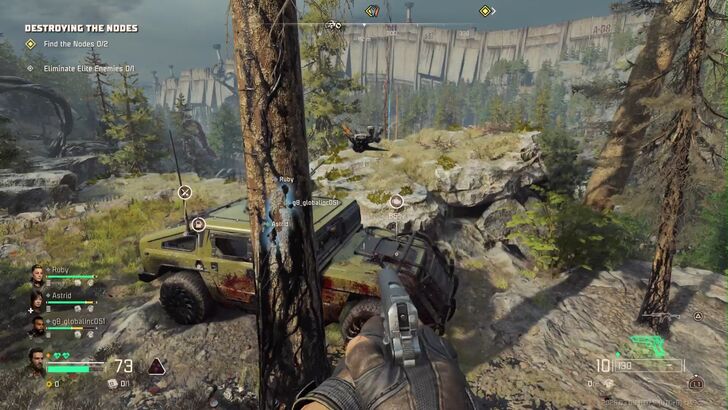
The game practically asks to be a movie (which I wouldn’t mind), and the way it’s been written supports the campiness to a whole new level by making everyone sarcastic, quippy, and having just the right one-liner for every situation.
That’s not to say that it’s jokes, though, because the body horror of the Sludge God comes through effectively through the grotesque designs of the Undead, particularly the special infected.
I will concede that it does all become too much to handle at times. Such is the nature of "camp" as a concept. With all this so-bad-its-good energy, one forgets the bad part of the phrase, and you’ll find yourself overstimulated by the constant plot contrivances and witty dialogue before long.
It’s fun to experience in moderation, as with all things from the 80’s.
Too Few Levels to Contain All This Fun
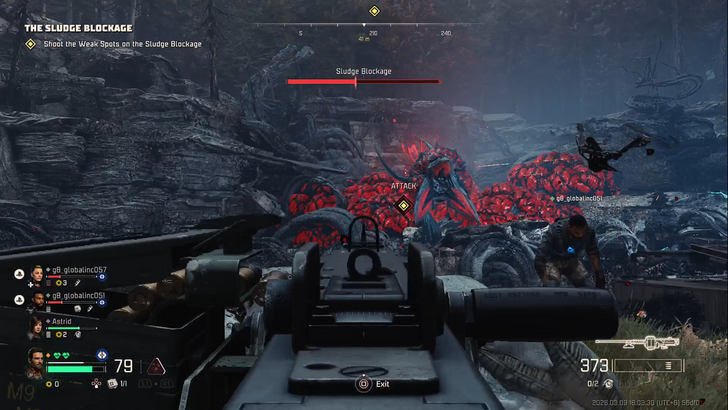
Now we finally address what I’ve been saying about Toxic Commando this entire review. Consider this a criticism borne from love and appreciation for the game, but Toxic Commando is way too short and way too small. Yes, you can replay levels across multiple difficulties, as different classes, and through different paths across the same map. Yes, the weapon and enemy variety is exceptional enough to keep the game fresh for more than a few hours. I’m talking about the maps and missions, of which there are no more than 10, including the tutorial mission.
Imagine my surprise when I played the tutorial mission and the PlayStation 5 homescreen said I was 11% through the entire game. Two missions later, and I was at 33%. Keep in mind, these only took me an hour at most to finish, combined. I wish there were more missions, more story, and more Toxic Commando, but there simply isn’t, at least at the moment.
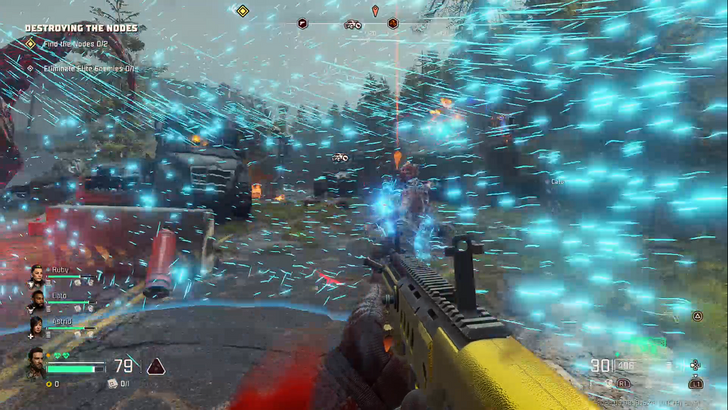
Don’t get me wrong, the game has depth, it just doesn’t have scope. What few missions Toxic Commando lets you experience are all mastercrafted to be the most exhilarating, zombie-slaying experience you can have in its unique open world; there just aren’t that many of them. It’s a very limiting existence that stifles what would otherwise be an excellent new horror shooter in all respects. Instead, it’s only excellent in some.
Running Where Back 4 Blood Stumbled
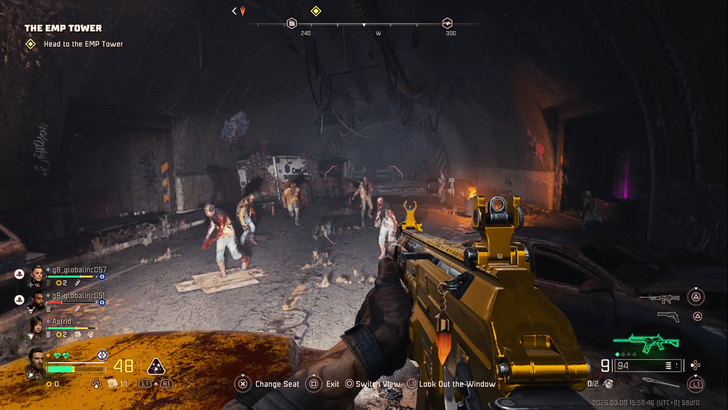
And with that, we’ve reached this review’s final stand. Toxic Commando is a sickeningly good title that could’ve been much greater had it not been too big for its own britches. I mean that in a literal sense, of course, since the game itself is well-designed, well-envisioned, and well-executed, and could freely boast any of those accolades.
As it is, though, it simply cannot contain the scale of its own variety with such a paltry selection of levels and no alternative game modes to supplement it. Replayability is high, but its own depth tells me that it could be higher. Limited by its own existence, you’ll eventually hit the same wall everyone hits when they realize L4D2 only has so many levels. It’ll be a hell of a ride until then, though.
Is John Carpenter's Toxic Commando Worth It?
Costs More on Console, But Worth Every Penny

John Carpenter’s Toxic Commando comes in at a workable $39.99. That price will be multiplied by how many of your crew want to play simultaneously, made even more expensive by any subscription fees if you’re playing on a console like I was, but that remains a completely acceptable price for the game’s quality.
It’s by Saber Interactive, which by no means makes it anything but a AAA title, so I really can’t complain about a price that’s giving retro vibes to go with its story. If your group can’t afford all the copies with the console tax, you can always opt for online co-op instead, so there’s no way for you to lose.
FAQ
How Do I Enable Bots in John Carpenter’s Toxic Commando?
Players can enable bots in John Carpenter’s Toxic Commando by having unfilled slots in their party. Toxic Commando always maintains a 4-player party, so if parties don’t have enough players to fill each slot, bots will replace any character not flagged as a player’s preferred character.
Can You Have Duplicate Classes in the Same Party in John Carpenter’s Toxic Commando?
Yes. Parties are not limited to one of each class, and players from the same party can choose to be the same class despite not having the same character. Each player will still have their own progression on that particular class active, however.
Game8 Reviews