
Sword of Justice Review Overview
What is Sword of Justice?
Sword of Justice is an open-world MMORPG inspired by Wen Ruian’s classic The Four Great Constables: Sword of Justice. Set in a breathtaking reimagining of the Song Dynasty, the game blends martial arts mastery, ancient mysteries, and immersive exploration.
Sword of Justice features:
⚫︎ Open-World Martial Arts Adventure
⚫︎ Solo or Social Play
⚫︎ A Ton of Side Activities
⚫︎ Reimagined RPG Systems
⚫︎ Seasonal-Based Progression
| Digital Storefronts | |||||
|---|---|---|---|---|---|
 Steam Steam |
 App Store App Store |
 Google Play Google Play |
|||
| Price | Free-to-Play | ||||
Sword of Justice Pros & Cons

| Pros | Cons |
|---|---|
 Engaging Main Story with Clear Protagonist Motivation Generous Progression System Wide Range of Activities Engaging Main Story with Clear Protagonist Motivation Generous Progression System Wide Range of Activities |
UI Becomes Overwhelming Minor Bugs and Missing Assets Combat and Difficulty is Too Easy |
Sword of Justice Story - 7/10
Sword of Justice delivers a surprisingly solid narrative for an MMORPG, with a defined protagonist and meaningful personal motivations—a rarity in the genre. The story’s branching dialogue choices and replayable chapters add charm, but predictable arcs and black-and-white antagonists hold it back from deeper emotional payoff. It’s engaging, but not groundbreaking.
Sword of Justice Gameplay - 7/10
The gameplay loop is fun, approachable, and bursting with activities—from main quests and dungeons to quirky side systems like Rambler and PvP arenas. Combat feels smooth, if a little too forgiving at times, and the gacha system adds variety even if underutilized. It’s enjoyable, but its lack of real challenge and confusing abundance of features prevent any semblance of mastery.
Sword of Justice Visuals - 8/10
Visually, the game shines with beautifully crafted environments and expressive cutscenes that capture the grandeur of its world. While not revolutionary, it nails the aesthetic it aims for. Minor rendering issues and UI clutter bring it down a notch, but overall, it’s a world worth seeing.
Sword of Justice Audio - 8/10
The Chinese voice acting is passionate and fitting, capturing the theatrical energy of a historical drama. Sound effects and ambient tracks heighten both exploration and combat, though dialogue sometimes makes exchanges sound hollow, and occasional BGM stutters can pull you out of the moment. Despite these hiccups, the overall presentation remains rich and immersive.
Sword of Justice Value for Money - 10/10
For what it offers—an expansive open world, multiple systems, and no hard paywalls—Sword of Justice is more than worth its price of admission, which is $0. There’s plenty to do without spending extra, and its replayability through branching chapters adds lasting value. It’s generous, immersive, and content-rich.
Sword of Justice Overall Score - 80/100
Sword of Justice stands out as an MMO that genuinely tries to tell a story worth following while keeping its gameplay engaging. It’s filled with systems that reward curiosity, a narrative that gives players purpose, and a world that feels alive even when it stumbles. Not every part of it lands perfectly—the UI can overwhelm, and combat could use more bite—but its ambition and heart make it easy to recommend.
Sword of Justice Review: Justice Served (Mostly)
A World That Promised to Redefine the MMO
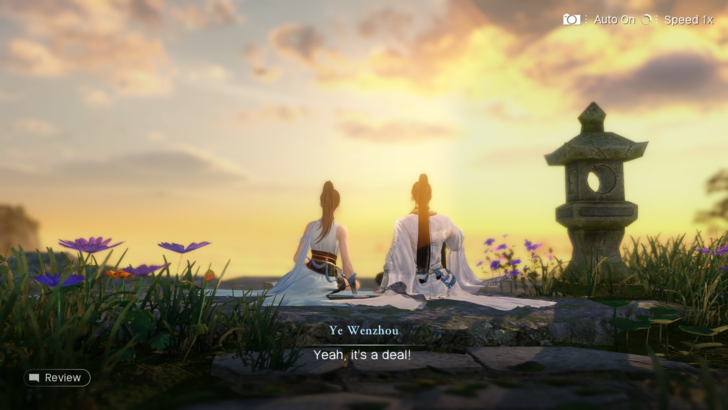
There was a time when MMOs were all I played—days and nights blurred by raids, gear grinds, and the comforting rhythm of a living world that never slept. From the high-fidelity spectacle of Black Desert Online, to the classic mobile grind of Toram Online, and dense, system-packed chaos of Dragon Raja Sea, I’ve wandered through just about every kind of digital realm that promised adventure and community. But the MMO landscape has changed. Worlds are getting bigger, systems are getting denser, and ambitions are climbing higher than ever.
And while everyone’s waiting for the global release of Where Winds Meet, here comes Sword of Justice—a new contender to the global world that doesn’t just want to fit into the MMO mold but to challenge it. It promises a world where your actions shape the story, where justice isn’t just a theme but a system, and where player choice supposedly matters more than your next level-up. Lofty, right? But the question is, did it actually succeed?
Let’s get into it.
A Cursed Heart in The Martial World
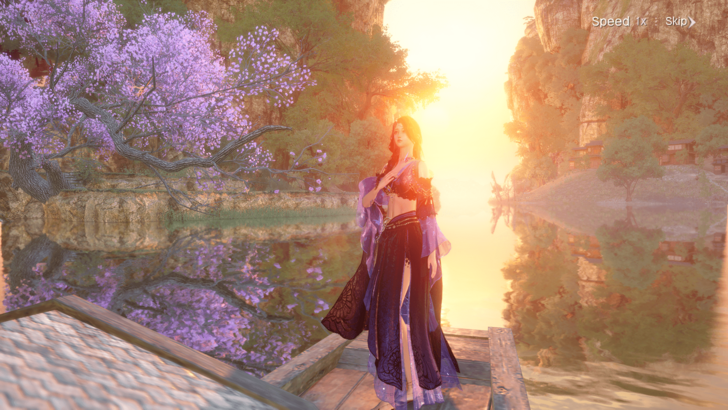
Sword of Justice takes place in a world where martial arts isn’t just a discipline—it’s a philosophy, a way of life that governs the balance between strength, spirit, and morality. Our story begins with a constitutionally weak protagonist, born with what they believe is a frail heart, and burdened by a recurring nightmare that’s haunted them since childhood. Taken in by a Shifu, they spend their early years training on a mountain hidden from the rest of the world, mastering the art of survival despite their physical limitations.
Their quiet life changes when they’re sent down to a nearby city on a seemingly simple task. There, they meet a lot of new people, including Baihe, a girl under the control of a cruel and manipulative man. Moved by the injustice of Baihe’s situation, the protagonist promises to return in a month and pull her out of that life. But when the protagonist returns to the mountain, the story takes a darker turn. New conspiracies surface, enemies emerge, and the truth behind their "weak heart" begins to unfold. It isn’t weakness at all; it’s a curse, one that took root during the same nightmare that has plagued them for years.
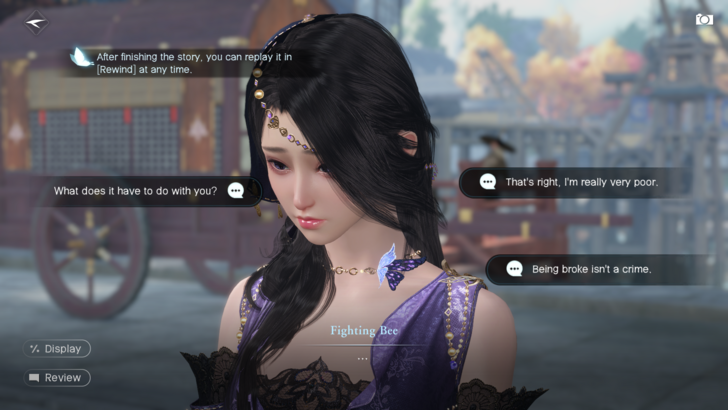
When they learn that the curse will claim their life within a year, the protagonist decides to defy fate itself. Determined to uncover the truth behind their past, they descend the mountain for good, stepping into a vast, dangerous world filled with rival sects, political machinations, and divine mysteries. Along the way, they’ll meet allies and enemies alike—each carrying their own ambitions and secrets—and what begins as a quest for survival soon unravels into something much greater: a story of destiny, justice, and the weight of one’s choices.
Endless Cycle of Battle, Bonds, and Balance
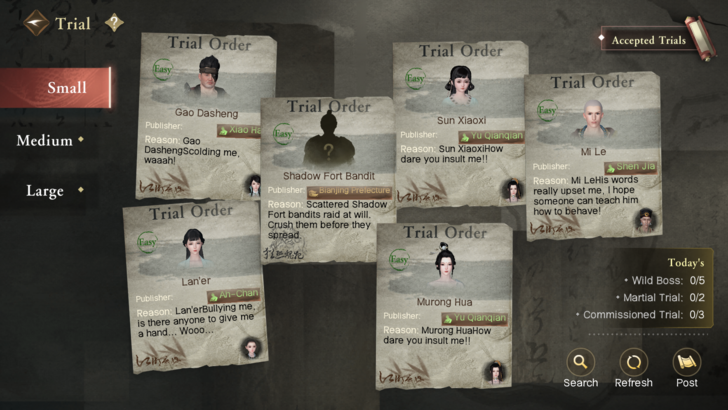
The main story in Sword of Justice flows much like a traditional martial arts drama; you travel from one province to the next, chasing threads of conspiracy and destiny, and each major story beat usually crescendos in a cinematic combat encounter. It’s a familiar rhythm: dialogue, travel, discovery, battle, repeat. But it works.
That pacing gives the narrative room to breathe while ensuring players are never too far from a fight. Eventually, the main quest begins to branch into several narrative paths. While the lore behind them is interconnected, these threads don’t fully intertwine, creating distinct arcs that explore different parts of the martial world rather than one tightly braided storyline.
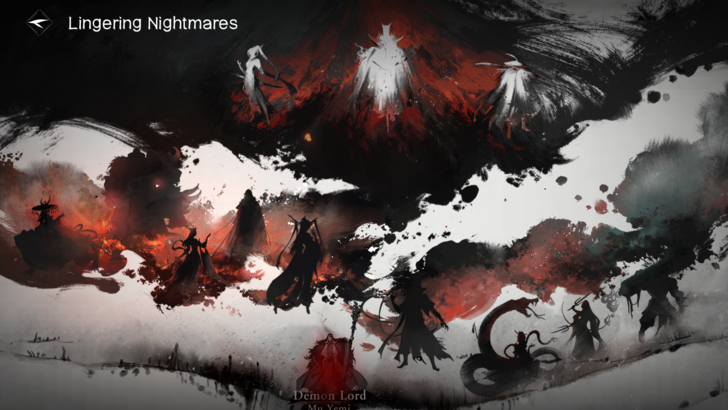
Outside the main story, the world opens up into a sea of possibilities. There are side stories that expand the lore, Martial World quests that push your skills, and Adventure quests that take you off the beaten path to uncover small character moments or hidden treasures.
And with the main chapters being time-gated, requiring you to wait until the next day to continue (yes, real time), the game nudges you toward everything else it has to offer. While some players may find the wait annoying, it doubles as an invitation to explore the other main quests, catch up on side stories, or simply wander.
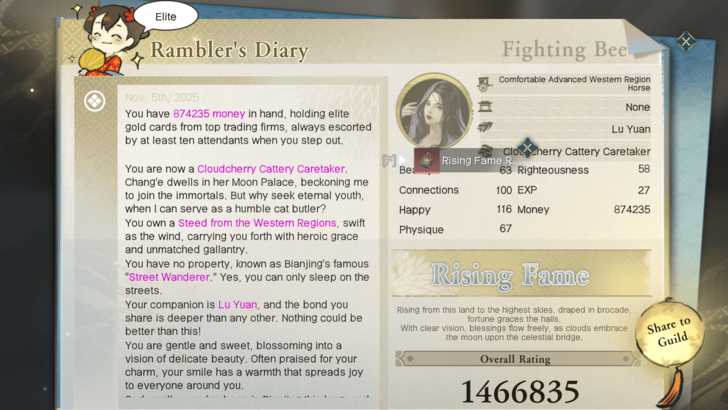
It’s an MMO at heart, meaning the gameplay loop is as much about progression and distraction as it is about the central plot. You might log in to advance the story and end up spending hours exploring dungeons or tinkering with your house instead.
You’ll find yourself bouncing between mini-games like Rambling, a freeform exploration mode I’ll touch on later, and competitive features like MOBA-style arenas where players test their martial prowess against each other in flashy, chaotic duels. Add in guild events, a surprisingly deep housing system, and a relationship feature that can even lead to in-game marriage, and the loop becomes clear—it’s a digital life of its own.
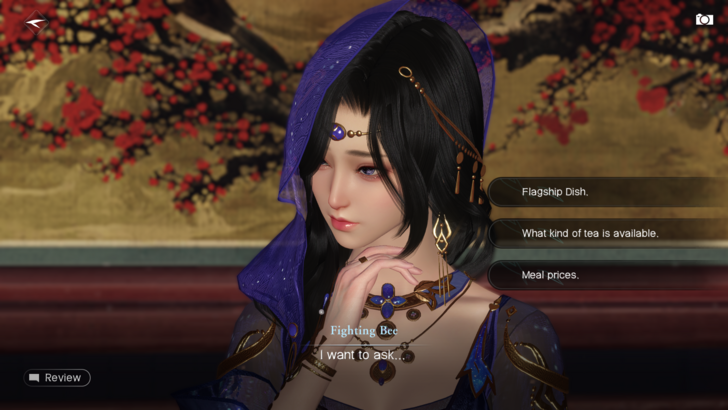
But that’s where the balance comes in. With so much to do, Sword of Justice constantly asks, Will you chase justice, or will you get lost in the world around it?
A Story That Knows Its Hero
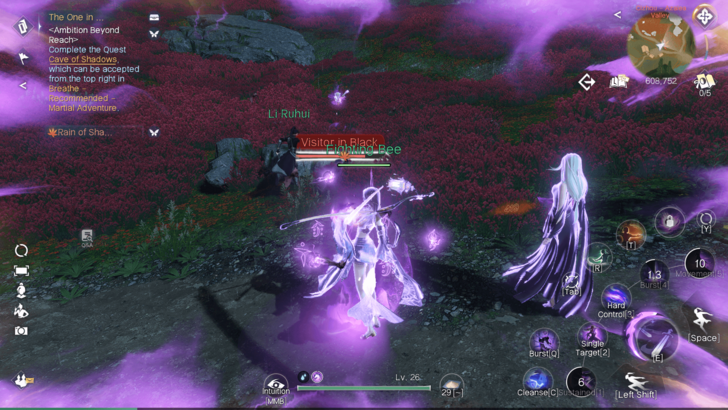
I’ll start with the story, and honestly, it’s stronger than most MMOs I’ve played in years. See, the problem with many MMOs is that you’re rarely the hero. You’re the errand runner, the courier, the "somebody please fetch ten herbs while the real protagonist gives an inspiring speech" kind of character. Sword of Justice flips that just enough to make a difference.
Yes, the narrative still has you crossing paths with other characters whose arcs you help push forward, but everything always loops back to your journey. Every favor, every alliance, every fight feels like a step toward your own destiny rather than a distraction from it.
It helps that the protagonist has a clear, compelling motivation. You’re not saving the world because the plot says so; you’re doing it to survive, to understand the curse that’s been shadowing you since birth. And that personal drive gives the broader narrative an emotional anchor.
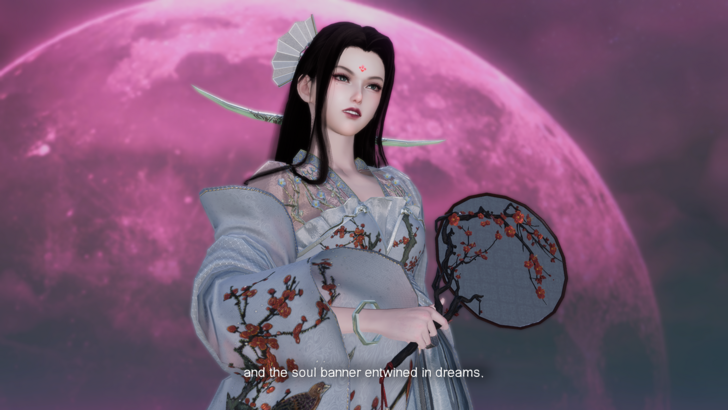
That said, the story is compelling without necessarily being gripping. The major story beats, like the political strife, romantic loyalties, bureau secrets, and inevitable betrayals, are all there. But the writing doesn’t always land with the weight it’s aiming for.
Maybe it’s the pacing, or maybe it’s the sheer volume of quests happening around the main thread, but I often found myself wanting to be more invested than I actually was. It’s not a bad story, per se. The plot exists, intrigue exists, the themes are clear, but something in the execution keeps it from fully sinking its hooks in.
Some of the antagonists lean a bit too hard into their villain roles—those "evil because the script said so" types—but the rest of the cast fare better. They’re not the most nuanced characters you’ll ever meet, but they’re not flat either. They live, breathe, and often surprise you with how much they grow.
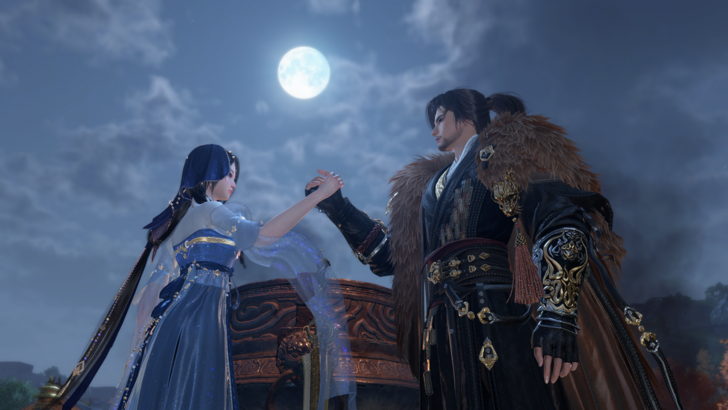
What’s impressive, though, is how Sword of Justice handles replayability within its story. You can revisit chapters after finishing them—nothing new in the MMO space, sure—but here, there’s a twist. Choices matter.
Dialogue options branch in subtle ways, sometimes unlocking only if you’ve explored enough or interacted with certain NPCs beforehand. It doesn’t change the ultimate ending, but it changes how you get there. Seeing alternate reactions, new insights, or missed paths makes the story feel alive in a way most MMOs, or even single-player RPGs, don’t bother to.
Drama in Sound and Sight
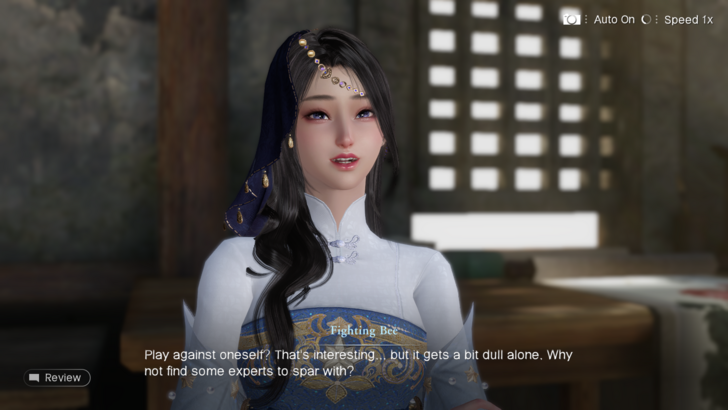
Sword of Justice is fully voiced in Chinese, though the interface and subtitles are available in English. There were a few moments when subtitles failed to render, but it didn’t stop me from keeping up with the story. In fact, the Chinese voice acting adds a certain flavor—like watching a period drama come to life, complete with those impassioned deliveries and sharp tonal shifts that sell every moment of tension. It gives the world more authenticity, even if you don’t understand the language.
Visually, the game lands in that familiar CRPG territory. It’s undeniably beautiful—crisp environments, ornate architecture, and character designs that lean heavily into the wuxia aesthetic—but it doesn’t quite redefine what an MMO can look like. You’ll catch yourself admiring a sunset over a misty valley one moment and then noticing how certain textures or animations feel a generation behind the next. The overall presentation works; it sells the fantasy but doesn’t really deliver what the devs have promised.
Schools, Stats, and the Surprising Simplicity
Let’s get into the meat of it, the gameplay. I’ll say it outright: Sword of Justice is both very easy and very confusing. I know that sounds like I’m contradicting myself, but hear me out.
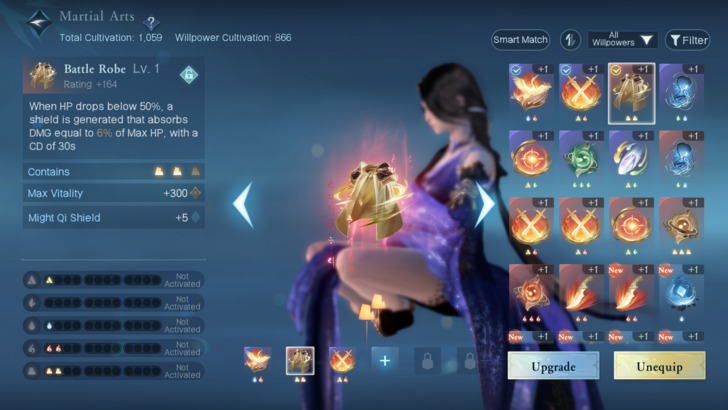
There are six schools—essentially your classes—each offering its own combat identity: Nightwalker, Ironclad, Bloodstrom, Clestune, Sylph, and Numina. I went with Numina because, well, it looked the prettiest—and also because it deals the most damage while balancing support abilities.
Each school unlocks a distinct set of skills, and you can further enhance your character using Aptitude Points to raise stats like vitality, willpower, hit damage, and crit rate. It’s a standard RPG system at its core, with recommended stats for each school to make it easier for newcomers to navigate.
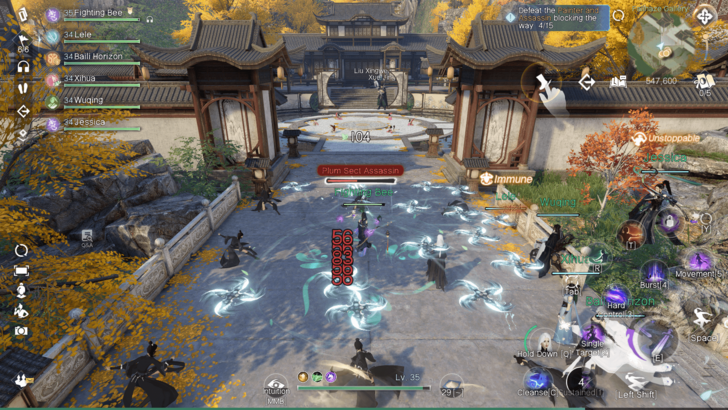
Now, why do I say it’s easy? Because combat rarely pushes back. I cruised to level 40 without touching a single stat upgrade or equipment change. Bosses, story fights, side battles—they all went down with my starter setup.
The combat was so easy that it often turned into pure button-spam. Since you can automate full combo strings just by pressing a single attack button, most encounters boil down to tapping the same input repeatedly and watching enemies melt. It’s flashy, sure, but not exactly demanding.
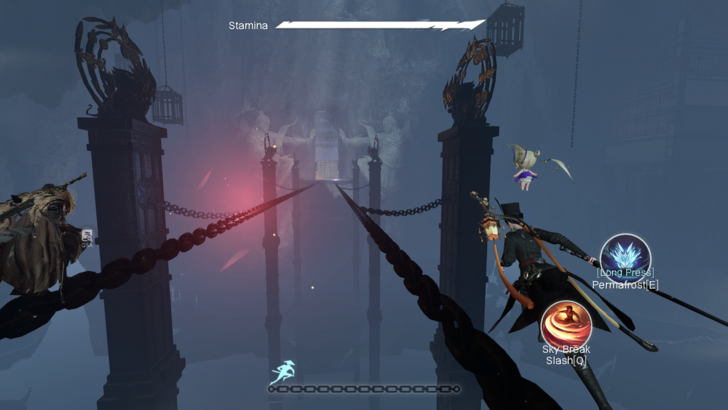
Even resources are everywhere. Crafting materials practically fall into your lap—granted as quest rewards or lying around during exploration. There’s no real grind, at least not in the early or midgame. I’m not complaining exactly—the developers did say this will be a no grind, no p2w, adventure—but I can’t help but wonder if it’s too easy.
Another thing to note is that while the MMO offers a wide range of activities on paper, it feels limited in practice. There are PvP areas, but they’re fairly contained and don’t offer incentives. Dungeons follow a similar pattern: fun the first time around, but sparse and lacking the depth or replay value you’d expect from an MMO that promises a more robust structure.
Heroes and Gacha
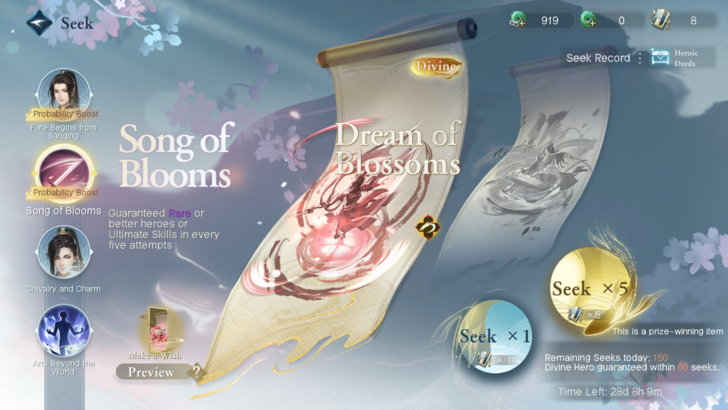
Sword of Justice includes a gacha mechanic, but don’t expect to pull for flashy companions or husbando collections. Instead, you pull for skills tied to heroes. These hero skills can be equipped to your character, but here’s the catch: you can only use one hero at a time.
It’s a bit of a shame, really. There’s potential here for collectors—people like me who would happily chase rare heroes just to build the ultimate roster—but when you can’t deploy multiple hero skills simultaneously, it starts to feel a little pointless.
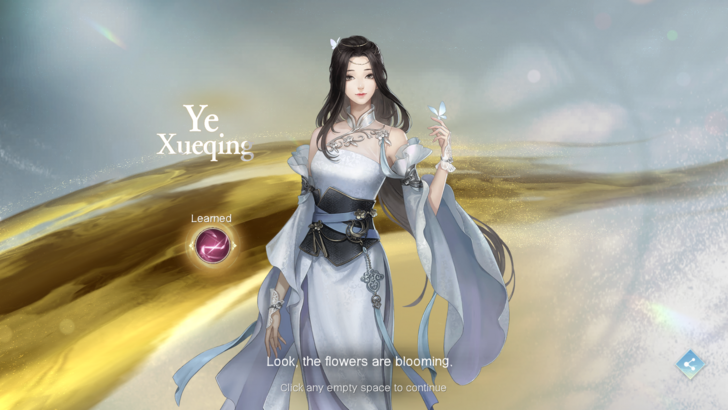
Pull rates aren’t brutal, though. A single "Seek" roll has about a 1.5% chance of granting a divine skill and roughly 9.8% for rare ones. Even better, the currency used for seeking—Jades—is surprisingly easy to earn. You’re showered with them through quests, events, and milestones, making the system more forgiving than most gacha-based games.
Still, I can’t help feeling that this mechanic, while interesting on paper, doesn’t yet justify its own existence. It’s a side dish that never quite becomes the main course.
Trials, Dungeons, and the Life of a Rambler
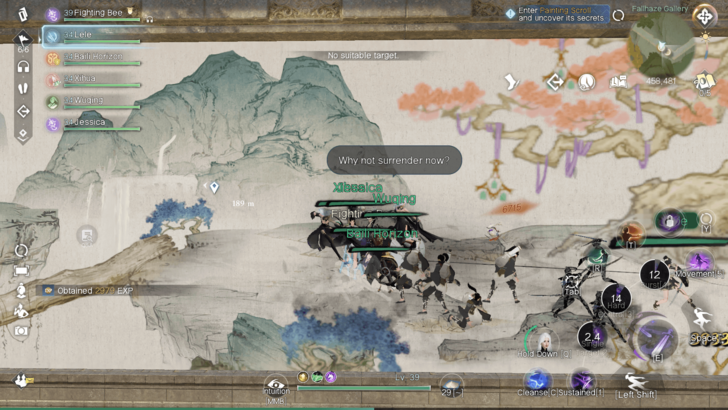
I ran dungeons and Trial by Combat matches with either other players or auto-generated AI allies and opponents, and these, too, leaned on the easy side—straightforward dungeon routes with clear objectives, capped off by mini-stories that gave each location a bit of flavor.
As I mentioned before, dungeons are pretty limited, but to their credit, each one is thoughtfully crafted. Exploring them is like moving inside a painting, and the little narrative snippets feel rewarding. Still, once the novelty wore off, I started to realize that these encounters don’t quite scale in challenge.
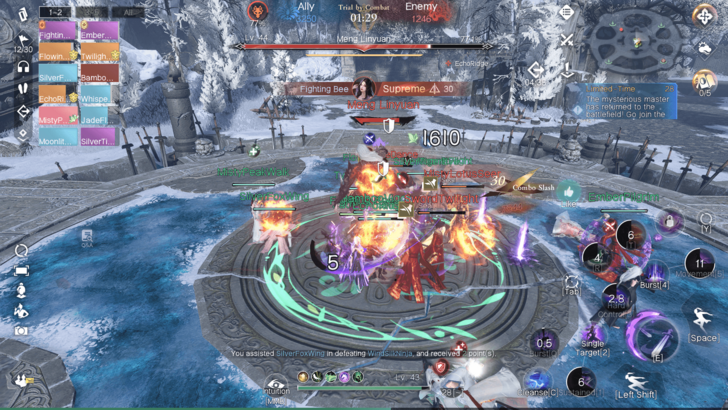
Trial by Combat was the real surprise. It plays out almost like a MOBA, minus the tower defenses. Two teams clash head-on, racking up kills to earn points and dominance. It’s chaotic, it’s flashy, and even against AI, it’s fun in short bursts.
And then there’s Rambler, one of the strangest, most delightful side systems in Sword of Justice. Think BitLife meets wuxia philosophy. You follow your character from birth to adulthood across seven days, making life choices that shape your destiny—whether you pursue wealth, influence, or reputation. It’s charming and it reinforces the game’s recurring theme that your path is never set in stone.
Where the Blade Dulls
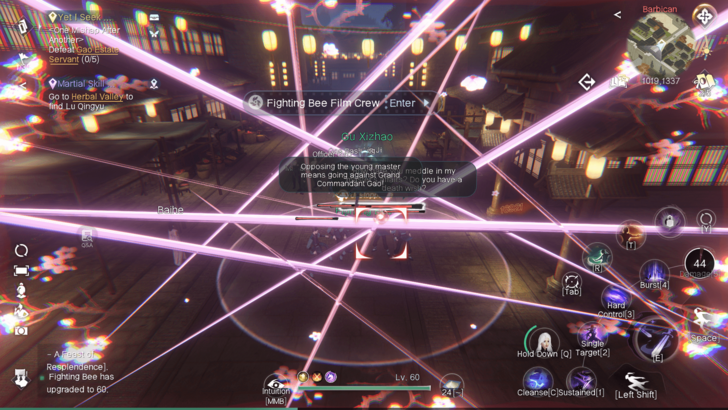
For all its ambition, Sword of Justice can be overwhelming. With so many systems packed into one experience, the game starts to blur the line between feature-rich and feature-bloated. There’s a guide, yes, but it often feels more like a list of reminders than an actual helping hand. Menus multiply and by the time you’ve unlocked everything, even the so-called "minimalist" layout begins to look like organized chaos.
And then there are the bugs—early access copy or not, they’re hard to ignore. I can forgive minor hiccups, but when a mount refuses to spawn and the quest tied to it becomes unplayable, that’s not a small issue. I had to skip an entire chapter because the horse I was supposed to lead simply… didn’t exist.
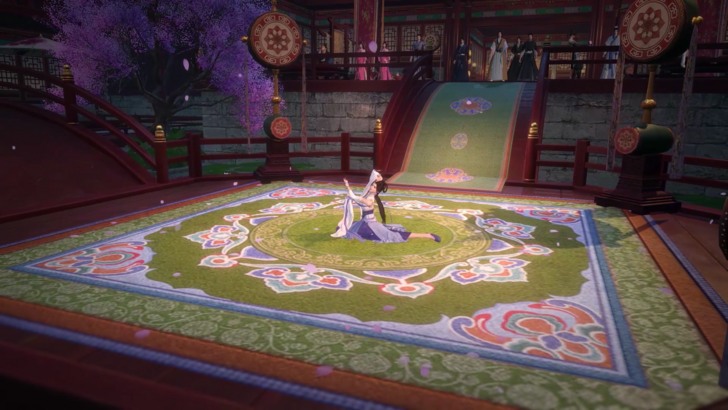
Subtitles also sometimes refuse to appear, and the occasional "he" slips out when referring to my female character, but these hiccups don’t ruin the experience. Beneath the bugs and clutter lies an MMO with genuine heart—a game that wants to blend traditional martial arts storytelling with modern systems and community-driven play.
Another thing I’m not particularly a fan of is the auto-tracking system for quests. I’m not saying it’s inherently bad since most MMOs have some form of it, but the fact that it is present says a lot. Although Sword of Justice doesn’t force it on you since it’s limited and requires consumables items to be of use, the mere existence of an autotrack proves that the quest flow often involves too much running back and forth in one singular place that could’ve been streamlined into a single, cohesive sequence.
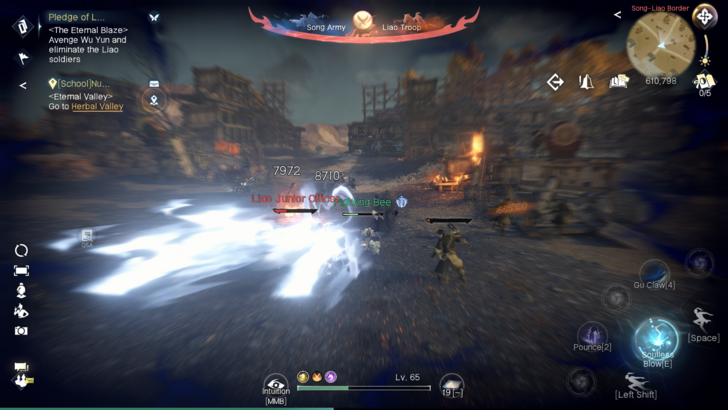
The UI is also strongly confusing at times, almost as if it were lifted straight from a mobile port. So many buttons, icons, and nested menus feel designed for a touch screen first, leaving the PC layout feeling cluttered and unintuitive. And sure, I understand that MMOs tend to have busy interfaces by nature—but there’s a difference between dense and disorganized. Sword of Justice often leans toward the latter, making simple tasks feel like you’re clicking through layers of menus just to find what should’ve been obvious from the start.
Despite its flaws, Sword of Justice shows a lot of promise. It’s not perfect, but it doesn’t have to be. For MMO fans who’ve grown tired of recycled loops and hollow worlds, Sword of Justice offers something that at least tries to be different. And that’s worth celebrating.
Is Sword of Justice Worth It?
Despite Its Flaws, It's Still Rightfully Worth It
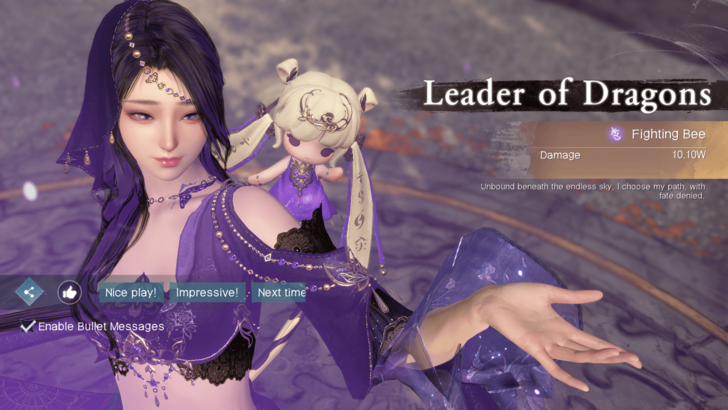
So while Sword of Justice may have failed to deliver everything it promised, in my humble opinion, it’s still worth your time. Beneath the layers of systems, bugs, and confusing menus lies a game that understands why we love this genre in the first place: the thrill of adventure and the satisfaction of watching your character grow stronger not just in numbers, but in purpose.
It’s still a little unrefined, still searching for balance between its ambition and execution, but that’s part of what makes it exciting. You’re not just playing an MMO—you’re stepping into one that’s still evolving, still learning how to tell its story better.
I will say, though, that while it’s a game I can genuinely recommend, if you’re looking for a fully polished, tightly directed experience, you might be better off with Where Winds Meet. But hey, you can just play both, especially since the two scratch very different itches in the genre.
For newcomers, it might feel daunting; for veterans, it’s a breath of fresh air in a genre that’s been coasting for too long. And if you can look past its rough edges, Sword of Justice just might surprise you.
| Digital Storefronts | |||||
|---|---|---|---|---|---|
| Steam |
App Store |
Google Play |
|||
| Price | Free-to-Play | ||||
Sword of Justice FAQ
What Are Sword of Justice’s System Requirements?
| System | Minimum | Recommended |
|---|---|---|
| OS | Windows 10 64-bit | Windows 10 64-bit |
| Processor | Intel i5 9th generation / AMD equivalent | Intel i7 9th generation / AMD equivalent |
| Memory | 8 GB RAM | 16 GB RAM |
| Graphics | NVIDIA Geforce GTX750TI / AMD equivalent | NVIDIA Geforce GTX1060 / AMD equivalent |
| Storage | 55 GB available space | 55 GB available space |
Game8 Reviews

You may also like...
 |
Where Winds Meet Review Action, Adventure, RPG |
 |
Battlefield 6 Review Action, Multiplayer, Shooter |
 |
Megabonk Review Shooter, Action, Roguelike |
 |
Borderlands 4 Review Action, Adventure, RPG, Shooter |
 |
Longvinter Review | A Cozy Escape... If You Have the Patience 1, MMO, PvP, PvE |
Sword of Justice Product Information
 |
|
| Title | SWORD OF JUSTICE |
|---|---|
| Release Date | Game Drop November 5, 2025 Server Launch November 7, 2025 |
| Developer | ZhuRong Studio |
| Publisher | ZhuRong Studio |
| Supported Platforms | PC (Steam), Mobile (Android, iOS) |
| Genre | MMORPG, Adventure, Open-World |
| Number of Players | 1, MMO, Server Limit |
| ESRB Rating | T |
| Official Website | Sword of Justice Website |