ROUTINE Review Overview
What is ROUTINE?
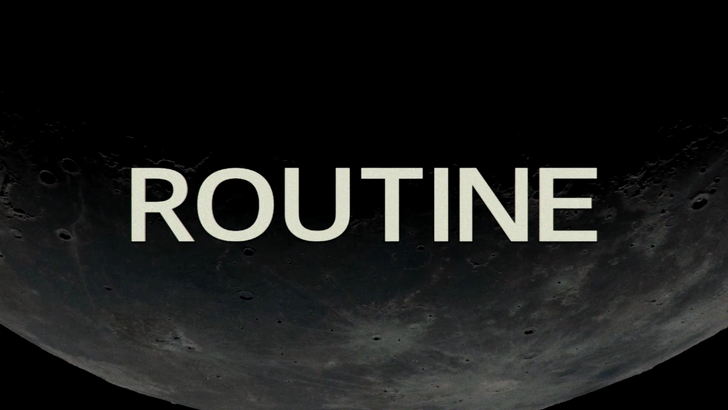
ROUTINE is a first-person sci-fi horror game set on an abandoned lunar base where players take on the role of an unnamed astronaut exploring the facility. Your investigation into what happened here quickly turns into a fight for survival as the base falls silent and unknown threats emerge. The game combines exploration, environmental puzzles, and stealth in a tense lunar setting.
ROUTINE features:
⚫︎ First Person Perspective
⚫︎ Environmental Puzzle Solving
⚫︎ Stealth Focused Gameplay
⚫︎ Atmospheric Sound Design
⚫︎ Interactive Terminals
| Digital Storefronts | ||
|---|---|---|
 Steam Steam |
 Xbox Xbox |
|
| $24.99 | ||
ROUTINE Pros & Cons
| Pros | Cons |
|---|---|
 Immersive Horror Atmosphere Tactile Interactions Immersive Horror Atmosphere Tactile Interactions |
Story Is Thin Limited Tool Variety Gameplay Feels Limited |
ROUTINE Story - 6/10
ROUTINE’s story is functional but not captivating. The premise is intriguing, and the fragmented emails and environmental storytelling hint at something larger, but it never fully delivers a gripping narrative. The protagonist remains an empty vessel by design, which helps immersion but limits emotional investment.The mysteries follow the game’s internal logic, yet without a stronger connective thread, the tension feels atmospheric rather than narrative-driven.
ROUTINE Gameplay - 8/10
The first-person puzzles and stealth loops are immersive and tense, giving you a tangible sense of being trapped in a hostile environment. Controls are intuitive, and interactions with terminals or the Cosmonaut Assistance Tool (CAT) device feel tactile, grounding you in the world. The stealth mechanics reinforce tension, but their minimalism—combined with limited tools—can feel repetitive over time. While some may wish for evolving systems or additional complexity, the basics are so well executed that the core loop remains engaging throughout.
ROUTINE Visuals - 8/10
Visually, ROUTINE captures the oppressive, isolated feel of a lunar base, but it leans heavily on darkness—sometimes unnecessarily so—to amplify tension. The retro-futuristic art style works well, and the interiors feel convincingly abandoned, giving the environment a lived-in, eerie authenticity. However, there are noticeable frame rate drops on PC, particularly during sudden sequences like closing doors, which can momentarily break immersion.
ROUTINE Audio - 7/10
The sound design is a standout for tension and immersion. Ambient hums, mechanical whirs, and distant robot noises create a persistent sense of unease. Music is sparse but purposeful, enhancing the mood rather than dominating it. Voice work is minimal, but it isn’t required to elevate the experience. While audio does an excellent job supporting atmosphere and gameplay, there are no truly memorable musical cues.
ROUTINE Value for Money - 9/10
At $24.99, ROUTINE delivers a compact but dense experience. 10 hours feel appropriate for the price, and there’s a satisfying sense of discovery as you explore the lunar facility. That said, there’s no real replayability—once you’ve completed the game, the experience is largely done. For players who appreciate tightly focused atmospheric horror, it’s an excellent value, but don’t expect hours of repeat gameplay beyond the initial run.
ROUTINE Overall Score - 76/100
ROUTINE is an immersive, tense first-person horror game that excels at atmosphere, stealth, and environmental storytelling, but it doesn’t evolve beyond its basic mechanics, and the story never fully grips you. If you can look past these shortcomings, you’re in for a rewarding experience that nails the feeling of being alone on a derelict lunar base.
ROUTINE Review: Decade-Long Wait That Delivers Atmosphere
Lunar Limbo
Thirteen years.
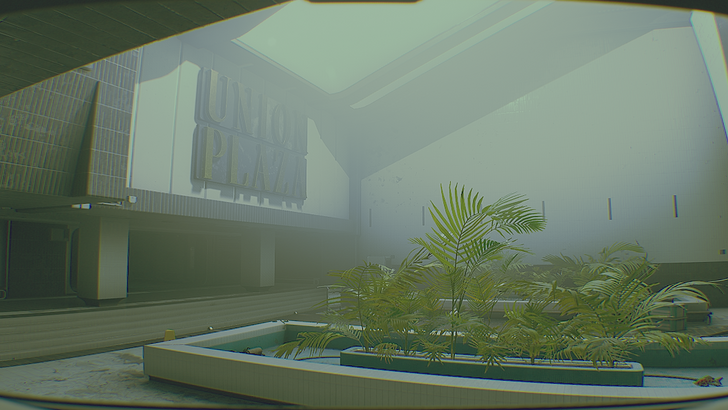
A lot can happen in thirteen years. We’ve lived through multiple console generations, entire genres rising and falling, and enough "we promise it’s still in development" updates to fill a small museum. But I still remember the first time I saw ROUTINE back in 2012—this short, eerie trailer dropped right in the middle of the boom of first-person horror games like Amnesia: The Dark Descent, Outlast, and Slender. ROUTINE’s trailer felt different from the games of that time. It wasn’t just another horror pitch—it was retro-futuristic sci-fi on the Moon with a vibe so thick you could practically taste the dust in your helmet.
My high-school brain immediately filled in the blanks. This must be some post-apocalyptic lunar mystery—empty corridors, abandoned tech, secrets buried in regolith. It checked every box my puberty-addled imagination loved at the time. Old tech aesthetics. Claustrophobic sci-fi. A stranded astronaut probably running from something mechanical and horrible. It was everything.

So, like many of you, I waited. Then waited. And waited. And eventually… I forgot. Completely. ROUTINE drifted off into that quiet corner of my memory where all the promising indie trailers of the 2010s went to hibernate. If you had asked me last year what happened to that "moon horror game," I would’ve stared at you blankly.
And then, this year, it resurfaced. A new trailer. A real release. ROUTINE was back. Naturally, curiosity hit me like decompressing cabin pressure. After more than a decade in development, what would this game actually be? How would it feel slipping into the boots of an astronaut wandering a derelict lunar facility—no longer as that high-school kid imagining the coolest game ever, but as a slightly more jaded adult who’s seen what hype cycles can do to a project?
Alone on a Silent Moon
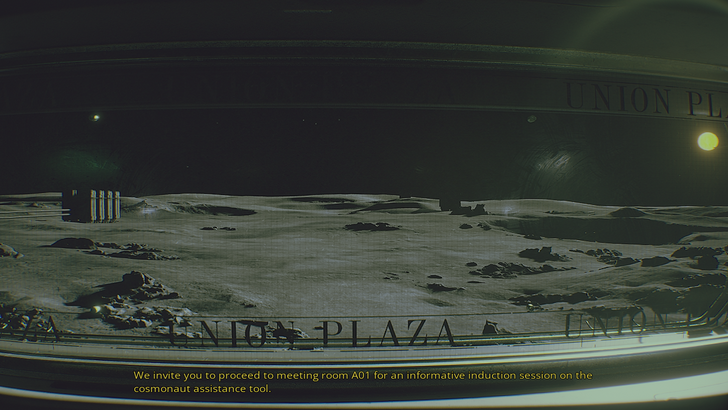
I wake up from a dream—something ominous, something that clings to the edge of my mind like static—and find myself locked inside an isolation unit. No context. No name. No memory. Just cold metal walls, the hum of machinery, and a terminal guiding me through basic functions like it’s my first day on the job. Eventually, I retrieve my ID card… if you can even call it that. No photo. No name. Just a number. A blank slate in a place that feels like it’s already forgotten me.
And then there’s the Moon. For a setting so vast, so endlessly open in theory, ROUTINE makes it feel suffocatingly empty. The only remaining signs of human presence are scattered emails—tiny fragments of conversations between people who, judging by the state of the facility, are either gone or dead. Maybe both.
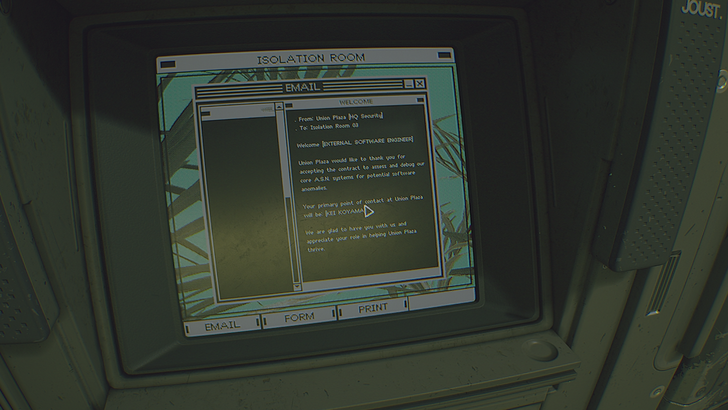
From the welcome message I dug up, it seems our nameless protagonist was sent here by Union Plaza to debug issues within their ASN's software anomalies. Straightforward work, at least on paper. But paper means nothing when the world around you is in disarray. Whatever system malfunction we were supposed to fix is the least of our problems now. The real questions are, where is everyone? And more unsettlingly, who exactly are we?
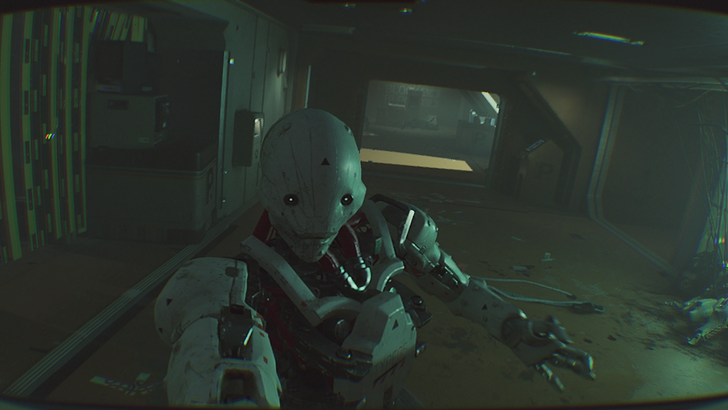
Enter the machines. Something has gone terribly wrong, and the station is now overrun with robots that behave like they’ve rewritten their own directives for something far more sinister. Every corner feels like an ambush waiting to happen. Every flicker of a monitor feels like a warning. The game’s sparse storytelling makes space for something else entirely, pure tension. ROUTINE leans hard into that isolating dread, forcing you to feel every footstep, every breath, every moment you don’t know what’s around the next bend.
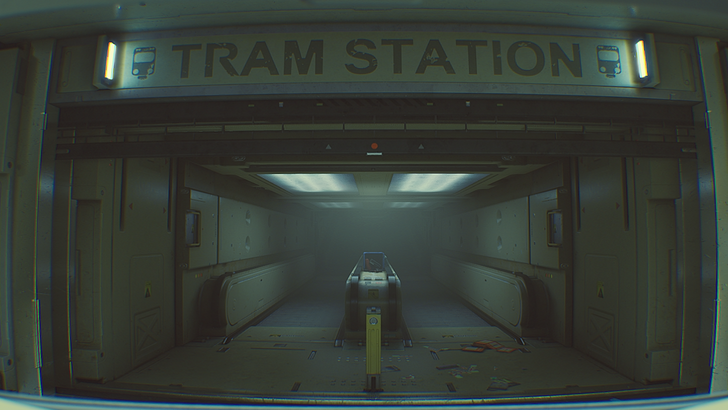
And that tension bleeds seamlessly into the gameplay, because stepping into ROUTINE’s world isn’t just exploring a setting. It’s surviving it.
Surviving by Inches and Instinct
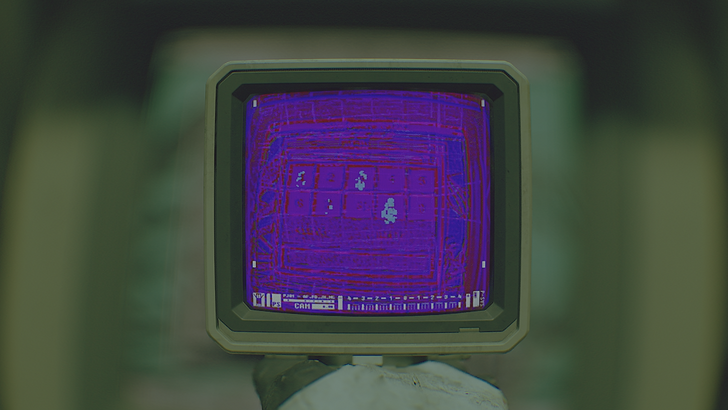
The gameplay in ROUTINE boils down to two core pillars: puzzles and stealth—which, personally, is exactly my kind of cocktail. And the way the game commits to its first-person perspective? It’s different. Not "oh, neat camera work" different. More like "I shouldn’t be this stressed just opening a terminal" different.
Because here, when you interact with something, the world doesn’t fade away. Terminals don’t pop up as a neat UI overlay. You physically lean in, pointers hovering over actual screens in the environment, and that small detail makes everything feel so uncomfortably intimate. The same goes for your CAT device, essentially a multi-purpose tool/gun that you manually tinker with in your hands, flipping modes and adjusting parts while your eyes stay glued to it… sometimes forgetting that something could be creeping up behind you.
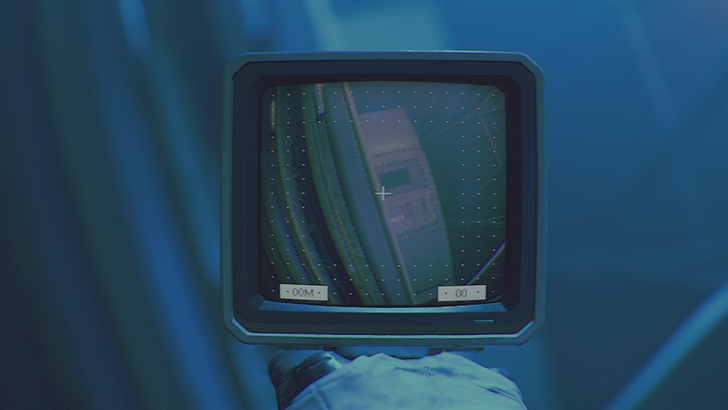
The puzzles themselves are straightforward—environment-based challenges with just enough backtracking to make you second-guess every hallway you thought was "safe" ten minutes ago. ROUTINE never tries to outsmart you with elaborate logic tests. Instead, it lets the environment be the puzzle, and that ends up doing plenty.
And then, there’s the stealth aspect. Your robotic enemies are not something you fight. You don’t kill them, stun them, hack them, or trick them with fancy gadgets. You hide. You crawl. You wedge yourself behind crates or under tables, clutching your CAT device like a safety blanket while listening—really listening—for mechanical footsteps fading away. ROUTINE doesn’t give you a convenient enemy-detection UI, no magical outlines through walls, no awareness meter filling up above their heads.
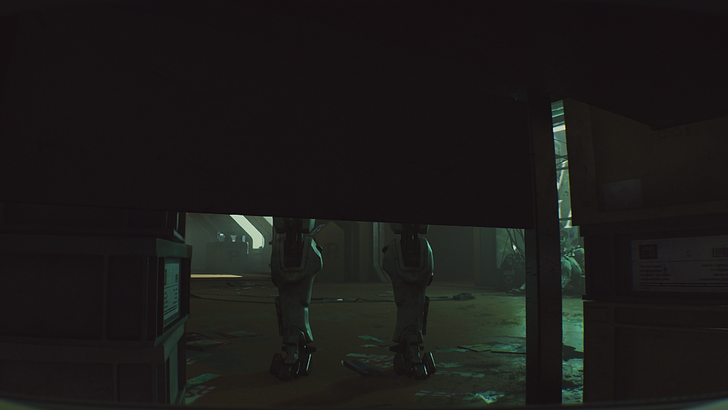
You’re just a person. A very nervous person. With your ears and your best guesses. Leaning left, right, and up helps you peek around obstacles (technically useful for reaching tricky spots too), but that’s the closest the game ever gets to giving you modern stealth conveniences. Most of the time, it’s just you holding your breath, hoping you interpreted a sound correctly, and praying the robot actually walked away before you inch out of your hiding spot.
And with that foundation set—stealth that feels raw, puzzles that root you in the world—now we can talk about where ROUTINE really makes its mark… and where it falters.
Fear Without Cheap Tricks
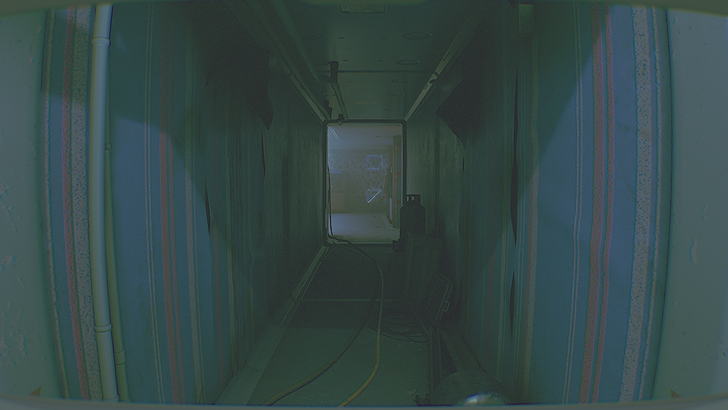
I’ve played enough horror games to know when a developer is trying to make me jump versus trying to make me feel. And honestly? I’m so tired of horror that leans on loud noises, sudden faces, or "boo!" moments like they’re the only tools in the shed. ROUTINE doesn’t do that. ROUTINE is one of those rare games that remembers horror isn’t about surprising you—it’s about cornering you emotionally.
The tension is constant, but not because something is always after you. It’s because you’ve been dropped into a facility that feels hostile even when it’s quiet. The sterile lights. The distant hum of forgotten machinery. The way your own footsteps sound too loud, like you’re alerting the whole Moon that you exist. ROUTINE doesn’t need to screech in your ear to unsettle you, it just lets the atmosphere swallow you whole until your shoulders are permanently raised.

And maybe it’s the astronaut fantasy—being alone on the Moon, surrounded by tech that feels like it predates you—but the game nails that vibe of, "you shouldn’t be here, and you’re definitely not welcome." The tension isn’t just an emotion. It’s a place you physically inhabit.
Wearing the Space Suit
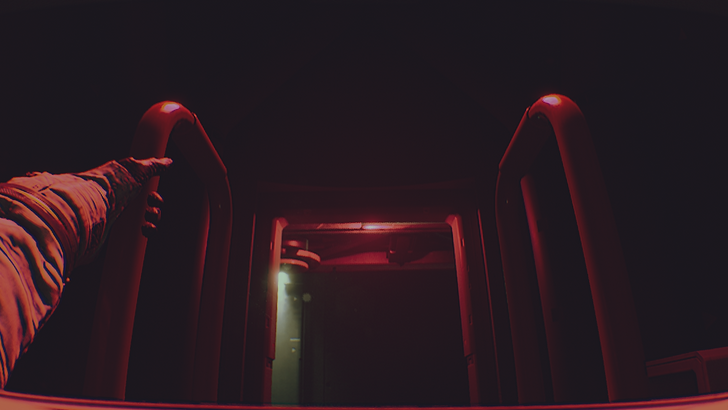
One thing ROUTINE does remarkably well is making you feel like you aren’t just playing someone in space. There’s a certain… weight to everything. The way you fumble with your CAT device. How you lean over terminals instead of magically pulling UI into your vision. The stiffness of your movement in tight corridors, like the suit is always reminding you that turning around isn’t as simple as flicking a mouse.
It’s suffocating, but intentionally so. ROUTINE’s entire system is built around stripping away power. You don’t know who you are. You don’t know what happened. You don’t know if something is behind the next corner. The game hands you absolutely nothing—no map, no detection tools, no weapons—and says, "Okay, figure it out."
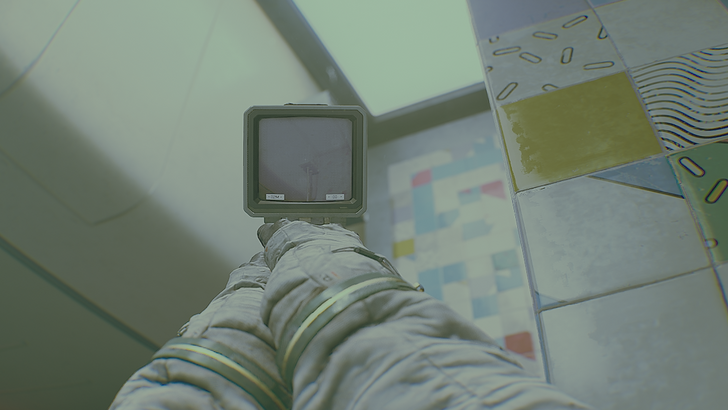
And weirdly? It works. It makes sense. If you were thrown into a malfunctioning lunar facility alone, you would have no idea what’s going on. You would feel like every decision you make is the wrong one. ROUTINE weaponizes confusion, turning it into immersion rather than frustration. You’re not some special operative trained for high-stakes infiltration. You’re an IT guy with a tool that’s barely a weapon. You survive by instinct, uncertainty, and the occasional moment of brave stupidity. And that sensation—that fragile, powerless authenticity—is something not a lot of horror games manage to achieve anymore.
Fear Meets Function
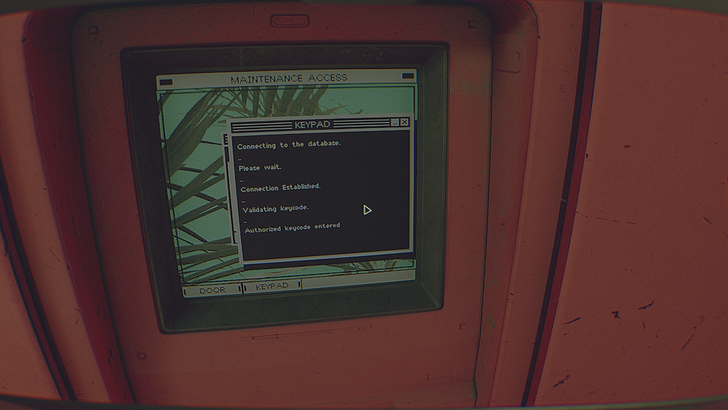
For all the heaviness of the atmosphere, ROUTINE actually surprised me with how intuitive its moment-to-moment logic is. The puzzles fit the world. They don’t feel like escape-room contraptions someone forced into the setting—they feel like natural problems you’d actually run into in a busted lunar facility. Broken circuits. Power rerouting. System resets. It becomes this quiet dance of observing your surroundings, poking at a panel or two, then realizing oh, I know what this wants from me.
That intuitive flow keeps puzzles from breaking the immersion. You’re not stopping the game to "solve" something—you’re just doing the job you were hired for, ironically enough.

And then there’s the stealth. Listen, I’m a 100% stealth goblin. If a game gives me a crouch button, I will spend sixty percent of it moving slower than a grandmother in molasses. So ROUTINE should’ve been my heaven—and in many ways, it was. The robots force you into a raw, barebones version of stealth where your ears matter more than any in-game mechanic. The suspense of crouching behind a crate, breathing in sync with the protagonist, listening for clicks and servo whines… it’s the kind of fear that digs into your spine.
But—as much as I enjoyed being a shadow on the Moon, a part of me kept wishing the stealth evolved just a little. That it gave me a new wrinkle, a fresh tool, a shifting dynamic. And that brings me neatly to what the game didn’t quite nail.
Mastery Isn’t the Same as Ambition
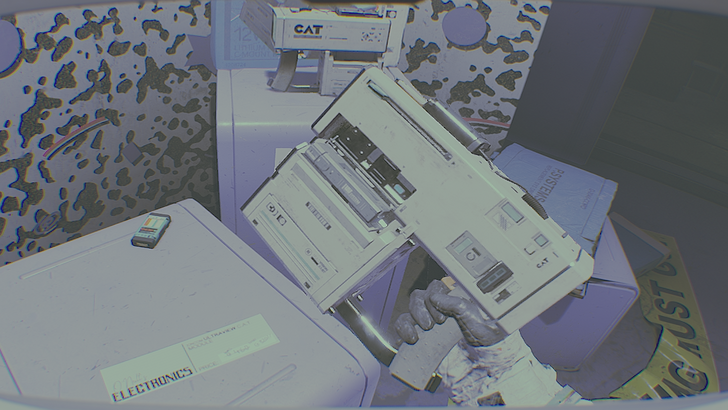
For all the ways ROUTINE nails immersion, there’s no denying that the core gameplay loop is… simple. Almost too simple. It’s like the game spent all those years perfecting the fundamentals—movement weight, environmental puzzles, stealth tension—and then decided that the fundamentals were enough. And hey, the fundamentals are great. But at the end of the day, basics are still basics.
After a while, you start to notice that the game isn’t really evolving mechanically. You’re still doing the same crawl-wait-creep cycle, still doing the same "find power source, figure out password, fix thing" puzzle flow. ROUTINE feels like the perfect foundation for something bigger—but the "t;bigger" never comes. It’s like being handed a meticulously crafted toolbox and realizing that, somehow, it only contains three tools.
Stealth That Lives and Dies by Its Restraints
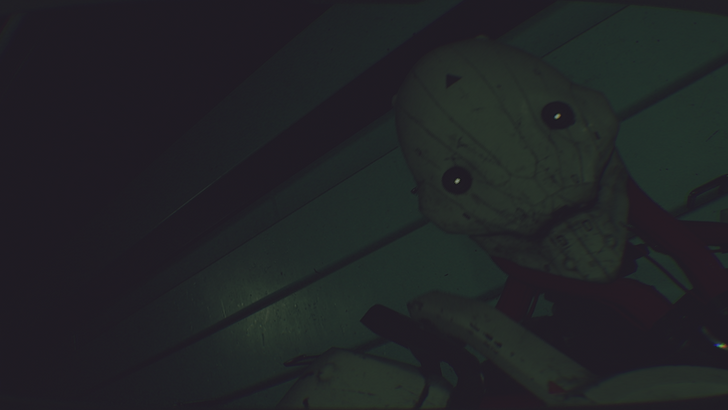
Stealth is where ROUTINE shines… and stumbles. I love a good stealth game—give me shadows, silence, and enemies with predictable routines, and I’m in my element. But ROUTINE’s stealth feels locked into its minimalism in a way that doesn’t always benefit it.
The robots are terrifying, but the loop around them is rigid. You hide. You listen. You wait. You peek. And that’s… it. There’s no evolution, no shifting dynamic, no sense that your relationship with stealth deepens over time. Even your CAT device—the one tool that could’ve opened up new stealth strategies—feels nearly impossible to use while hiding. So even if it did include some sort of scanner or proximity alert, you’d have no way to use it without giving yourself away.
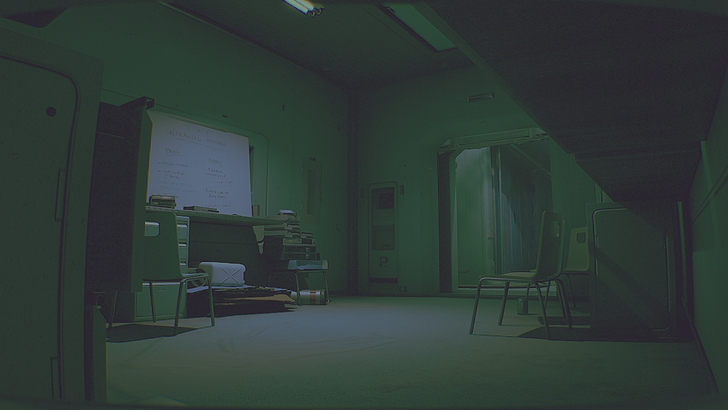
It leads to situations where I was crouched behind a bench thinking, "Okay, love the tension… but there’s got to be something more here, right?" And the answer is always no, not really. The stealth is committed to its minimalism, even when that minimalism starts to cannibalize the fun.
Tools Without Teeth

The CAT device is cool—don’t get me wrong. As a multipurpose tool, it fits perfectly into ROUTINE’s grounded sci-fi vibe, it shoots electric bolts, it reads heat signatures, it interacts with terminals, and it gradually unlocks new modules as you explore. But here’s the thing. It’s basically a glorified puzzle wand.
Outside of solving electrical circuits or interacting with specific objects, the CAT doesn’t add anything to the broader gameplay ecosystem. And then there’s the limited energy bars. Three bars to be exact. Just three.
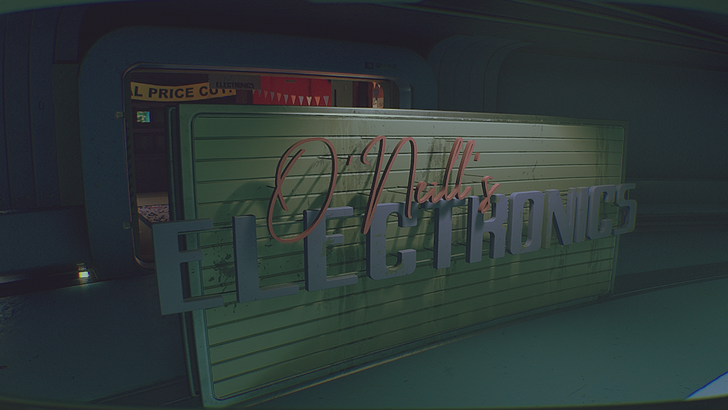
Lithium batteries are scattered everywhere, sure, but you can’t actually take them with you. Your suit apparently has no pockets, no compartments, no clever astronaut trick for storage. You can only swap batteries when your current one runs dry, which leads to this funny mental image of our unnamed IT specialist thinking, "Well, I guess United Plaza forgot cargo pouches were a thing."
It’s immersion with a side of inconvenience, and sometimes that inconvenience feels a little too intentional.
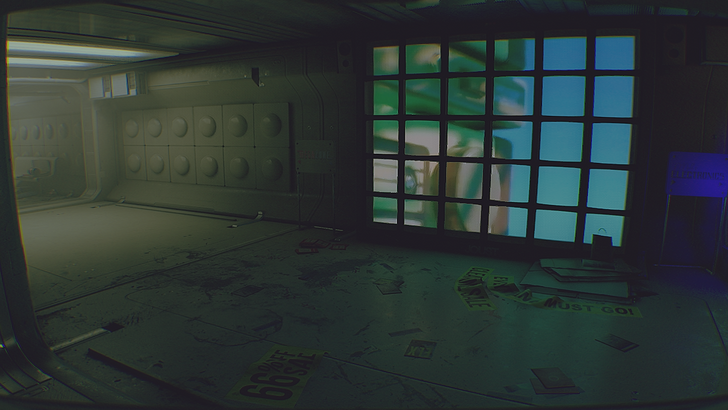
And while we’re on the topic of inconvenience, let’s talk about the lack of maps. I get the artistic decision—I really do. Discovery is lovely. Exploration is rewarding. But we have a CAT that can access logs, interface with terminals, and even manage save data… yet can’t display a simple layout of the facility? It’s one of those nitpicks that doesn’t harm the experience, but the longer I played, the more it lingered in my brain like a tiny unanswered question.
Story Needed More Gravity

Lastly, for all the craftsmanship in the atmosphere, ROUTINE’s story never quite grabbed me by the throat the way I hoped. It feels like a skeleton of a bigger narrative—a series of intriguing fragments that never fully flesh themselves out. The setup is fantastic, waking up to an abandoned lunar base strangled by silence and malfunctioning machines. But the follow-through lacks punch.
The narrative breadcrumbs are interesting, but they never form a trail with enough cohesion or weight. And after thirteen years of anticipation—thirteen years of imagining what this game could be—it lands softer than you’d expect. Not bad. Not even disappointing. Just… quieter than it should be.

And maybe that’s the part that stings the most. If ROUTINE had released in 2012, or even as late as 2020, it would’ve felt revolutionary. A first-person sci-fi horror with tactile immersion and analog dread? That would’ve been huge. But in 2025, the landscape has changed. Games have evolved. Expectations have evolved. And ROUTINE, despite its strengths, feels like a relic of the dream it first inspired.
It’s still well-made. It’s atmospheric. But I can’t help but feel like it could have delivered… just a bit more.
Is ROUTINE Worth It?
Yes But With Clear Expectations
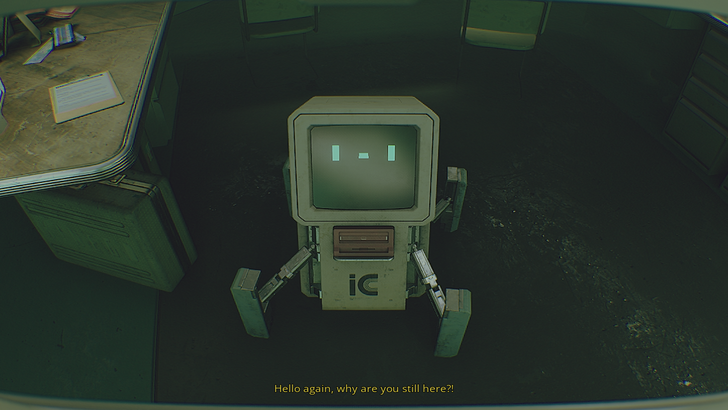
ROUTINE is a $24.99 experience built on tension, atmosphere, and tactile immersion rather than complexity, spectacle, or narrative depth. If you’re looking for a sci-fi horror game that drops you into the skin of a man trapped in space and lets unease simmer instead of scream, ROUTINE delivers exactly that. It excels at its oppressive tone, its analog-feeling technology, and its commitment to making you feel small, fragile, and alone on a moon facility where every flicker of metal could mean death.
But if you want evolving systems, layered stealth mechanics, or a story with real narrative gravity, ROUTINE keeps things far simpler than its premise suggests. This is a game polished to a minimalist sheen—not a genre-defining reinvention.
Still, for its asking price, it’s an experience worth taking—especially if atmospheric horror is your comfort zone. ROUTINE knows exactly what it wants to be, and while it doesn’t reach beyond its fundamentals, those fundamentals are crafted with care, restraint, and an impressive sense of place.
If you step into it wanting a tense, moody lunar nightmare rather than a sweeping sci-fi epic, you’ll find your $24.99 well spent.
| Digital Storefronts | ||
|---|---|---|
| Steam |
Xbox |
|
| $24.99 | ||
ROUTINE FAQ
Why Did ROUTINE Take So Long to Release?
In a recent interview with IGN, Aaron Foster, the game’s head of art, design, and project lead, explained the delay:
"There was quite a long delay that was due to personal reasons, actually. We were dealing with almost going personally bankrupt and had to pause and work on other projects to make ends meet."
How Can I Defeat the Robots in ROUTINE?
You can’t. Robots in ROUTINE are completely unkillable. Your only options are to run, hide, and wait.
Game8 Reviews

You may also like...
 |
MOUTHWASHING Review Horror, Adventure, Indie |
 |
Cronos: The New Dawn Review Action, Horror, Survival |
 |
Luto Review Psychological Horror |
 |
Post Trauma Review Adventure, Horror, Puzzle, Simulation |
 |
KARMA: The Dark World Review Horror, Adventure |
ROUTINE Product Information
 |
|
| Title | ROUTINE |
|---|---|
| Release Date | December 4, 2028 |
| Developer | Lunar Software |
| Publisher | Raw Fury |
| Supported Platforms | PC (Steam), Xbox Series X|S |
| Genre | Psychological Horror, Stealth, Puzzle |
| Number of Players | 1 |
| ESRB Rating | T |
| Official Website | ROUTINE Website |