
| KILLER INN | |||
|---|---|---|---|
| Release Date | Gameplay & Story | Pre-Order & DLC | Review |
Everything We Know About KILLER INN
KILLER INN Plot
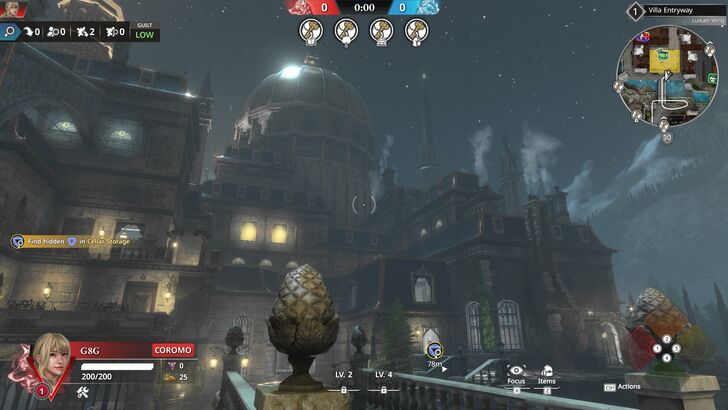
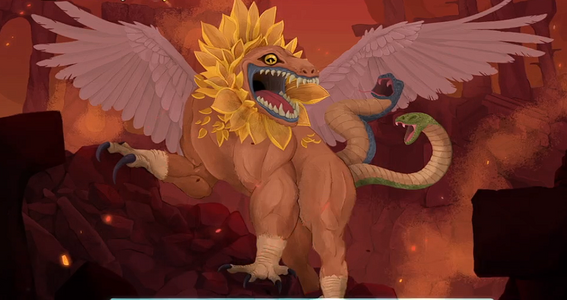
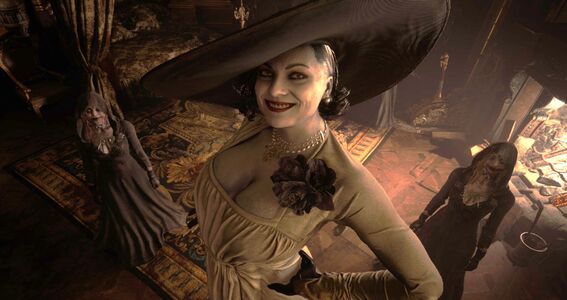
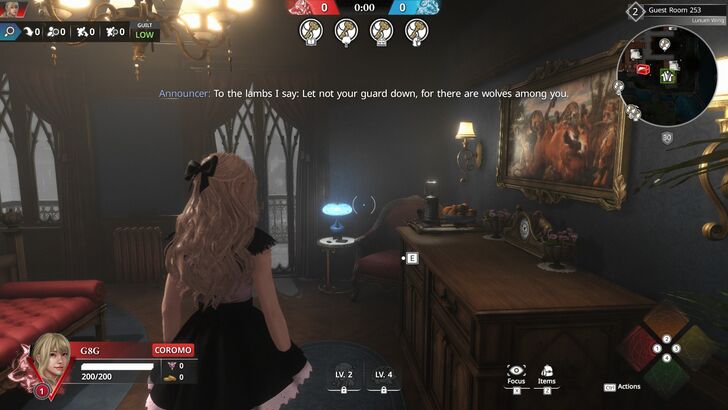
KILLER INN is set within a sprawling, secluded mansion where 24 players are brought together. As bodies begin to appear throughout the estate, players are tasked with examining crime scenes, gathering evidence, and observing the behavior of others to determine who can be trusted.
KILLER INN Gameplay
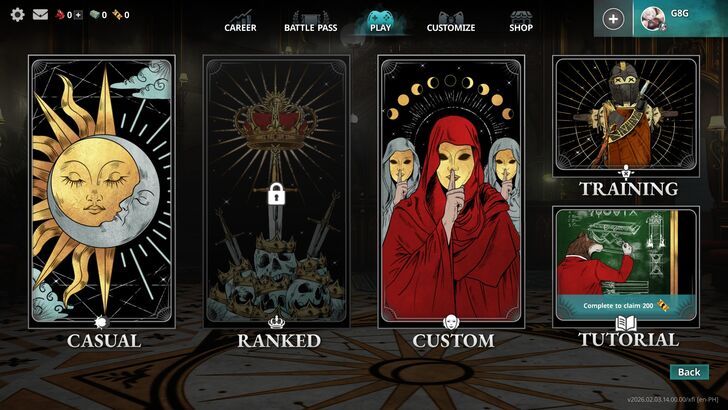
KILLER INN is a multiplayer social deduction game that supports matches of up to 24 players, divided between 16 Lambs and 8 Wolves. Each session takes place inside a large, explorable mansion filled with non-playable characters, interactive locations, and branching routes that players can use to navigate the map.
KILLER INN Release Date
KILLER INN launched in Early Access on February 13. No date for the full release has been announced.
| Digital Storefronts |
|---|
 Steam Steam |
| $9.99 |
KILLER INN Review (Early Access)
Our Deduction? It’s Not Good
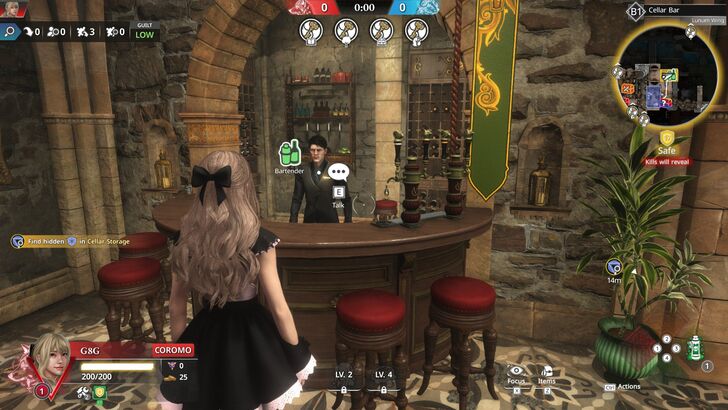
In a gaming landscape where every profitable genre has been strip-mined, repackaged, and resold to exhaustion, it’s almost strange that social deduction hasn’t had its own gold rush. The formula has existed for decades—from Clue nights and Mafia sessions to Blood on the Clocktower—and yet in video games, the genre still feels like it’s waiting for its next cultural supernova. We’ve had hits like Goose Goose Duck, sure. We’ve even had indie spins like Guilty as a Sock. But nothing that truly kicked the door down the way Among Us once did , the kind of game that even people who don’t play games could name.
That’s why KILLER INN looked so promising on paper. A large-scale, 24-player social deduction game and the backing of Square Enix. It had the shape of something big. And then I actually played it. What I found instead was a game that doesn’t just stumble in execution, it actively undermines the very fantasy it’s trying to sell.
Solving a Murder Is Less Effective Than Starting a Gunfight
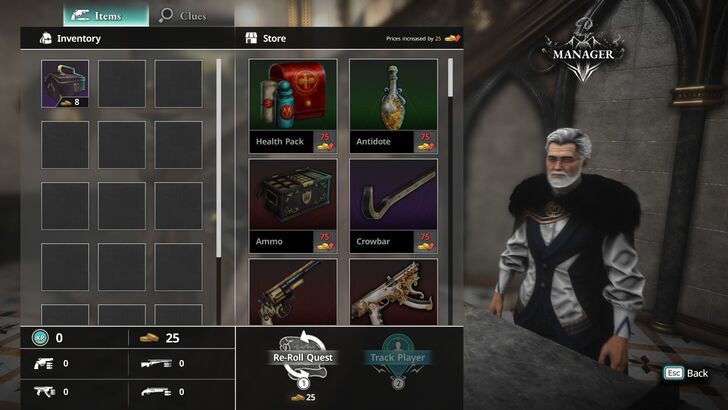
The core setup is simple and genuinely compelling in theory: 24 players trapped inside a mansion, divided into 16 Lambs and 8 Wolves. The Lambs are meant to investigate, gather clues, identify the killers, and escape. The Wolves are meant to blend in, build trust, and eliminate targets without being exposed.
It’s Clue as a live multiplayer experience. But in practice, the mystery never gets a chance to exist. Because there is no meaningful way to expose a killer through deduction alone.
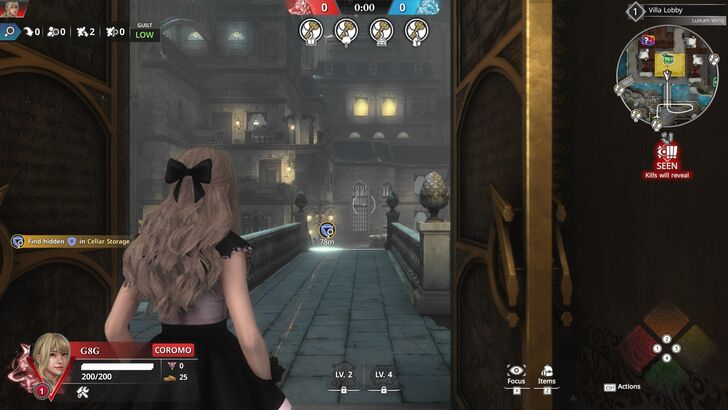
Every match—and I mean every match—eventually collapses into a shooter, not because players are impatient, but because the systems give you no other reliable path to victory. If you suspect someone, you don’t present evidence. You don’t corner them in a discussion. You don’t trigger a mechanic that verifies your theory.
You pull the trigger. And just like that, the entire investigative layer becomes cosmetic.
Clues That Exist Without Purpose
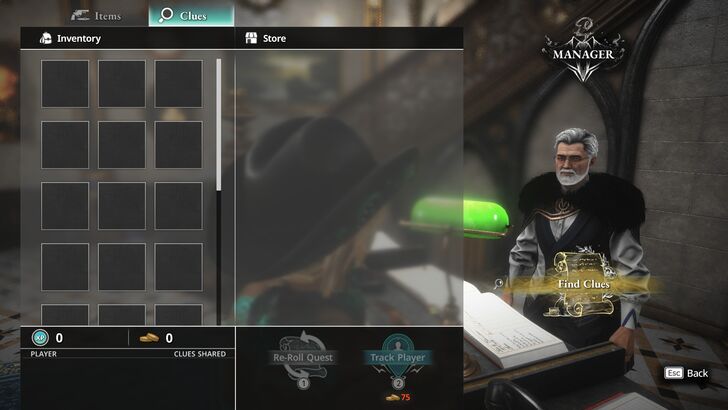
The most baffling part is that the game does have a clue system. When a body is discovered, you can collect evidence supposedly left behind by the killer. But those clues rarely—if ever—lead to meaningful conclusions. They don’t narrow the field in a convincing way. They don’t create those tense "wait… it has to be you" moments. They don’t empower the Lambs to play intelligently.
So instead of feeling like an investigator, I felt like I was looting a crime scene for items that had no real impact on the match. And because deduction isn’t viable, the Lamb role, which should be the heart of the experience, turns into something completely different. Instead of observing behavior, or tracking alibis, you stop thinking and instead start grinding.
Lamb Experience Is Just a Gear Grind With Paranoia
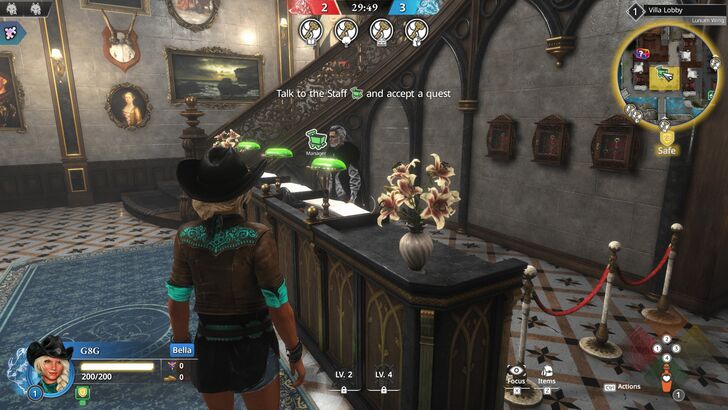
That’s why most of my time as a Lamb wasn’t spent solving anything, it was instead spent doing NPC errands for gold so I could buy better weapons and armor. That loop is shockingly action-RPG in structure: run quests, earn currency for gear, survive long enough to reach the harbor. Which would be fine… in a different game.
But in a social deduction game, this shifts the focus away from people and into progression. Instead of watching other players, you’re watching your economy. Instead of reading the room, you’re checking shop inventories. And when conflict happens, it’s not a dramatic reveal but rather a stat check.
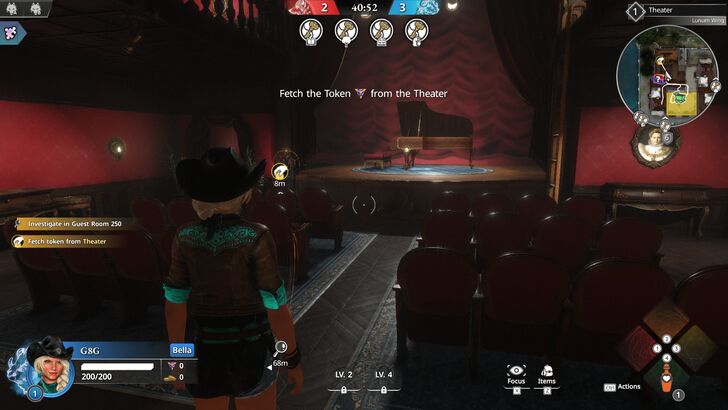
If you guess wrong and kill an innocent player, you get turned to stone, which sounds like a clever punishment on paper, but in reality just discourages interaction even further. Players become hesitant to act unless they’re fully geared, which pushes the match deeper into that shooter-style endgame. The result is a mystery game where the optimal strategy is to ignore the mystery.
Throws Wolves Blindly Into The Game
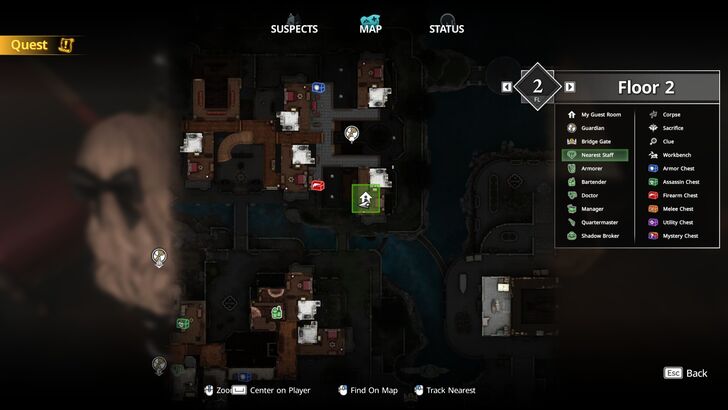
Becoming a Wolf should flip the entire experience, suddenly you’re lying, manipulating, staging kills, controlling the flow of information. Except the game barely teaches you how to do that. The tutorial only explains how to play as a Lamb. So in my first match as a Wolf, I did exactly what I had been trained to do, I ran quests, I bought gear, I played normally.
And for long stretches, it didn’t even feel different. Yes, you’re looking for moments to isolate and eliminate someone, but the surrounding gameplay loop is identical. There’s no strong mechanical reinforcement for deception. No dedicated systems that make social engineering as deep as combat. You’re not orchestrating a murder mystery. You’re just a player with a different win condition.
Combat Undermines Both Stealth and Chaos
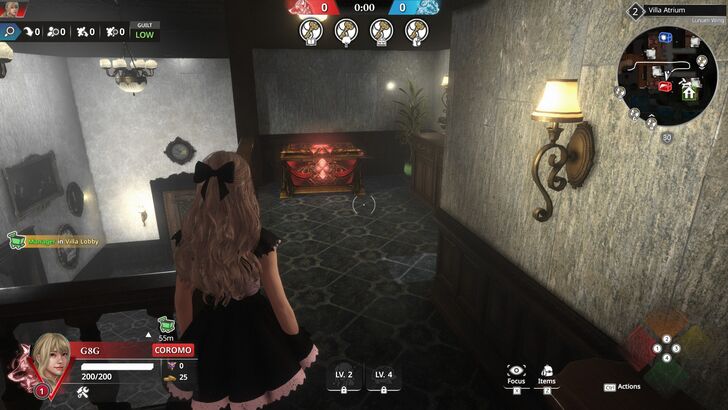
And then comes the combat itself. If the game insists on becoming a shooter, then the shooting at least needs to feel good. Right now, it doesn’t. Gunplay feels floaty and imprecise, like your inputs have a slight delay that never quite goes away. There’s no real weight to hits, no satisfying feedback loop that makes firefights tense or skill-driven.
Melee stealth—which should be a cornerstone for Wolves—is even more unreliable. Attempting silent eliminations often fails to register properly, which removes one of the few playstyles that could have supported the deception fantasy. So the action side doesn’t work. And the deduction side doesn’t work. And the game gets stuck in between them, just not working properly.
Roster Decides Matches Before They Begin
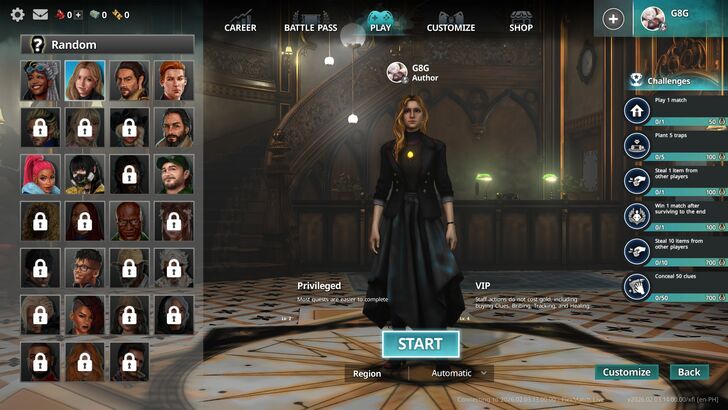
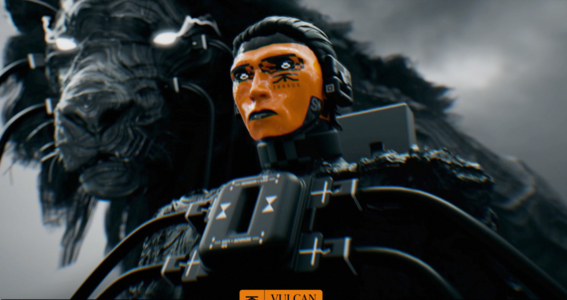
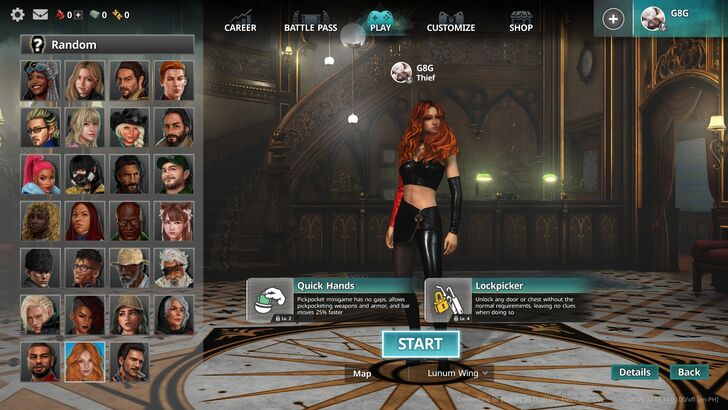
Then the unbalanced characters make things worse. Each character has a profession, and some of them can access locked rooms far earlier than others. That means certain players can gear up minutes into a match while everyone else is still scraping together basic equipment.
The power gap becomes immediately obvious. And when someone with early high-tier gear starts picking fights, it doesn’t feel like you were outplayed, it feels like the match was decided at character select. In a game that’s supposed to be about information and trust, starting advantages like this completely skew the social dynamic.
Technical Issues Shouldn’t Be This Severe
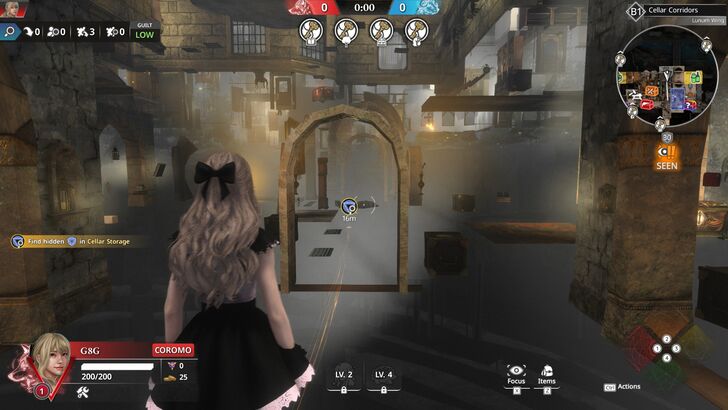
The server problems are also impossible to ignore. Queuing for a match often meant sitting in a loading screen for up to 30 minutes and getting disconnected mid-session was also something I frequently came across with.
For a studio with the experience of Square Enix, it’s honestly shocking. These aren’t minor Early Access hiccups, they directly prevent you from playing the game you paid to access.
Monetization Leaves a Bad Taste in the Mouth
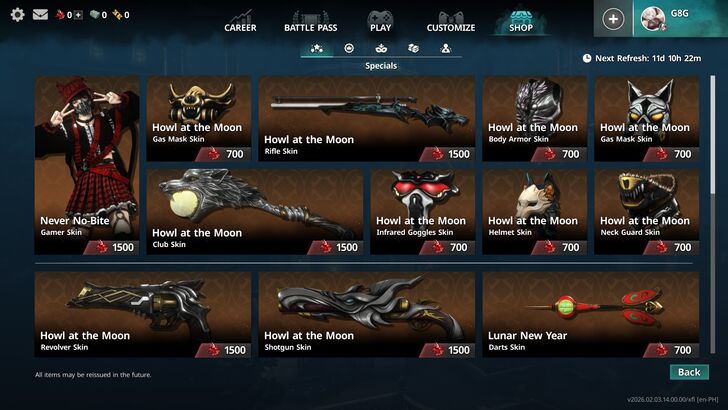
Speaking of paying for access, this is where the frustration turns into something else entirely. You’re already paying for Early Access and on top of that paywall for battle pass, locked characters, and locked cosmetics are slapped in your face. And the uncomfortable reality is that the locked characters are significantly more enjoyable to play because of how the current balance works.
So the game starts to feel less like a rough-but-promising Early Access build and more like a system that’s already asking for long-term investment before proving it deserves it. It leaves a bad taste, especially when the core experience is still struggling to function.
Mansion That Deserves a Better Game
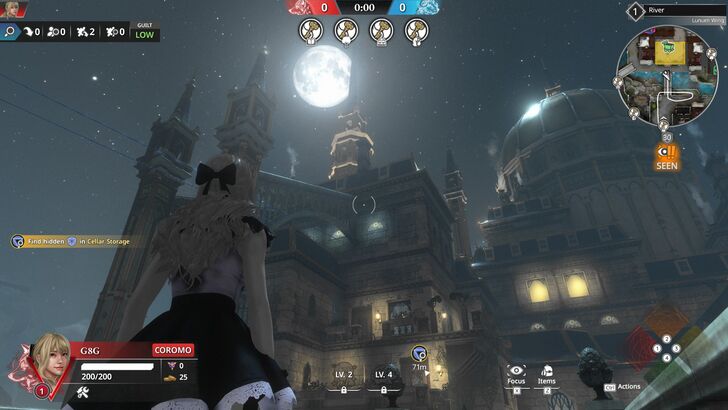
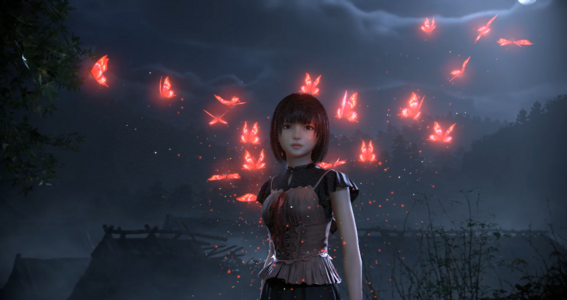
And the part that hurts the most is I can almost see the vision. The setting is gorgeous. The hidden passages are exactly the kind of spatial design a social deduction game needs. The scale, the atmosphere, the idea of players moving through this space while trying to read each other, it’s all there.
For brief moments, you can almost feel the game it was supposed to be. But KILLER INN never successfully fuses its two identities, It isn’t a satisfying deduction game and it isn’t a satisfying action game. It’s stuck between them, and because of that, it fails at both. Right now, this feels like a project that doesn’t know what it wants to be.
Vision and hope in what it will become in the future is not exactly a recommendable purchase. Add the fact that this is an online-only game with a disclaimer that its service may be terminated in the future, which is standard, sure, but here it feels less like fine print and more like a warning that if this doesn’t find an audience fast, it might simply disappear. And that’s genuinely sad, because beneath all the missteps is a concept I still want to see succeed. I’m hoping it gets there, I’m just not convinced, right now, that it will.
Game8 Reviews

You may also like...
 |
Among Us 3D Review | Nothing Beats the Original 3D, Casual |
 |
The Midnight Walkers Review [Early Access] Extraction Shooter |
 |
Highguard Review Action, Shooter, Multiplayer |
 |
Escape from Tarkov Review FPS, Action, RPG |
 |
Call of Duty Black Ops 7 Review Action, Shooter, Multiplayer |
KILLER INN Product Information
 |
|
| Title | KILLER INN |
|---|---|
| Release Date | Early Access February 13, 2026 |
| Developer | Square Enix, Tactic Studios |
| Publisher | Square Enix |
| Supported Platforms | PC (Steam) |
| Genre | Action, Shooter, Social Deduction |
| Number of Players | 1-24 |
| ESRB Rating | N/A |
| Official Website | KILLER INN Official Website |