


| Cairn | |||
|---|---|---|---|
| Release Date | Gameplay & Story | Pre-Order & DLC | Review |
Overview
What is Cairn?
Cairn is a standalone action-adventure survival game by The Game Bakers, best known for the 2020 RPG Haven The game is set to release on January 29, 2026 on PC and PS5, following a delay to allow for additional polish.
As pro-climber Aava, player aim to reach the summit of the fictional Mount Kami, a previously unconquered peak while uncovering traces of past expeditions. It's a physics-driven climbing game that requires players to read rock formations and manage resources such as pitons, stamina, food, and medical supplies. Unlike more automated traversal systems in other adventure games, climbing is designed to feel tactile, with falls and misjudgments carrying consequences.
Cairn features:
⚫︎ Tactile Limb-Based Controls
⚫︎ Open Route Navigation
⚫︎ Dynamic PIton and Rope System
⚫︎ Detailed Body Maintenance
⚫︎ Environmental Hazards and Weather
For more gameplay details, read everything we know about Cairn’s gameplay and story.
| Digital Storefronts | |||||
|---|---|---|---|---|---|
 Steam Steam |
 Epic Epic |
 GoG GoG |
|||
 PSN PSN |
|||||
| $29.99 | |||||
Cairn Review: Oh, What a Peak
The Loneliest View in the World
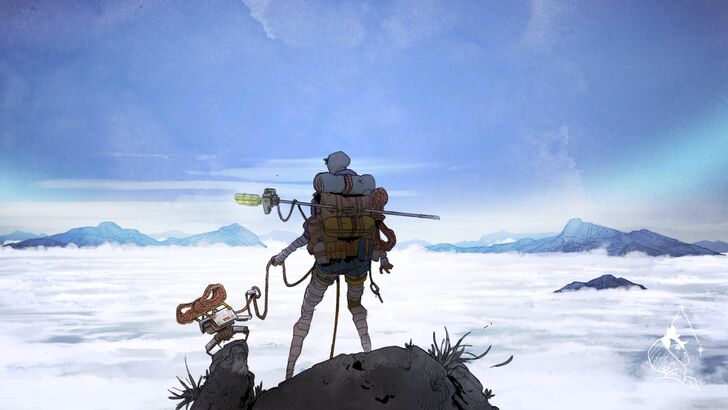
Aava reaches for a thin crack in the granite. Her fingers are raw and red. I move her left arm, then her right leg, and then her left again. The wind howls against the rock, but there is no music to guide us. There is only the sound of heavy breathing and the metallic click of a piton, as we slowly crawl toward a summit that no one has ever reached.
Cairn is a climbing game, and a beautifully profound one at that. You manage your weight, you hammer in your own anchors, you pray for a solid hold, all to reach the very summit of Mount Kami, the fictional highest and unconquered peak in the world. Early on, Aava speaks of a desire to find her place in the universe, to feel, even for a second, that she is woven into the fabric of something more eternal.
However, the higher I go, the more it feels as though the mountain cares little about my determination. It only cares about my stamina and my grip. I spend minutes staring at a pockmarked wall, catching my breath, planning a path through the stone. If I choose the wrong hold, Aava’s limbs begin to shake. If I push too hard, she falls into the clouds below. Between the climbs, I sit by a small stove and wrap my bleeding fingers in tape. The very act of standing on flat ground feels like a distant dream. It is a grueling and lonely experience, but it is all necessary to reach the very peak.
The Weight of the Void on a Granite Crack
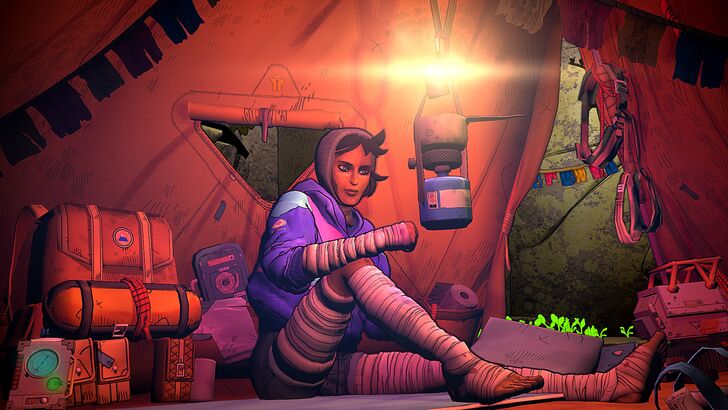
Cairn is Aava’s story. She is a professional mountaineer driven by a singular goal: to become the first person to stand atop Mount Kami, a mountain defined by its lethality. It is a mass of rock and ice that has already claimed over 150 lives. That is the basic premise, and for a long time, it feels like all you need to know. The game does not dump its plot on you through long cinematic scenes. Instead, the narrative arrives in small pieces that you find scattered along the vertical face.
You find a discarded piece of gear here or a faded note there. The story isn’t spelled out for you, but you never feel lost. The game trusts you enough to connect the dots on your own. As you encounter the skeletal remains of rusted cable cars and the eerie stillness of abandoned campsites, themes of ambition, isolation, and death wrap themselves into the very environment you are fighting to survive. The signs are everywhere; if you stop for a second to look around, the mountain tells the story for you.
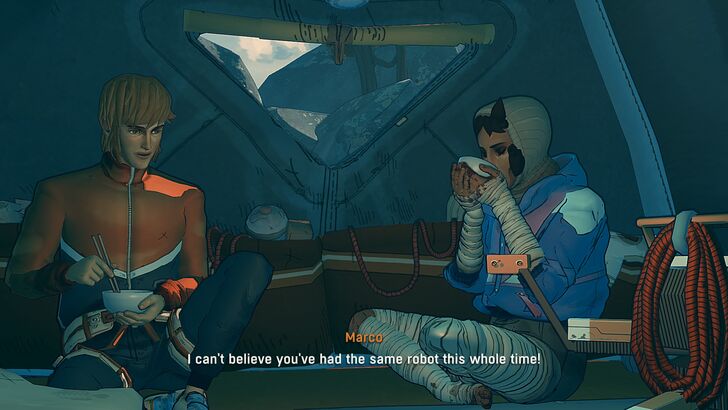
To climb is to be consumed by a crushing sense of loneliness. Aava spends most of her time in a world of grey stone and white clouds. She does meet people, but rarely in the way you might expect. More often than not, the "people" she encounters are just ghosts of the past. You find the graves of those who failed. You see the camps of those who gave up halfway through. You even stumble upon the ancient remains of troglodytes—villagers who once lived in the caves of Mount Kami. These remnants are part of the landscape now, consumed by the mountain.
To help her, Aava has a small drone called a Climbot that helps her navigate the vertical terrain. She does meet one living soul, a climber named Marco. He is also braving the slopes of Kami, but unlike Aava, Marco is content with just getting close to the end. He doesn’t have the same burning need to touch the highest point.
As Aava climbs higher, the world she left behind tries to reach her through digital messages. These come from people like Chris, her agent, who views the climb as a career milestone. More importantly, you see messages from Naomi, Aava’s partner. Naomi isn't just worried; she is trying to understand. She wants to know if Aava truly understands the price of this obsession. She wants to know if the summit is worth the distance it creates between them.
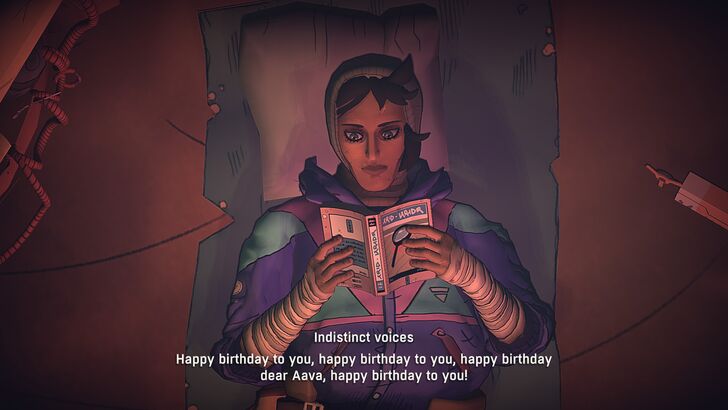
Aava doesn't respond. She receives these messages in silence, sending nothing back. The messages are a tether she seems willing to cut. A moment that stayed with me involved a recording of Naomi and their friends singing "Happy Birthday" to Aava. Briefly, you see her smile as she listens. The light is warm. This, however, is consumed by the loneliness that follows. When the song ends, she softly blows on the light of her Climbot as if it were a birthday candle, lies there for a while, then goes back to sleep, alone.
Aava’s Obsession is Contagious, Painful, and Beautiful
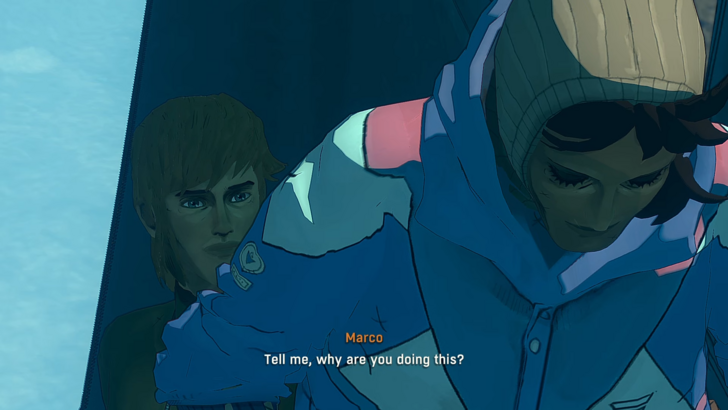
Ambition is a dangerous drive, and Aava is someone willing to follow it regardless of the cost. She is a complicated person, as complex as the winding cave channels that snake through the mountain she is obsessed with conquering. As the climb got steeper and the air got thinner, I found myself constantly questioning her. Why is she so willing to leave everything behind for this peak? She talks about wanting to be "part of a whole," even though there is a "whole" waiting for her back on the ground.
Because of this conflict, I started to feel a deep empathy for her. Aava is believable because she is imperfect. She is a person with a singular, perhaps selfish, obsession. Over time, I stopped judging her and simply started wanting her to succeed. I wanted her to be happy, or at least to find whatever it is she’s looking for so she can finally rest. You see her struggles in every bruised finger and every heavy breath, and even if you can’t quite pinpoint the "why" behind it all, you feel the weight of it.
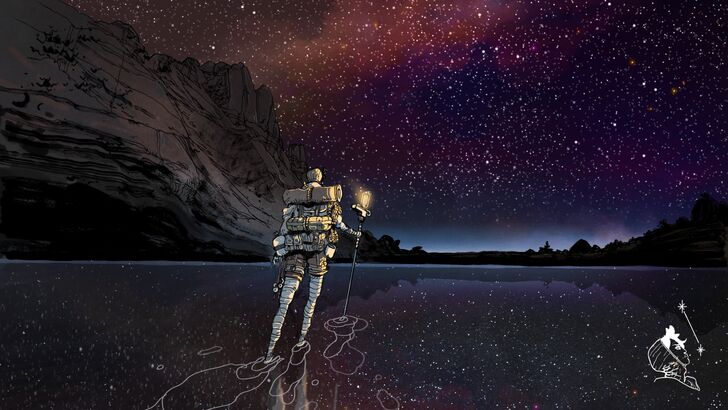
All of this tension culminates in the final moments of the game. Cairn offers two different endings, and it is important to note that there is no "correct" choice here. Both paths give Aava a conclusion, but neither feels straightforward. Depending on how you interpret them, these endings are bittersweet. I really admire what the developers at The Game Bakers went for here. They didn’t provide the easy, cathartic release that most games offer after such a long struggle. The entire climb is a massive buildup for a finale that, much like Aava herself, leaves you staring into the void of her existence. You spent hours fighting for every inch of progress, only to realize that the summit doesn’t change the person you are.
Regardless of how one feels about the choices she makes, Cairn is beautifully poignant, one that manages to be both painfully realistic and deeply haunting. It proves that the most difficult "mountains" we climb aren’t made of stone, but of the heavy reasons we choose to leave the world behind.
Limb by Limb, Breath by Breath, Take Your Time
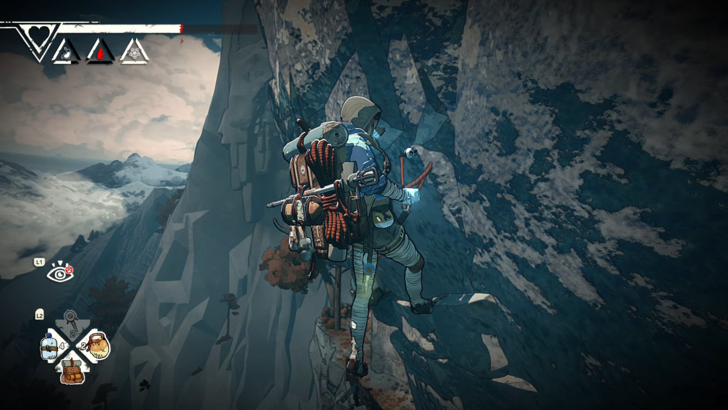
But Aava’s high-minded ambitions would mean nothing if the game didn’t make you feel the literal weight of her choices. To understand her obsession, you first have to master the grueling labor of the climb itself. You move her limb-by-limb, manually placing her hands and feet as you scan the rock face for viable holds. You are constantly judging her posture and center of gravity in real time. Although the game gives you the freedom to choose your own line up the wall, that freedom comes with a heavy burden. The simulation accounts for the quality of the rock and the angle of the incline. If you overextend, misjudge a grip, or linger too long in a bad position, her stamina drains rapidly. Sometimes, this results in a nasty fall.
Most of Aava’s vitals are shown in the HUD, but her stamina is hidden. You have to read her body instead of a bar. As she tires, her limbs begin to tremble and her breathing grows heavy. The screen subtly blurs, and the controller intensifies in your hands. The longer Aava hangs in an awkward stance, the more her grip weakens. It makes the struggle feel physical and immediate.
To manage this, you can use pitons to anchor yourself to the stone. These act as makeshift checkpoints where Aava can recover her strength and access her inventory. These pitons are vital, as they mitigate the punishment of a slip, but they are also scarce. You only carry a limited amount, which forces you to be smart about where you place them. If you reach a perilous stretch of rock with no points to rest, the tension becomes unbearable. It doesn’t help that these anchors can break if you fail the quick-time event required to set them while Aava is struggling to hang on.
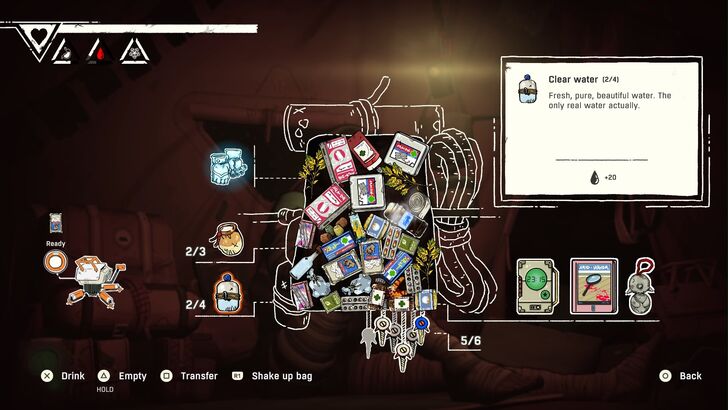
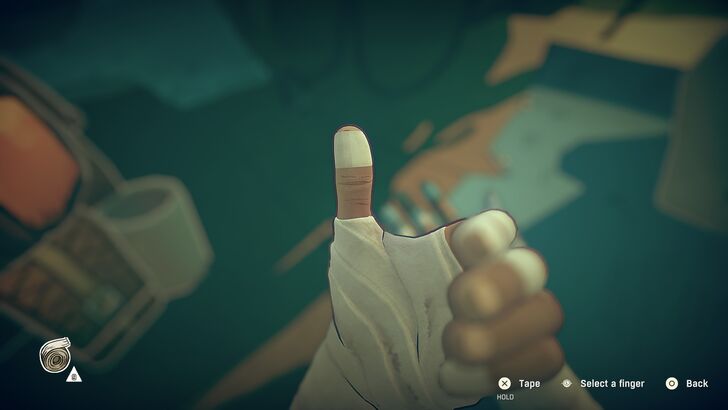
As a survival game, you are tasked with managing Aava’s hunger, thirst, health, and warmth. This necessitates frequent stops at small plateaus or bivouac sites to set up camp. In these moments of respite, you have to prepare for the next leg of the journey. Here, you might use your Climbot to repair damaged pitons, cook meals from ingredients you’ve foraged, or manually bandage Aava’s bleeding fingers to improve her grip. Factors like the weather, the time of day, and altitude all influence how fast your stamina drains and how far you can see.
Despite the constant pressure, though, the climb never stops being intoxicating.
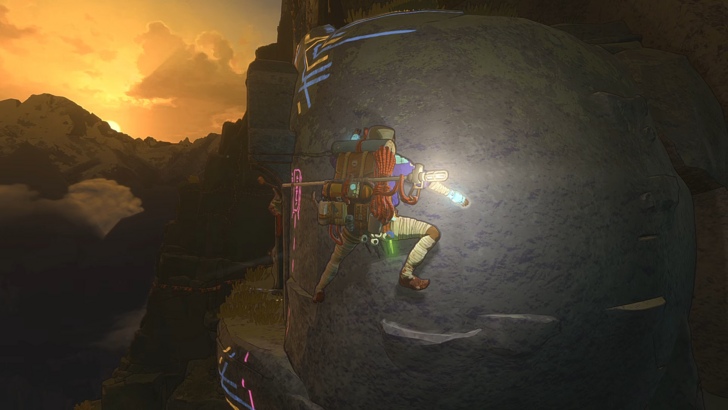
The game can be frustrating, yes. Mount Kami is a brutal peak. There were many areas where I fell over and over again. After the tenth or twentieth fall, I had to pause the game and gather myself. Aava felt it too; she would often scream and voice her anger to no one in particular. I would mirror her at my desk. The game can be mean, and it demands a level of patience that not everyone will have.
For those who simply want to see her story through, the game does include a suite of accessibility features. You can rewind time after a fall or disable the survival requirements entirely. These are great for inclusivity, and I’m happy that it’s here, but I believe the hardship of climbing Mount Kami is a fundamental part of the story. The struggle in gameplay perfectly complements the struggle in the narrative. Removing the difficulty feels like removing the heart of Aava’s journey.
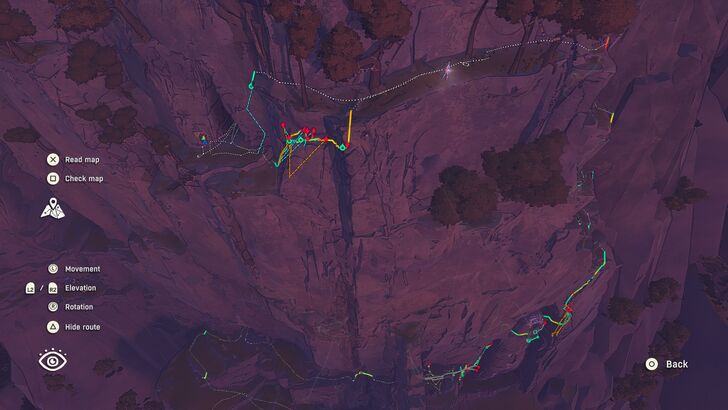
This hardship is balanced by the incredible freedom the game grants you in route planning. One of the best parts of Cairn is standing at the base of a wall and simply looking up. You chart your own line, deciding which cracks to follow and which ledges to avoid. You can adjust on the fly when a chosen path becomes too risky or consumes too many resources. The ability to climb nearly anywhere is liberating. Sometimes, the smartest move is to traverse sideways or even descend briefly to reach a ledge with better resting points.
I often found myself pausing halfway through a difficult route to look at an alternative path. I might see that the other way had a safe bivouac site while my current path was barren, but my route offered a helpful piece of gear or a hidden secret. You are always deciding what to prioritize.
There are Some Immersion-Breaking Moments
As beautiful as scaling Mount Kami is, the experience is occasionally hampered by a persistent layer of technical jank. It is not necessarily a deal-breaker, but these moments can pull you out of the experience. Because the game relies so heavily on its physics, anything concerning it is magnified. A lot of the time, Aava’s legs would scramble in ways that looked physically impossible, or she would perform inhuman splits just to reach a distant platform.
The physics engine can be especially temperamental when things go wrong. On several occasions, I would fall only for the rope to catch me at an awkward angle. Instead of swinging naturally, Aava would simply jitter against the rock surface for several seconds. During these moments, the game would effectively lock me out; I couldn't press anything or attempt to recover until the physics engine decided to stop vibrating and snapped Aava back into her proper place. It also doesn't help that Aava’s limbs or her climbing rope frequently clip through the very mountain you are trying to scale.
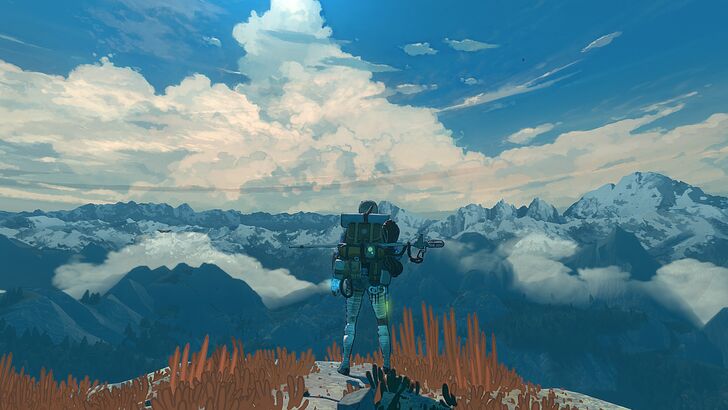
None of this diminishes the fact that Cairn still looks incredible. The Game Bakers deserve immense praise for the atmosphere alone; the way the light hits the peaks and sheer scale of the mountain are often breathtaking.
Is Cairn Worth It?
Yes, Aava’s Ascent is Painfully Beautiful
Cairn costs $30. That’s not cheap, but it also isn’t out of line with many recent indie releases. For that cost, you’re looking at around 10 to 20 hours of playtime, depending on how much of Mount Kami you choose to explore.
Once you reach the summit and the credits roll, there isn’t much content left in the traditional sense. The main draw for sticking around is the Free Solo mode. It strips away your ropes, your pitons, and most of your supplies to force you to climb Mount Kami with nothing but your own good judgment. That mode won’t be for everyone, but it adds replay value for players who enjoy pushing their limits.
Do be careful, though, and remember to take frequent breaks. Like Aava, you might start the climb wanting to "touch eternity for an instant," only to find that the mountain doesn’t offer any easy answers. By the time you reach the end of the game, the mountain remains exactly as it was, but you are never quite the same.
Cairn FAQ
How Many Endings are There in Cairn?
Cairn has two endings, and the game presents players with a choice between the two.
Game8 Reviews