| Atelier Resleriana: The Red Alchemist & the White Guardian | |||
|---|---|---|---|
| Release Date | Gameplay & Story | Pre-Order & DLC | Review |
Atelier Resleriana: The Red Alchemist & the White Guardian Review Overview
What is Atelier Resleriana: The Red Alchemist & the White Guardian?
Atelier Resleriana: The Red Alchemist & the White Guardian blends traditional Atelier mechanics like alchemy and synthesis with strategic turn-based combat. New mechanics include exploration with Dimensional Paths
—dynamic, multi-level dungeons for gathering rare items—and town development through shop management, where players contribute to Hallfein's restoration.
Moreover, this title is a dedicated offline experience, distinguishing it from the prior mobile Atelier Resleriana game, and it aims to provide a classic Atelier feel, much to the excitement of fans anticipating its return to a more traditional formula and the inclusion of beloved characters from past entries.
Atelier Resleriana: The Red Alchemist & the White Guardian features:
⚫︎ Simplified resource gathering mechanic
⚫︎ Turn-based combat
⚫︎ The series’ signature synthesis system
⚫︎ Various cameos from past games
⚫︎ Randomized dungeons in the Dimensional Paths
⚫︎ Basic city management systems
For more gameplay details, read everything we know about Atelier Resleriana: The Red Alchemist & the White Guardian's gameplay and story.
| Digital Storefronts | |||||||
|---|---|---|---|---|---|---|---|
 Steam Steam |
 PlayStation PlayStation |
 Switch Switch |
|||||
| $59.99 | |||||||
Atelier Resleriana: The Red Alchemist & the White Guardian Pros & Cons
| Pros | Cons |
|---|---|
 Joyously Awkward Romance Easy Grinding Synthesizing Items is Still Very Engaging Lots of Characters from Previous Games Joyously Awkward Romance Easy Grinding Synthesizing Items is Still Very Engaging Lots of Characters from Previous Games |
Too Many Characters from Previous Games Most Bosses are Just Bullet Sponges Stages Lack Any Real Attractions |
Atelier Resleriana: The Red Alchemist & the White Guardian Story - 7/10
Unfortunately, this installment of Atelier Resleriana has a rather weak story. Sure, the themes on display aren’t anything new or risky; tried and tested they might be, the continued reliance on characters from previous games, just like in its last installment, makes it hard to recommend as an entry point for the franchise. Sure, you may enjoy seeing favorites like Sophie return, but it really hurts the narrative balance. Thankfully, though, it’s salvaged by one of the most joyously awkward romances I’ve ever seen from the franchise.
Atelier Resleriana: The Red Alchemist & the White Guardian Gameplay - 8/10
At first glance, especially for those unfamiliar with the franchise, Atelier Resleriana’s combat may look like your typical turn-based fodder—but it’s anything but that. Everything in the game is tied closely to its alchemy-slash-synthesis system, making even the most torturous grinds (of which it has many) for material and experience feel worthwhile in the end. The combat itself plays out as a wonderful, item-heavy tug-of-war for advantageous turn orders; exceptionally difficult at times, yet never unfair. Exploration, however, has been simplified so much that it’s barely enjoyable anymore.
Atelier Resleriana: The Red Alchemist & the White Guardian Visuals - 8/10
Despite not looking nearly as impressive, striking, or shiny as the previous entry (Atelier Yumia) or even its older sister from the same series, the new Atelier Resleriana still manages to make a strong, lasting impression with its exquisite models, great animation, and practical UI. However, nitpicks aside, every stage looks very bland due to the lack of verticality, texture, and notable landmarks. This makes exploration feel incredibly stale, beyond the simple drive to gather better materials for your alchemy.
Atelier Resleriana: The Red Alchemist & the White Guardian Audio - 9/10
There’s very little to criticize in terms of audio here; the voice acting is masterful, the sound effects are punchy, and the music is memorable. Heck, even navigating the menu feels satisfying thanks to the subtle yet noticeable audio feedback. But “little to criticize” doesn’t mean “nothing to mention,” as many filler scenes with non-essential characters, particularly those with characters from other Atelier series, lack the voice acting that would have made the nostalgia hit much harder.
Atelier Resleriana: The Red Alchemist & the White Guardian Value for Money - 8/10
Atelier Resleriana has managed to make the normally tedious, rarely engaging act of collecting hundreds of materials from the overworld require much less stopping, allowing it to barely cut into your momentum when exploring areas. This, together with its abundance of alchemical recipes, makes spending dozens of hours planning your creations an unexpected joy. On the other hand, the game isn’t very replayable beyond challenging yourself with tougher runs, and without the grinding, it’s quite short for its asking price.
Atelier Resleriana: The Red Alchemist & the White Guardian Overall Score - 80/100
Unlike most other games in the series, it’s pretty clear Atelier Resleriana had to cut a few corners to make room for all the appearances from past protagonists. Unfortunately, that leaves the story feeling flat if you were hoping for a fresh world instead of a reunion tour. Thankfully, the surprisingly complex gameplay and excellent audiovisuals do more than enough to keep you around until you get past the awkwardness of its uneven narrative.
Atelier Resleriana: The Red Alchemist & the White Guardian Review: Addictingly Subtle
The Next Installment to a Dead Mobile Game
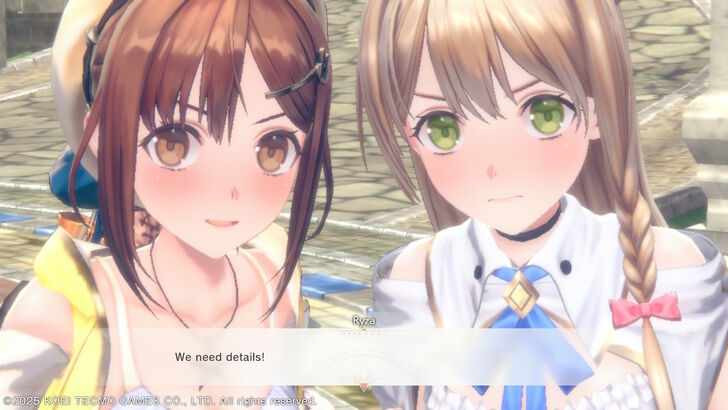
If you have been keeping up with mobile games, then you might recognize the Resleriana series from the PC and mobile release Atelier Resleriana: Forgotten Alchemy & the Liberator of Polar Night. It was a free title with microtransactions to collect in-game characters, just like other gacha games such as Honkai: Star Rail and Reverse 1999. However, unlike most other gacha games, the main pull for it was that the characters you could collect were from previous games such as Atelier Ryza, Sophie, and Totori.
It… didn’t last long, at least in Global, ending its service to the players after just over a year. Predictably so, considering the kind of systems it had that were just not very popular among people who were already balancing several gacha games all at once—on top of having stamina-gated synthesis. Like, why it would limit the defining mechanic of the entire franchise is beyond me.
That said, I did play the game for quite a while, like I do most Atelier games. It was sad to see it go, but at least its spirit will live on in its successor, Atelier Resleriana: The Red Alchemist & the White Guardian—and oh boy, it shows.
The Art and Town Lost to Time

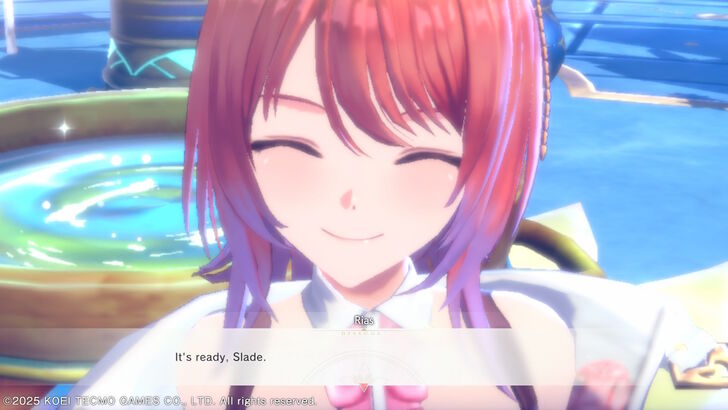
Atelier Resleriana: The Red Alchemist & the White Guardian is a story about Rias Eidreise and Slade Clauslyter—two fated individuals separated by goals yet joined by the paths they walk. Rias, an adventurer intent on helping restore her ruined hometown and uncovering the cause of its fall, discovers an abandoned alchemist’s atelier together with Slade, who is on a journey to find meaning and fulfill his father’s last wishes.
At first, the story begins innocently enough. Rias, who learns she has the long-lost gift of alchemy, is encouraged by Slade to use it for the good of their hometown. Along the way, they encounter characters from across the franchise who have somehow crossed into their world, such as Raze from Mana Khemia 2, Ayesha and Wilbell from Atelier Ayesha, Totori from Atelier Totori, and Sophie and Oskar from Atelier Sophie. These characters either join their party for their own goals or whims, or serve as major supporting roles.
This serves Rias and Slade well, as the further they pursue the restoration of their town and search for answers, the more troubles they encounter in turn. At first, these challenges revolve around simple issues such as the lack of funding for restoration. But gradually, their problems grow far more serious as they uncover the truth behind the disaster that ruined their town, leading them to cross paths with a criminal organization and eventually to a conclusion hundreds of years in the making.
Imbalanced Story Development

Similar to the first entry in the Resleriana series (and to Nelke & the Legendary Alchemists), The Red Alchemist & the White Guardian heavily features characters from previous Atelier games, including those from the prior installment, Forgotten Alchemy & the Liberator of Polar Night. These aren’t just mere cameo appearances, either. More often than not, they’re essential to the story and frequently act as plot devices, if not one of its main driving forces.
There’s one major issue, though: the game makes absolutely no effort to develop these returning characters beyond their newfound relationships with the two protagonists. Nearly all of them are presented as if they’ve known each other long before Rias and Slade came into the picture. Normally, that would be fine if they were just cameos, but because so many serve as key drivers of the plot, it often feels like you’re just the third wheel tagging along.
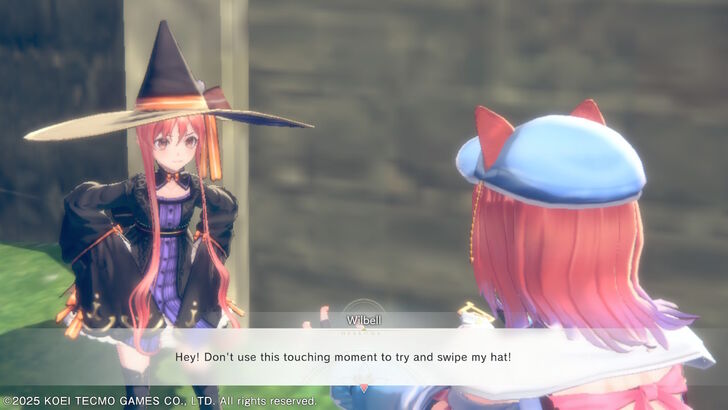
If you’ve played many of the earlier Atelier titles, this isn’t as big of a problem. Still, the fact that Rias and Slade essentially start from zero while everyone else seems to have had an off-screen head start creates a noticeable imbalance in character development. In a way, it’s like beginning your journey only to run into people who were already halfway through theirs, making the story’s central conflict feel more like a footnote in the bigger picture.
This, combined with the story’s overall lack of interesting twists or unpredictable turns, makes for a fairly sterile and beginner-unfriendly reading experience. Thankfully, though, it’s almost entirely redeemed by some of the most adorably awkward romances I’ve seen in recent years, helped along by painfully cliché writing that somehow works heavily in the game’s favor.
A Simple to Understand, but Hard to Perfect Combat System
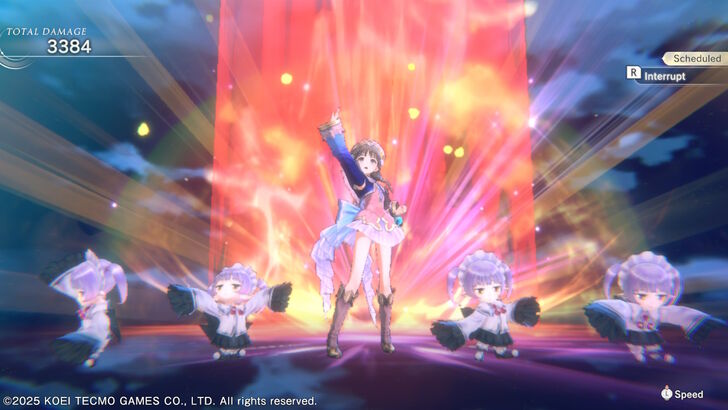
Before we get into the real meat of any Atelier game (the synthesis system), let’s start with the more common ground it shares with other RPGs: the combat system. It’s a fairly traditional turn-based setup where characters jockey for position on the timeline through their Speed stats.
But right away, there’s something unique worth pointing out: the field effects, known as Effect Panels, that are tied to specific turns. These panels act as buffs or debuffs applied to whoever lands on that turn, and they can have a massive impact on battle flow. Effects range from dealing heavy damage and applying poison to crippling a character’s attack or shredding their defense.
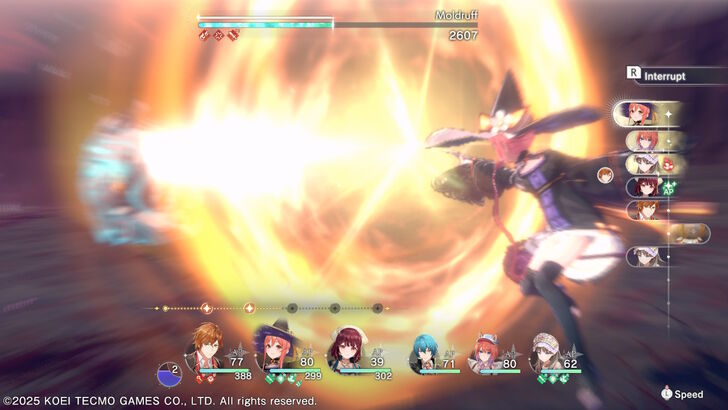
To balance this out, the game gives you several ways to manipulate turn order—usually by bumping your opponent down the timeline. For example, you can bring reserve characters into play through either a Multi-Action or an Interrupt, use skills to add, subtract, or move individual turns, or use items to achieve the same effects.
Each option has its pros and cons, as you’d expect from mechanics that essentially let you multiply your actions. Multi-Action is the most versatile, since it allows a reserve character to use either a skill or an item, but it can only be triggered on your own turn—making it useless for countering enemy plays. Interrupts, on the other hand, can be activated outside your turn, making them great for reacting to threats. The tradeoff is that the reserve character can only use an item, turning it into a test of resource management.
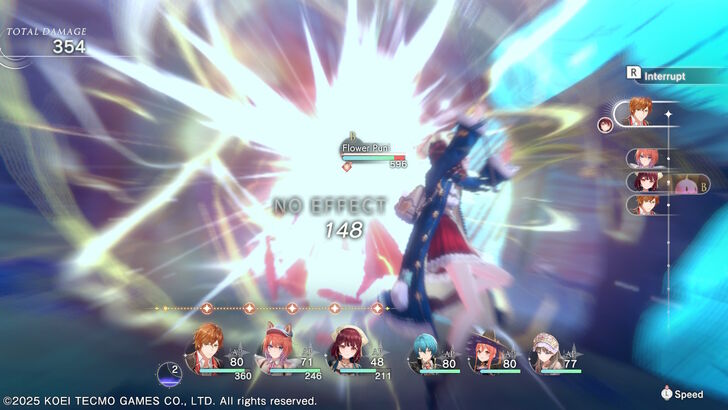
Most characters also have skills that can manipulate turn order in some way. Rias, for example, can pull the next ally to act right after her if she moves just before an enemy—kind of like the move After You from Pokémon. Raze, meanwhile, can insert an extra copy of himself into the timeline, while Totori can simply boot an opponent further down the order.
These mechanics are essential for Unite skills, which require multiple characters to act consecutively, and if enough time or moves have passed, this can culminate in an extremely powerful Unite Burst special move.
This tug-of-war over turn order, mixed with throwing hands against your enemies, makes combat in Atelier Resleriana: The Red Alchemist & the White Guardian a surprisingly rich experience. You can get away with focusing on just one aspect early on, but tougher enemies later will demand a balanced approach—because they do get smarter, and their moves become much nastier, if you don’t fully use every tool at your disposal.
Alchemy — the Glue That Holds It All Together
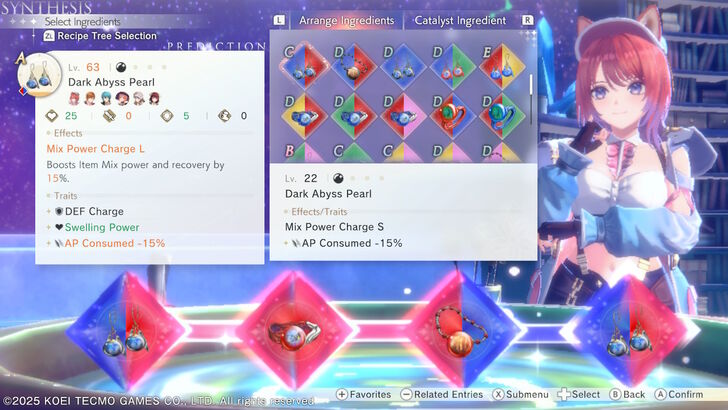
Now, let’s set aside the combat system and focus on the real pull of any Atelier game: the Synthesis (or Alchemy) system. It’s what defines the series, and it remains one of the most versatile mechanics in any modern RPG.
For the uninitiated, the Atelier series revolves around its protagonists practicing alchemy. Using their abilities, they can synthesize items with different uses and properties depending on the materials they gather and the recipes they know. This system is still present—though somewhat streamlined—in Atelier Resleriana: The Red Alchemist & the White Guardian.
Here’s how it works: first you learn a recipe, then you collect the ingredients, and finally you dive into the subtly frustrating yet incredibly satisfying process of matching ingredient properties (visualized as colors) to draw out as much of their latent abilities as possible.

This crafting system is the bread and butter of the series—the backbone of every other mechanic. Everything from fighting enemies, to exploring the map, to fulfilling quests is tied directly to your skill in alchemy. And in turn, the game does a great job of constantly rewarding you, whether through new items, recipes, or areas to explore, that feed back into your craft.
The game features hundreds of ingredients to collect and dozens of recipes to pursue. These include materials for empowering your creations, weapons and armor to equip, the series’ trademark potions and bombs, and even more lighthearted recipes like cakes and accessories.
And matching ingredients isn’t just about picking the strongest ones. Each material has innate skills that can be carried into the final product, and these can be evolved further by combining the right ones. Catalysts can even be used to ensure skill transfer, manipulate ingredient properties, or sometimes alter the recipe entirely. It’s such an engaging system that I always end up spending dozens of hours tinkering with it in any Atelier game, and it’s just as fun here.
An Incredibly Undemanding Expedition—For Better or Worse
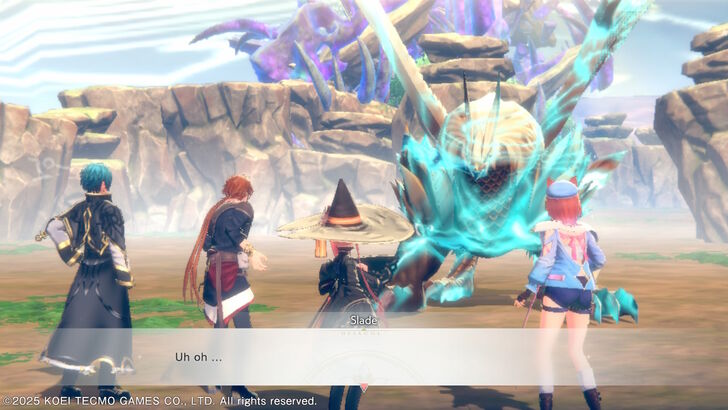
Of course, before you can synthesize anything after learning its recipe, you need to have enough ingredients to pull it off. Enter one of the main grinds of any Atelier game: exploration.
Exploration here serves three purposes—gathering ingredients, collecting battle experience and skill points, and searching for new recipes. Remember in Atelier Ryza when we constantly had to stop and swap tools just to break a rock for materials, or in Atelier Yumia when we had to crane our cameras upward like gamers just to spot resources on walls? Travesty, I know. Those systems weren’t inherently bad, but they did interrupt the flow of exploring the world around you.
No such thing in Atelier Resleriana. Collecting and battling are now both tied to a single button, which Rias or Slade can use to interact with gathering points and enemies alike. No more fiddling with tools—just swing your weapon, and you’ll clear out resources in front of you or instantly trigger combat with nearby enemies.
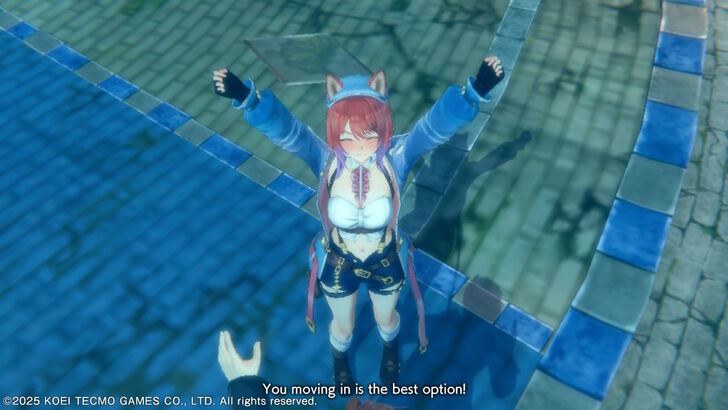
Sure, that also means no more resources perched on cliffs or hidden in lakes. We lose some fun features like swimming, but honestly, I’d say it’s worth it. Atelier Yumia’s exploration was already cozy, but this feels like a return to roots while keeping things smooth and simple.
The downside is that simplifying gathering also seems to have flattened stage design. Every area now feels almost entirely two-dimensional, with only the occasional raised or lowered ground that usually just blocks you until you get the right exploration tools. It’s a far cry from previous installments that gave us winding caves, multi-level ruins, and all sorts of areas that made exploration feel fun and suspenseful.
This is especially noticeable with dimensional paths—completely flat, grid-like zones that feel like a throwback to stage design from more than a decade ago. The fact that these areas are so important for farming high-rank materials only makes their repetition sting even more.
Bullet Sponge Bosses
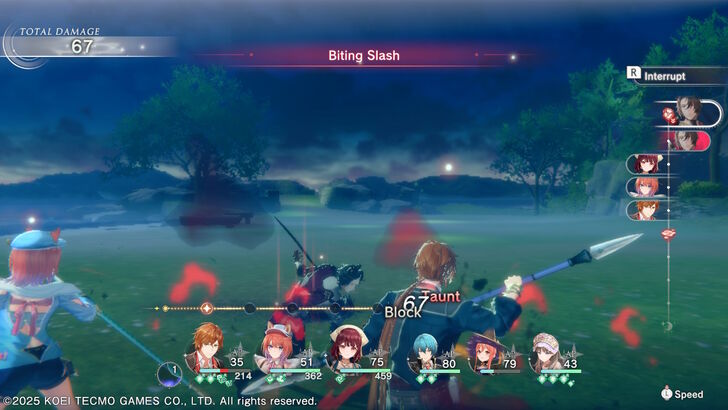
Normally, bosses should be tough fights that test your mastery of a game’s mechanics, right? That’s technically true in Atelier Resleriana, but not for the right reasons.
Here, bosses—whether they’re story encounters or field bosses—are threatening mostly because of their massive HP pools. Sure, they use the same mechanics you do, especially the humanoid ones, but the real challenge isn’t learning their movesets; it’s just whittling down their health. This is especially noticeable with field bosses, who barely have more stats than their regular counterparts. A giant bird, for example, might not hit much harder than the normal-sized version, but it takes forever to kill.
As a result, fights in Atelier Resleriana: The Red Alchemist & the White Guardian rarely feel challenging in the traditional sense—they’re more often just tedious. That said, a few boss fights do rise above the rest, and while they’re sporadic, they stand out enough to leave a lasting impression.
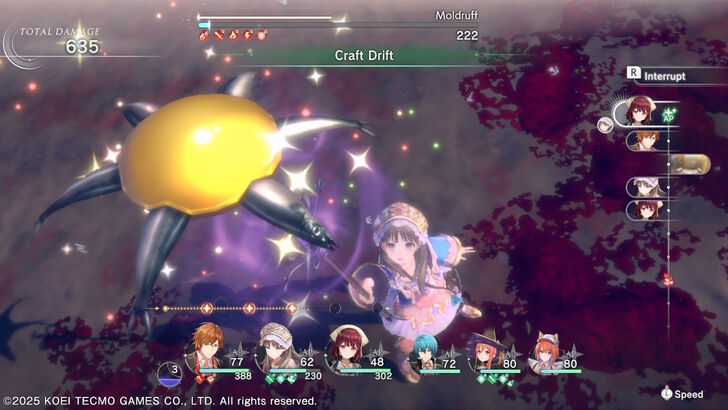
All in all, The Red Alchemist & the White Guardian plays like a hyper-simplified take on its predecessors, designed as a cozy nostalgic experience for returning fans rather than a demanding challenge. It may feel unsatisfying if you’re not looking for exactly that, but it still delivers enough to scratch the itch for series enjoyers.
It’s just a shame Yumia isn’t here.
Is Atelier Resleriana: The Red Alchemist & the White Guardian Worth It?
At Just the Right Price
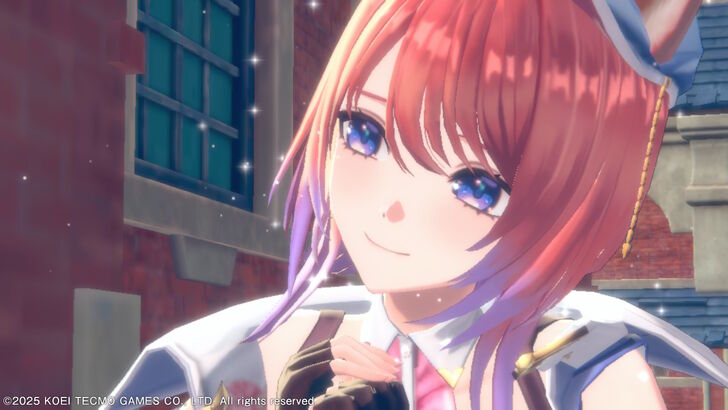
Atelier Resleriana: The Red Alchemist & the White Guardian is a great pick for anyone looking for a cozier experience, especially if they’re already familiar with the series. It’s also priced just right for a game that can easily stretch its playtime past the 50-hour mark. Take note, though—if you’re new to the franchise, it might be better to start elsewhere, since the sheer number of returning characters can overwhelm anyone with no prior knowledge of them beyond what this game provides.
| Digital Storefronts | |||||||
|---|---|---|---|---|---|---|---|
| Steam |
PlayStation |
Switch |
|||||
| $59.99 | |||||||
Atelier Resleriana: The Red Alchemist & the White Guardian FAQ
Who are the playable returning characters?
Raze from Mana Khemia 2, Wilbell from Atelier Ayesha, Totori from Atelier Totori, and Sophie from Atelier Sophie serve as Rias and Slade’s party members.
What about the other characters like Ryza?
Other returning characters like Ryza, Mu, and Viorate only appear as quest givers before they act as miscellaneous characters you can hire to gather materials.
Game8 Reviews

You may also like...
 |
Clair Obscur: Expedition 33 Review | A Stroke of Genius Through a highly stylized visual approach, dynamic storytelling, and a deeply flexible party system, Clair Obscur: Expedition 33 delivers a refreshing take on the genre, backed by a hauntingly beautiful soundtrack and surprisingly poignant character moments. |
 |
Eternal Strands Review | A Spellbinding Epic Eternal Strands is a love letter to fantasy epics, blending the creativity of Breath of the Wild, the grand battles of Shadow of the Colossus, and the fluid combat of Dragon’s Dogma. |
 |
FANTASIAN Neo Dimension Review | A True Final Fantasy Game in Everything But Name FANTASIAN Neo Dimension feels like a love letter to the golden age of turn-based storytelling—a game steeped in nostalgia, yet audacious enough to try something fresh. |
 |
Atelier Yumia Review | Pure Unsynthesized Enjoyment The combat’s a solid step up from past games, and gathering isn’t nearly as much of a chore anymore—though you’ll still manage to trip over the tiniest rock now and then. It looks great (sometimes too great for its own good if your PC isn’t ready), and the soundtrack’s an easy win. |
Atelier Resleriana: The Red Alchemist & the White Guardian Product Information
 |
|
| Title | Atelier Resleriana: The Red Alchemist & the White Guardian |
|---|---|
| Release Date | September 26, 2025 |
| Developer | KOEI TECMO GAMES CO., LTD. |
| Publisher | KOEI TECMO GAMES CO., LTD. |
| Supported Platforms | PC, PS5, Switch, Switch 2 |
| Genre | RPG |
| Number of Players | 1 |
| ESRB Rating | T |
| Official Website | Atelier Resleriana: The Red Alchemist & the White Guardian Website |