


| Kirby and the Forgotten Land + Star-Crossed World | |||
|---|---|---|---|
| Release Date | Gameplay & Story | DLC & Pre-Order | Review |
Kirby and the Forgotten Land marked a new era for the pink puffball, and Star-Crossed World looks to build on that. Read on to see how this sequel aims to expand Kirby’s future with bigger worlds and deeper mechanics.
← Return to Kirby and the Forgotten Land + Star-Crossed World main article
Star-Crossed and Beyond
Setting the Stage
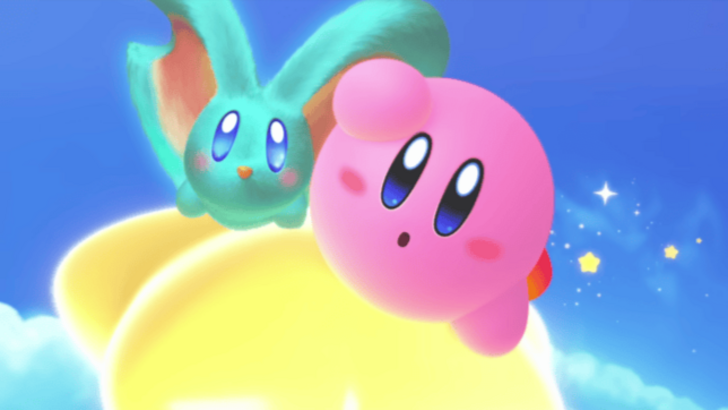
When Kirby and the Forgotten Land released, it carried a quiet but important milestone for the series; this was the first time a mainline Kirby game fully embraced 3D platforming. For years, the pink puffball had experimented at the edges of the format—with 2.5D stages, 3D arenas, and spin-offs that dabbled in perspective shifts—but Forgotten Land marked the moment when the series finally stepped out into three-dimensional space without hesitation. It felt both familiar and transformative, letting Kirby’s traditional abilities breathe in new ways while reshaping how players explored his world.
Now, with Star Crossed World joining Forgotten Land in a two-in-one package on the Switch 2, there’s a sense of continuity as well as possibility. Forgotten Land laid the foundation, proving Kirby could thrive in a 3D adventure. Star Crossed World, by contrast, carries the task of building on that groundwork—introducing new enemies, new challenges, and new modes, while hinting at a grander, more cosmic theme. Perhaps most importantly, it seems poised to give Waddle Dee a stronger identity as a co-op partner, reflecting the way fans have embraced him as more than just a rescued NPC.
| Digital Storefronts | |||||
|---|---|---|---|---|---|
 Upgrade Pack Upgrade Pack |
Base Game + DLC |
||||
| $19.99 | $79.99 | ||||
From Forgotten Land to Star-Crossed World
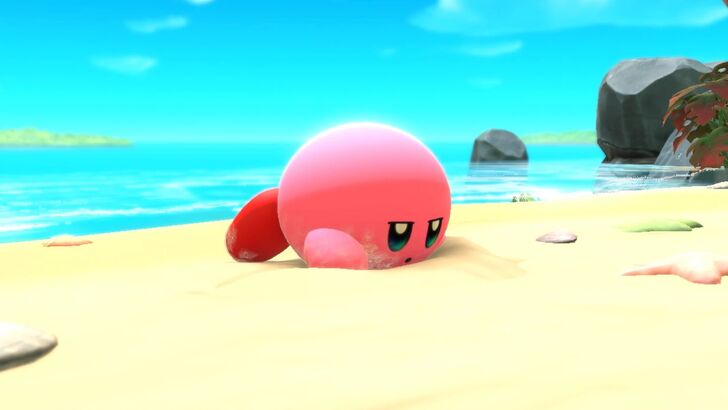
Kirby and the Forgotten Land didn’t simply move the series into 3D—it restructured how a Kirby game feels to play. The shift from 2D side-scrolling to fully 3D stages meant levels were no longer about rushing left to right, but about exploration. Hidden alcoves and branching paths turned every stage into a puzzle box, rewarding curiosity with rescued Waddle Dees or collectible figures. This subtle shift gave longtime fans a reason to slow down while still keeping the structure approachable for newcomers.
Copy abilities, a staple since the beginning, also gained new depth. Instead of remaining static powers, each ability could be evolved into stronger variations at Waddle Dee’s weapon shop. For example, the humble Fire power could become Volcano Fire, launching larger arcs of flame, or eventually Dragon Fire, which added flight and devastating damage over time. These evolutions didn’t just make Kirby stronger—they created a sense of progression inside a platformer, giving players a tangible reward for replaying stages and collecting resources.
Then there was Mouthful Mode, which shifted the formula again. By stretching over large objects like a car, traffic cone, or vending machine, Kirby wasn’t just copying abilities anymore; he was transforming level traversal itself. The car let you drive around and run over enemies, the vending machine turned combat into a projectile barrage, and the cone pierced cracked floors to reveal secrets. Where copy abilities were about combat variety, Mouthful Mode was about environmental interaction, a complementary system that ensured every stage had a moment of surprise.
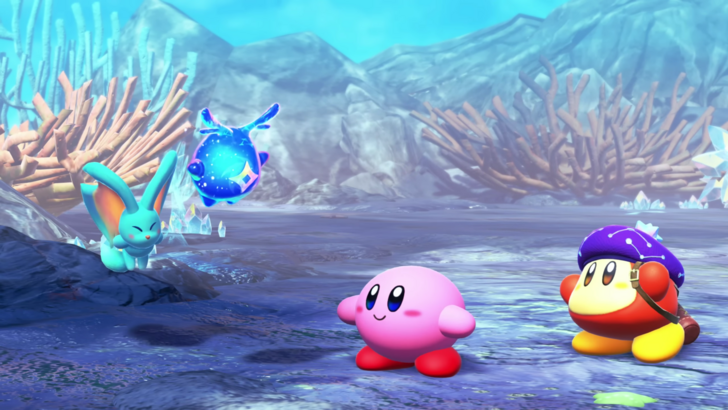
Co-op play carried its own deliberate balance. While Player 1 took on the flexible role of Kirby, Player 2 as Bandana Waddle Dee offered consistency. Instead of juggling multiple abilities, Waddle Dee relied on a focused spear moveset: jabs, throws, and spinning attacks that worked at both close and mid-range. He could also perform a ground pound from above, giving him reliable crowd-control options. Unlike Kirby, who constantly shifted his identity through powers, Waddle Dee provided stability—a way for less experienced players to stay effective without memorizing ability mechanics. This asymmetry gave co-op its strength; one player experimented while the other grounded the team, making Forgotten Land approachable for pairs of all skill levels.
This mixture of exploration, ability progression, transformative mechanics, and balanced co-op is why Forgotten Land didn’t just succeed; it proved that the pink puffball’s future in 3D isn’t a gamble, but a natural evolution. And the next stage for Kirby’s evolution is in Star Crossed World, which we’re expecting to push those same pillars into new territory.
The “Star-Crossed” Theme
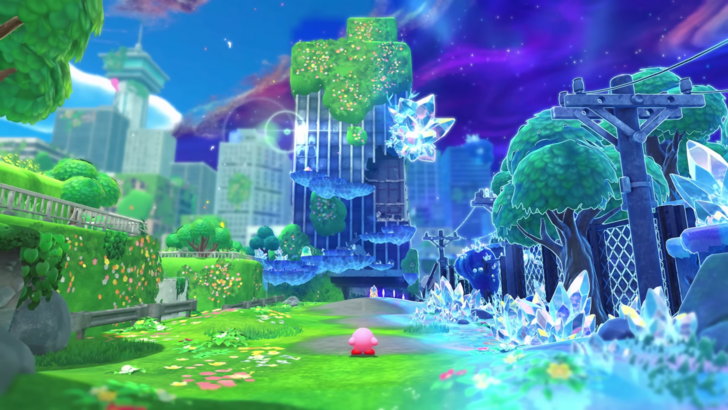
The title of the expansion points toward where Star-Crossed World may be headed. That phrase "star-crossed" carries layers. On one hand, it ties neatly into Kirby’s cosmic lineage, where stars have always been vehicles, motifs, and weapons. On the other, it hints at fate, tragedy, and celestial inevitability. Kirby has a long tradition of late-game swerves into the cosmic and otherworldly, and this title feels like a quiet warning that things will escalate in a similar fashion here.
It’s almost a series trademark at this point. Kirby’s Adventure pulled back the curtain on Nightmare, Kirby Super Star ended with a duel against Marx on a shattered star, Kirby 64 dropped you into the fight with the eldritch Zero-Two, and Forgotten Land went from goofy post-apocalyptic vibes to an all-out struggle with a rampaging space god, Fecto Elfilis. The pattern is always the same—start small, end with the cosmos staring back at you. Star-Crossed World looks like it’s setting up that rhythm again.
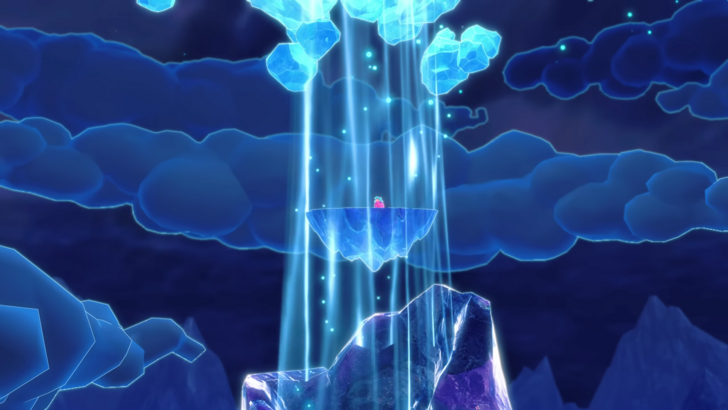
What sets Star-Crossed World apart isn’t just more levels; it’s a brand-new story layered on top of Forgotten Land’s foundation. After the meteor’s catastrophic arrival, its lingering power begins warping Dream Land itself. That’s where the Starry Stages come in; once-familiar places are reshaped, with shattered skyscrapers you can now climb and ocean depths that were once unreachable. To stop the corruption spreading across the land, Kirby must collect Starries, fragments of fallen stars scattered throughout these transformed zones.
It’s not hard to imagine that this additional plot will lead to a harbinger of a greater being, a link to another world, maybe even a doorway to the kind of cosmic narrative Kirby always finds himself pulled into whether he wants to or not. The "star-crossed" angle isn’t just about the sky above Dream Land—it could be about destinies clashing, about two forces (or two worlds) colliding in a way that rewrites the rules.
New Enemies, New Challenges, New Modes
Starry Stages
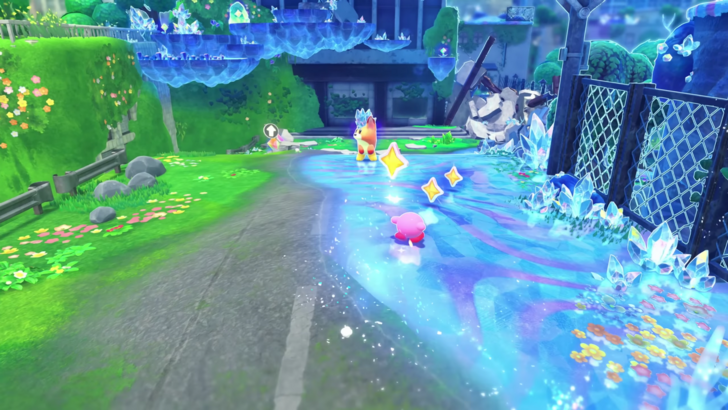
The DLC’s playgrounds, called Starry Stages, take familiar Forgotten Land levels and bend them through a cosmic kaleidoscope. Buildings that used to be flat facades now have climbable rooftops. Ocean floors are drained and explorable. Even crystal formations jut out like alien architecture, hiding tucked-away secrets.
It’s equal parts nostalgia trip and remixed playground. You’ll recognize the backdrop, sure, but you won’t move through it the same way.
Transformed Foes
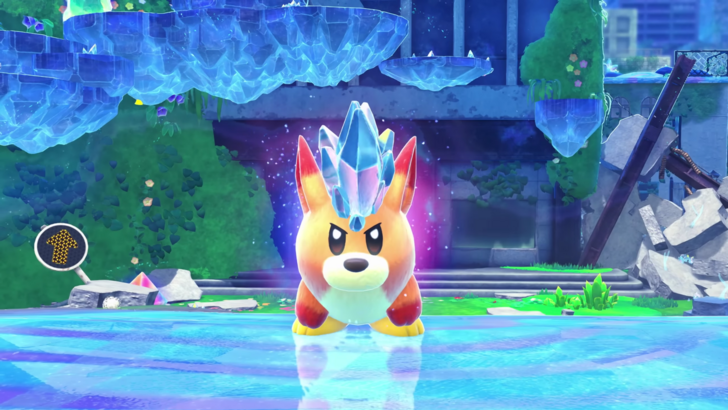
Star-Crossed World doesn’t just drop Kirby into new playgrounds; it arms his enemies with terrifying upgrades. The meteor’s fallout has warped familiar Beast Pack members into crystalline monstrosities. Take Wild Frosty, for example: once just a big bruiser, he’s now Crystal Wild Frosty, a walking shard of armor with tougher stats and resilience that demands a little more strategy than a simple dodge-and-smack.
And if Frosty’s been given the makeover treatment, you can bet others won’t be far behind. Early teases hint at a whole lineup of powered-up, crystal-clad foes, with bulkier armor and deadlier attacks. It’s Nintendo’s way of saying: "Yeah, you’ve seen these guys before, but don’t get comfortable."
Mouthful Mode Evolutions

Kirby’s iconic Mouthful Mode also gets a glow-up with three new forms that are more than just gimmicks; they actually rewire how you move, fight, and puzzle-solve.
⚫︎ Spring Mouth - transformation that lets Kirby coil up and launch himself skyward, making it easier to reach platforms that would normally be out of reach.
⚫︎ Gear Mouth - lets Kirby clamp onto walls and roll across. It’s a more vertical traversal tool.
⚫︎ Sign Mouth - allows Kirby to surf down slopes, ricochet off terrain, and spin into enemies for flashy knockouts.
Each of these abilities is designed to slot neatly into stage puzzles, layering traversal and combat challenges without feeling tacked on.
Collectibles & New Reward Systems

Completionists get a shiny new reason to obsess: Starry Coins. These collectibles pop up in each stage and can be traded with Astronomer Waddle Dee at the Gotcha Machine EX. The payoff? Exclusive figurines that expand your trophy shelf and incentivize replaying levels to sniff out every hidden cache.
It’s a simple system, but it doubles down on what fans already loved about Forgotten Land, turning exploration into a reward loop.
The Ultimate Cup Z EX

For players who laughed their way through the base game’s endgame arena, HAL has cooked up something nastier: The Ultimate Cup Z EX. This boss rush pits you against juiced-up versions of every major boss back-to-back, no breathers, no safety nets. Think of it as the DLC’s Soul Melter EX, a white-knuckle gauntlet built to punish complacency and reward mastery.
Much like Forgotten Land, which struck a careful balance between linear level progression and pockets of exploration, Star-Crossed World seems to expand that formula by layering its new systems—enemy variants, traversal-based Mouthful evolutions, and collectible loops—into each reimagined stage. What’s been confirmed so far suggests a DLC that doesn’t just add content, but reshapes how each stage is approached. Where Forgotten Land asked you to peek behind corners, Star-Crossed World looks poised to ask you to rethink the whole map.
Evolution of Waddle Dee
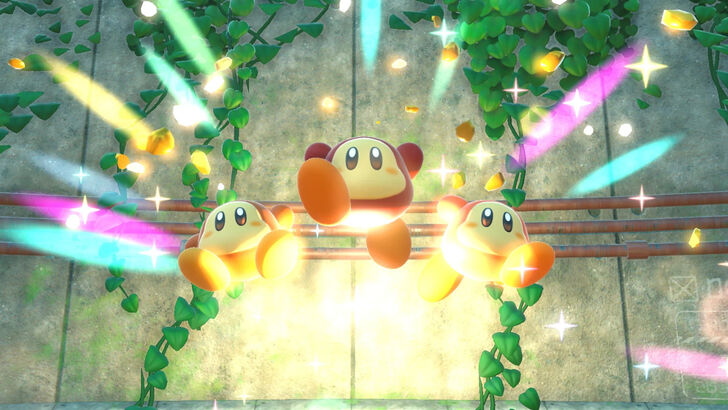
In Forgotten Land, Bandana Waddle Dee was deliberately approachable. His moveset was limited compared to Kirby’s—simple spear thrusts, a clean dodge, a spear throw for ranged play. It was designed for anyone to pick up the controller and contribute without needing to juggle copy abilities or power-ups. But for Star-Crossed World, it feels like HAL has an opening to push him further, to keep that pick-up-and-play accessibility while expanding his mechanical ceiling.
One obvious avenue is to give Waddle Dee a deeper spear toolkit. Imagine charged thrusts that pierce multiple enemies, or spear sweeps that double as crowd control. In a game where Kirby’s arsenal constantly shifts with abilities, Waddle Dee could instead build consistency, rewarding players who master timing and spacing. And then there’s room for aerial extensions, spear vaults for higher jumps, downward dives for mobility, maybe even a "flag plant" move that buffs Kirby when he’s nearby.
Another natural step would be support mechanics. Waddle Dee could toss items across the battlefield—food, stars, or temporary power-ups—letting him act as a kind of battlefield manager. Picture Kirby locked in a mid-boss tussle, and Dee lobs him a Maxim Tomato from across the screen. That’s a level of cooperation we haven’t seen in the series before, and it plays directly into the idea of him being more than just a second controller.

Finally, there’s the question of synergy attacks. Forgotten Land already gave us a taste of this; Bandana Dee could act as a turret while Kirby barreled forward in Car Mouth mode. Past Kirby games have dabbled with team powers too, like the Friend Abilities in Star Allies. If Star-Crossed World takes the idea further, we could see coordinated moves, Kirby freezing enemies with Ice while Dee’s spear creates jagged frozen spikes, or Dee vaulting Kirby higher for new platforming routes. These kinds of mechanics wouldn’t just make him viable in co-op; they’d make him indispensable.
In short, Forgotten Land’s Bandana Dee was the foundation. Star-Crossed World could evolve him into a genuine counterpart to Kirby, a character with his own toolkit that feels rewarding whether you’re the novice hopping in or the seasoned player looking to push the system to its limits.
The Next Era for Kirby
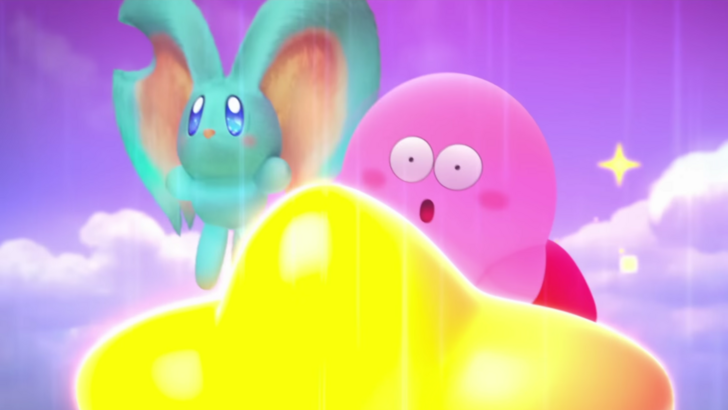
Star-Crossed World feels like the natural next chapter, but not in the predictable sequel sense. Everything about its reveal suggests HAL isn’t simply making Forgotten Land Part Two; they’re treating this as a broader statement about Kirby’s future. It’s the kind of shift that could redefine how these adventures are remembered—not just as cozy solo romps, but as journeys meant to be shared.
And that’s what makes Star-Crossed World so exciting. Forgotten Land showed Kirby could take the leap into 3D. Star-Crossed World looks ready to show us just how far he can fly once he’s truly at home there. Bigger, bolder, stranger, and more heartfelt—it carries the energy not just of a sequel, but of a series stepping confidently into its next era. If Forgotten Land was the first step on new ground, Star-Crossed World might just be the moment Kirby plants his flag.
| Digital Storefronts | |||||
|---|---|---|---|---|---|
| Upgrade Pack |
Base Game + DLC |
||||
| $19.99 | $79.99 | ||||
You may also like…
 |
DELTARUNE Monsters And Why You Should Spare Them DELTARUNE encourages nonviolence not through morality meters, but by building a world that remembers your kindness. |
 |
Hades 2: The Story So Far and What to Expect Next The Hades 2 Technical Test has revealed an abundance of information about the sequel’s heavily-anticipated plot! |
 |
Do Platformers Need Boss Fights? Boss fights. You love them, you hate them, but are they necessary? Maybe for an RPG or action game, but what about a platformer? |
 |
8 Games to Play With Your Self For Valentine's Day Stuck on February 14th without an SO? We got you covered. Here are 8 Games for People who just have that extra time and money on their hands for that occasion. |