



Rue Valley Review Overview
What is Rue Valley?
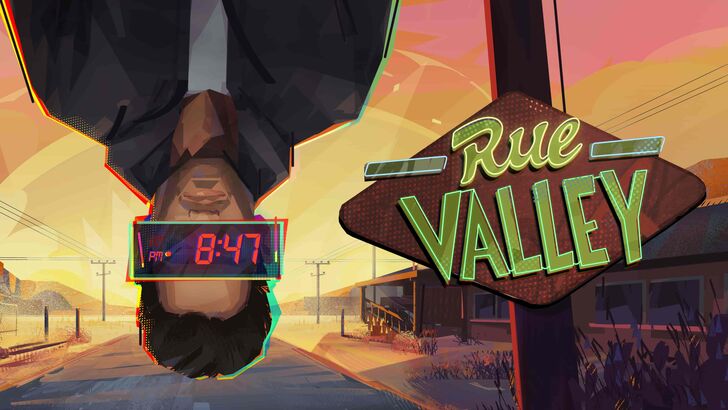
Rue Valley is a narrative RPG, developed by Emotion Spark Studio and published by Owlcat Games, where players take on the role of the protagonist, Eugene Harrow, who is trapped in a strange time loop that causes him to relive exactly 47 minutes in a cycle.
Initially sent to Rue Valley for therapy following a life-changing incident, he quickly finds out that there’s more to this strange valley than what meets the eye. To break free from its confines, he must take on the challenges of the anomaly, diving deeper into the depths of his own psyche, all the while helping the surrounding townspeople with their own deep-set issues.
Rue Valley features:
⚫︎ Intriguing Narrative
⚫︎ "Never-Ending" Time Loop
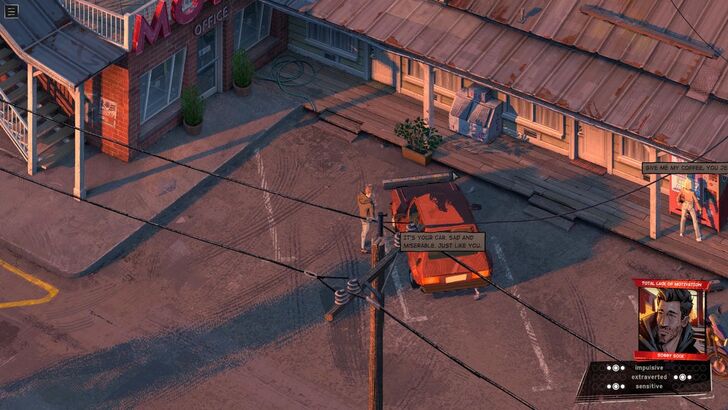
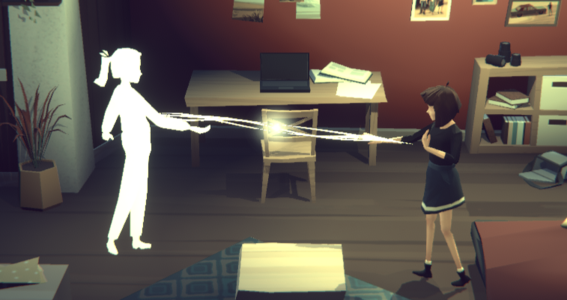
⚫︎ Comic-like Cell-Shaded Visuals
⚫︎ Well-Written Characters
⚫︎ Choice-Based Gameplay
| Digital Storefronts | |||||
|---|---|---|---|---|---|
 Steam Steam |
 Steam Steam |
 GOG GOG |
|||
 PSN PSN |
 Xbox Xbox |
||||
| $29.99 | |||||
Rue Valley Pros & Cons

| Pros | Cons |
|---|---|
 Compelling Story Deep, Well-Written Characters Choices Matter Time Loop Mechanic Compelling Story Deep, Well-Written Characters Choices Matter Time Loop Mechanic |
Mismatched Audio-Visual Lapses Text Typos |
Rue Valley Story - 10/10
Rue Valley feels overwhelming at first, but once you’re able to get a grasp of the situation that Eugene is in, everything follows through. Each new piece of information is gripping and important in its own way, and not to mention the characterizations of the other cast themselves—they’re well-written, emotionally deep, and intriguing. It’s evident that there has been a lot of work and passion put into its narrative.
Rue Valley Gameplay - 8/10
As the game is situated in a time loop, it progresses through exploration, choices, and information gathered from the characters around you. It’s a simple gameplay loop, yet the challenge lies in puzzle-solving and time management, given you only have a limited amount of time to use before the loop resets. It sounds tedious, but Rue Valley makes sure that not one loop is exactly the same. However, controls feel like there’s a bit of a delay to their execution, and eventually, the time passing scenes get old after a while, especially when you need to be moving from location to location.
Rue Valley Visuals - 8/10
Rue Valley employs a cell-shaded art style, looking very much like an interactive comic in most points. It’s charming in its own right, stylized in a way that adds to the whole storytelling. However, while it highly excels in overall graphics, the game still has its lapses, such as several typos, a dozen instances of mismatched text to audio that sometimes flipped the script entirely, and a few frame rate drops even when running on recommended specs.
Rue Valley Audio - 8/10
Its atmospheric music and sound design go hand in hand, as well as superb voice acting, breathing life into the locals of the quaint, quiet town of Rue Valley, especially in its genre. However, it is not fully voiced, with some seemingly random situations or dialogue lines not being voiced at all even if the previous line just had the character talk, which makes the experience a little jarring sometimes. Voices also randomly play too early, not matching the flow of the conversation.
Rue Valley Value for Money - 8/10
$30 is a decent price for a narrative RPG like Rue Valley, with the amount of content it has and its replayability (especially if you’re a completionist). While shorter than most other titles of its genre, it still delivers what it promised, although with some technical bugs and lapses that may need to be polished out first.
Rue Valley Overall Score - 84/100
Rue Valley in itself is a lovely narrative RPG gem that strikes it almost perfectly with an intriguing narrative coupled with fascinating and memorable characters, wrapped up in a bite-sized package good for a day or two. While it has its technical weaknesses and a few audio-visual lapses here and there, Eugene Harrow’s intertwining tale with the rest of the Rue Valley cast is definitely something to experience—again and again, in a time loop, of course.
Rue Valley Review: Disco Elysium Lite With Time Loops
I’m a fan of narrative RPGs and visual novels—worldbuilding in these genres seems to always nail it on the head, creating lore and worlds that make my imagination soar. Whether it’s fantasy-themed and set in another alternate universe or even just slice-of-life made more exciting, the storytelling in these games just feel like a cut above the rest because they’re primarily focused on the plot.
I especially like the ones that can take something and turn it into something gripping, compelling. Okay, not saying that time travelling and Groundhog Day time loops are mundane, but the way that some of these titles, though obviously set in a universe much like ours, managed to put a spin onto it that sometimes gets you thinking—"What if this really happened to me, right here, right now?"
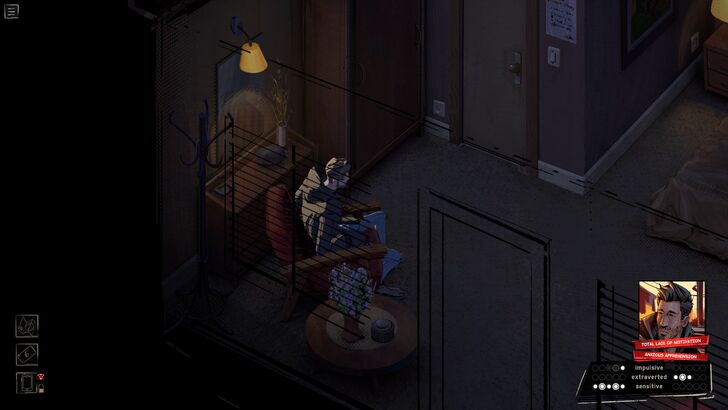
With that said, Rue Valley easily caught my eye from its idea of time loops, the charming visual style, and the relatable trailer. Bored, thirsty, and a total lack of motivation? You mean me every other day—but in a game!? Sign me up.
From the get go, it wears its inspiration on its sleeve, evidently from the critically acclaimed narrative RPG Disco Elysium. It’s no wonder I was drawn to it—while I haven’t finished Disco Elysium fully (forgive me), it has taken root in my head as one of the most compelling narrative RPGs in recent times. Rue Valley appears to echo it in some sort of way…and it definitely did not disappoint. While it’s not Disco Elysium in plot and scope, it’s close—it’s bite-sized, enough to keep you going.
The Sleepy, Mysterious Town of Rue Valley

Welcome to Rue Valley! You are put in the shoes of Mr. Eugene Harrow, the poor chap stuck in the strange town because of a particular incident that has changed his life forever—for better or for worse. Sent to a deserted place in the middle of nowhere under the need for psychotherapy, Eugene quickly finds out that something is very wrong with the place, especially when he finds himself back at the beginning of 8:00 PM in the therapist’s office…again…and again…and again.
It takes some convincing and several attempts to flee, some attempts more drastic than the others, but after some time and a dozen fiery skies and blue lightning flashes later, he finally accepts that he’s stuck in a time loop that relives his last 47 minutes—8:00 PM to 8:47 PM. No more, no less.
But our poor protagonist already has several challenges to deal with even before the time loop fiasco happened—mental ones, such as his own suffering and demons that have plagued his head ever since that incident. And thus, that’s the central plot and motivation of the game: figure out a way for Eugene to escape the confines of this strange anomaly, while also making sure to emerge victorious against his own inner battles…perhaps helping out a few people along the way too.
Talking To Strangers—Again and Again
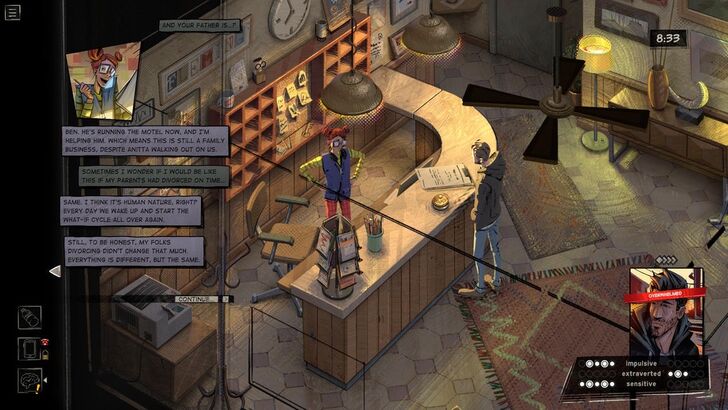
As a narrative RPG, players take on the reins of creating their own story, shaped by decisions and events as they progress through the game. In Rue Valley, there is a certain emphasis on "crafting their own personality"—be a cold-hearted lone wolf or be the extraverted loudmouth. However, these stats aren’t as permanent as they seem, as Status Effects will greatly change up the traits, allowing you to choose dialogue options or pass trait checks that you may not have been able to do before.
Different personalities open up different dialogues and interactions in the game, which are then converted into memories and stored away in a mind graph. These choices will shape your Eugene Harrow into having particular mindsets, which then turn into Intentions, or what is essentially the "quest" that needs to be fulfilled.
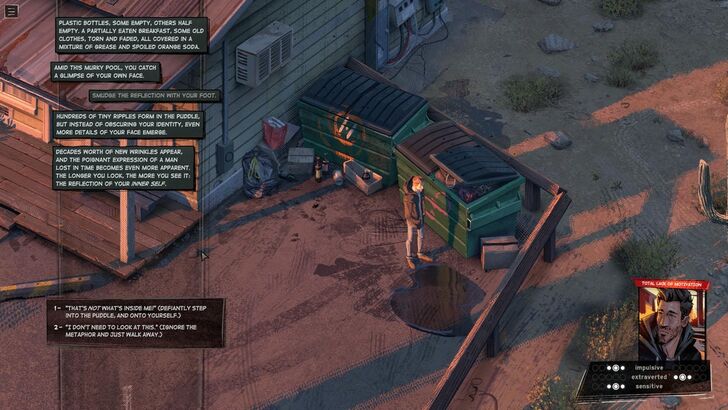
Your day (or well, er, 47 minutes) in Rue Valley revolves around exploring, conversing with characters, gathering new information, and fulfilling Intentions to progress through the story. Time only passes by when you converse with other people or choose specific options that pass the time, so even if it says 47 minutes on paper, you have the power of time travelling and stopping in your repertoire.
It might sound tedious at first, especially with the idea that it’s in a time loop, so everything plays out almost the exact same way right? Not exactly. While the core schedule is always the same (hence, it’s good to keep track of which characters are available at which time so you don’t waste those precious minutes), there’s always something new, something different that happens because of your past choices, revelations, or what you’ve done anew in the present loop.
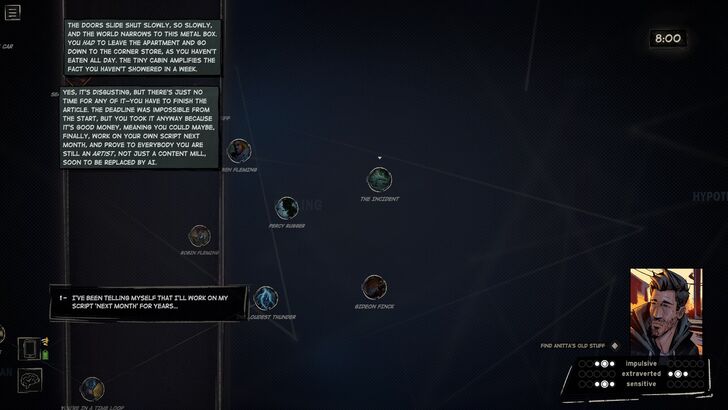
That’s what kept me intrigued with it despite being essentially playing the exact same day for hours. The writing really made it seem as if my choices even from two loops ago were meaningful, which makes the experience feel more complete, as if I was actually making a dent into the narrative.
Also, as someone who does tap into save scumming or reloading a previous save (I apologize) when things don’t go the way I want it to be, Rue Valley has actually eliminated the need for me to do that because…well, the loop resets itself anyway. You get the information and data you need to progress, while not facing the consequences of your actions no matter how heinous they may be (mostly)! It’s a win-win situation, and I definitely felt less bad about breaking a car window to snoop around.
An Emotionally Captivating Story—Maybe Too Relatable
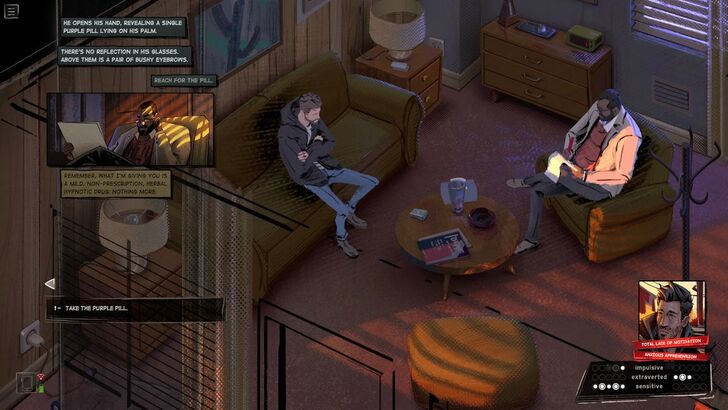
Aside from the gameplay, Rue Valley really lives up to it being a narrative RPG—the story is deep, compelling, and keeps you on your toes. It feels like a large jigsaw puzzle with its pieces scattered throughout the valley, and it’s up to you to gather those pieces to make things clearer and to have a better understanding of the whole situation. From the beginning, you’re thrown into the heat of everything without any pretext—you don’t even know who your character is, why exactly are you sitting in a therapist’s office, and why the hell are you in a godforsaken town miles away from home?
This level of mystery from the prologue itself and its storytelling is honestly quite motivating, just enough to pull you into the depths of its oddly tantalizing narrative. As you go through the story, it gets better and better as it weaves through the intricacies of the human psyche—so much so that it may be relatable to quite a number of people. Little by little, you start seeing yourself in Eugene, more than just a character to control. Perhaps it’s that relatability that makes it all the more fascinating.
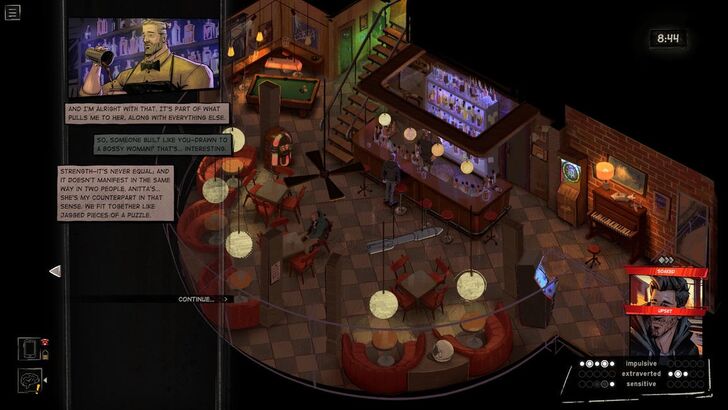
Then again, it’s not only Eugene who is battling with his inner demons—every single character you meet in this strange town is also fighting against their inner turmoil. There’s the hyper-controlling and bossy Anitta who appears to be a prickly woman who has other things going on behind the scenes, more emotional than she initially lets show; Robin, the quirky motel receptionist who seems to hide everything behind a sunshine-y smile and rambling; therapist Dr. Finck who appears to be the most level-headed out of all the cast members, yet there are things on his plate that he conceals to keep the supposed facade…and more.
These descriptions are vague enough to not tread into spoiler territory, but each character really feels intricately made, with real depth to them, with problems, thoughts, and issues that could be easily mirrored in our own world. That notion of being so close to reality hits deep.
Aside from finding similarities in the protagonist (and perhaps the other characters as well), when you think you’ve got one task down, the game surprises you with a dozen more questions to find the answers to, spurning you on and on to keep going…until you can finally free poor Eugene (and to some extent, yourself) out of this Groundhog Day situation.
Strange Lapses In Dialogue
Not all dialogue is voiced—not that it’s a bad thing, but it was a little jarring especially in the beginning or the prologue. The therapist suddenly didn’t have speaking lines for a certain choice yet his voice was present in all the others. Initially, I thought it was just for that scene, but further progression revealed that all characters had several choices that were just not given a voice even if the character was already talking just a second before. Sometimes, they even start talking again right after a beat of silence on the same topic, which is rather strange.
Given that the game is created by an indie studio, perhaps it’s understandable that with probably thousands of lines of dialogue per character there is in a narrative RPG, not everything could be done within its time frame or some other reason. Nevertheless, it would definitely benefit from having all other character lines at least fully voiced instead of having a sudden lull in the conversation.
Additionally, some lines of text don’t match what the character is saying, either being completely flipped or not being the same as the spoken line at all. It’s more like a funny bug but still something that should be polished, especially in a game that centers on its narrative.
Repetitive Time Passing Sequences
Another (minor) gripe I have with the game is that the travelling and time passing sequences can get old pretty quick, especially after the nth loop. As you progress through the story, you’d need to be travelling to and from farther distances to accomplish Intentions, and given how short the loops are in general…well.
Perhaps it’s for the immersive experience, seeing Eugene on the road either vrooming away in his rickety car or walking to show the passage of time, but after the 20th time of the exact same scenery…maybe there should be a cap to it.
Is Rue Valley Worth It?
A Bite-Sized Narrative RPG Gem
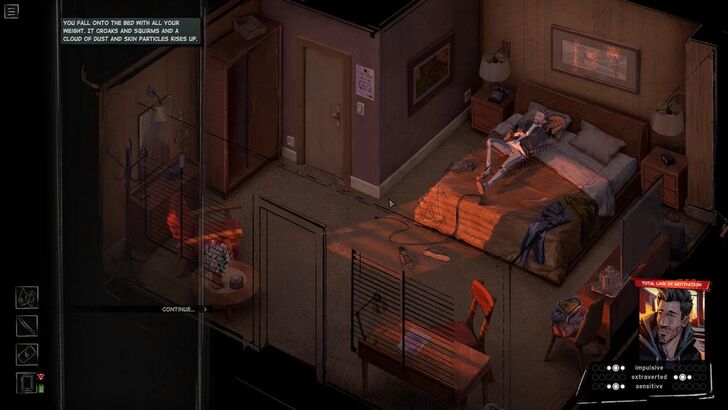
Rue Valley is worth the $30 price tag, with it being a charming and emotionally charged narrative RPG that’s sure to keep players discovering and searching all the way to the end, and if you can forgive its technical bugs and glitches here and there, although they’re nothing terribly game-breaking.
It also seems like it requires a shorter time to complete a run compared to other popular titles in its genre, and thus could be a good introduction to those who may want to try narrative RPGs without pouring too much into it. Rue Valley welcomes all—and will definitely keep you on the loop for a bit.
| Digital Storefronts | |||||
|---|---|---|---|---|---|
| Steam |
Steam |
GOG |
|||
| PSN |
Xbox |
||||
| $29.99 | |||||
Rue Valley FAQ
Is Rue Valley inspired by Disco Elysium?
It is heavily shown to be so, from its visuals to its gameplay structure and more. Rue Valley’s Creative Director Marko Smiljanić has previously expressed that the creators of Disco Elysium were "like his idols". He even got a chance to meet Robert Kurvitz, Aleksander Rostov, and Helen Hindpere of the Disco Elysium team, who gave very positive feedback on the Rue Valley demo as well.
Game8 Reviews

You may also like...



Rue Valley Product Information
 |
|
| Title | Rue Valley |
|---|---|
| Release Date | November 11, 2025 |
| Developer | Emotion Spark Studio |
| Publisher | Owlcat Games |
| Supported Platforms | Steam, Epic Games, GOG, PlayStation 5, Xbox Series X|S |
| Genre | Adventure, RPG, Indie |
| Number of Players | 1 |
| ESRB Rating | RP |
| Official Website | Rue Valley Official Website |